

Quick Read
- Australia’s AEMC is proposing to increase fixed network charges on electricity bills.
- The changes would require customers to pay a set amount regardless of electricity usage.
- Advocates warn of annual increases of $400-$700 for solar/battery owners and $127-$217 for low-income households.
- Stakeholders like the Smart Energy Council, Solar Citizens, Green Energy Markets, and Tesla oppose the proposal.
- The deadline for public submissions is February 13, 2026, with final recommendations due in Q2 2026.
SYDNEY (Azat TV) – Australian energy consumers are facing significant potential changes to their electricity bills as the Australian Energy Market Commission (AEMC) moves forward with a proposal to increase the fixed network cost component of tariffs. This shift, outlined in a recent draft review, has ignited widespread opposition from renewable energy advocates, consumer groups, and even major industry players, ahead of a critical deadline for public submissions on February 13, 2026. The AEMC’s final recommendations are expected in the second quarter of 2026, setting the stage for a pivotal decision on the future of energy pricing equity across the nation.
Australia’s Energy Bill Debate: The AEMC Proposal
The AEMC’s proposal centers on adjusting how network tariffs are structured, aiming to shift a larger proportion of costs to fixed charges. Currently, network tariffs, which can constitute up to 50% of a typical electricity bill, combine both fixed and variable components, with retailers determining the final structure. The proposed change would require all customers to pay a higher set amount each billing period, irrespective of their actual electricity usage, a departure from the current system where usage-based charges play a more significant role.
The Commission maintains that its proposal seeks to address perceived inequities in the current dynamic pricing model. According to the AEMC, while dynamic pricing has benefited those who can adjust their usage, such as households with solar panels and battery storage, it has reportedly disadvantaged renters and higher-consumption households that lack the flexibility to alter their energy consumption patterns. The AEMC’s stated goal is to create a more balanced system, though critics argue the method chosen could exacerbate existing inequalities.
Proposed Tariff Changes Spark Widespread Opposition
The AEMC’s draft review has been met with strong criticism from various stakeholders across Australia. David McElrea, chief advocacy officer of the Smart Energy Council, voiced his group’s firm opposition, stating that the proposed changes would undermine the significant efforts households have made to reduce both their energy costs and carbon emissions. He highlighted that households that have invested in energy efficiency measures would see the value of their initiatives eroded, as their bills would become largely unaffected by their consumption patterns.
Echoing these concerns, Solar Citizens CEO Heidi Lee Douglas emphasized that the new charges would disproportionately impact low energy consumers. This group includes individuals in single-person households, apartment dwellers, and occupants of energy-efficient homes. Douglas warned that implementing higher fixed costs would primarily benefit infrastructure firms, with minimal consideration for the financial strain placed on everyday consumers grappling with rising expenses, as reported by SSBCrack.com.
Financial Implications for Australian Households
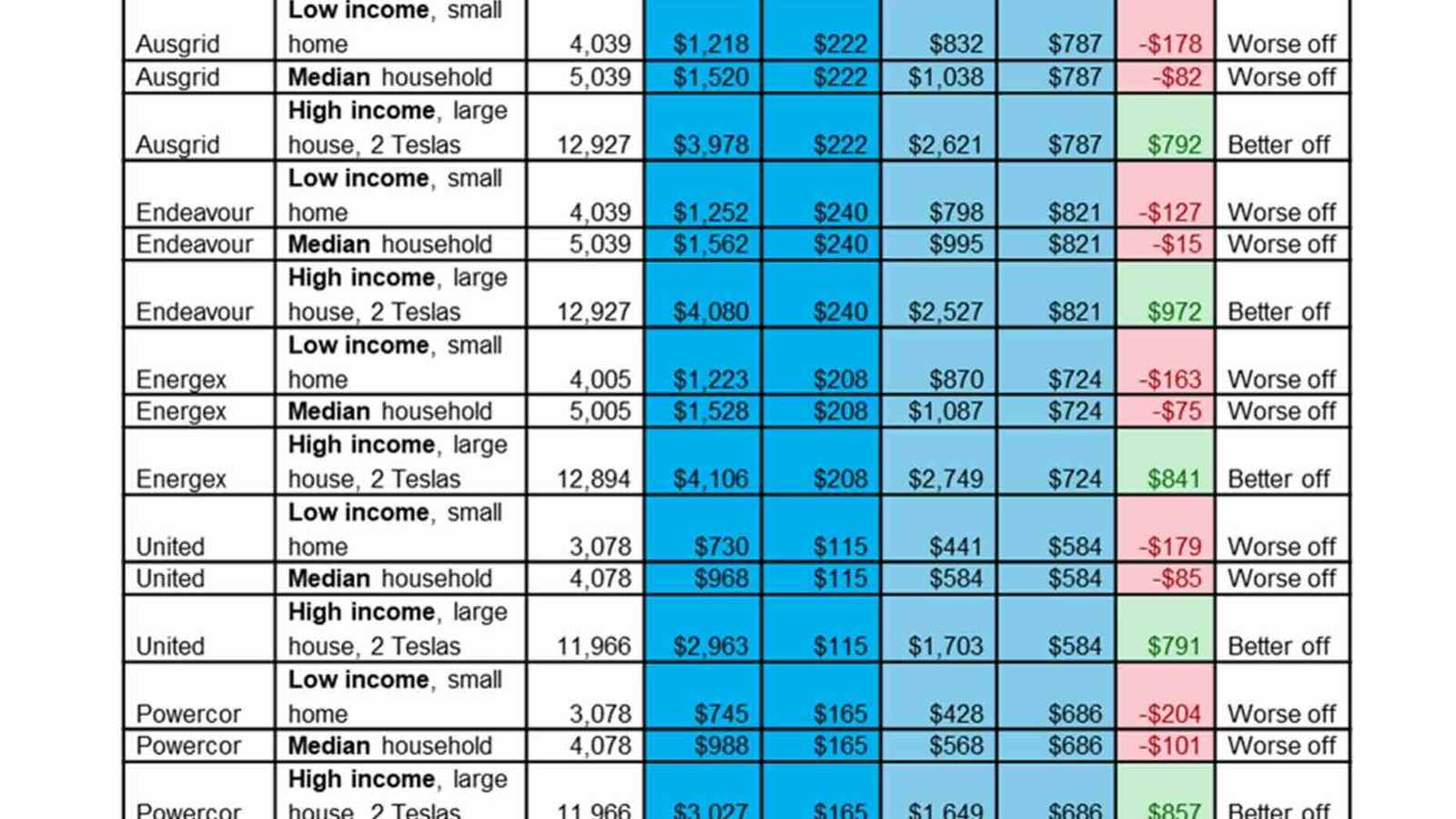
Research conducted by Green Energy Markets (GEM) provides a stark picture of the potential financial burden on specific consumer segments. GEM analyst Tristan Edis criticized the AEMC’s approach, labeling it a “Robin Hood scheme in reverse.” According to GEM’s analysis, households that have invested in solar and battery systems could face annual increases ranging from $400 to $700 due to the proposed tariff adjustments. Furthermore, low-income households, which typically consume less electricity, are projected to bear a considerable financial burden, facing increases of approximately $127 in some networks and up to $217 in others. Conversely, wealthier households, often associated with higher consumption, could see their overall bills significantly reduced under the new model.
Major corporations have also joined the chorus of opposition. Tesla’s senior energy policy advisor, Emily Gadaleta, underscored that static network tariffs represent an outdated model for a modern energy landscape. In prior consultations, Gadaleta noted that these traditional pricing structures actively hinder innovation and consumer engagement in an energy market that is increasingly valuing decentralized and renewable energy sources. This sentiment aligns with broader industry calls for tariff structures that incentivize, rather than penalize, investment in sustainable energy solutions and smart home technologies.
The Road Ahead for Australian Energy Policy
The approaching deadline for written submissions, February 13, 2026, marks a critical juncture in this ongoing debate. Stakeholders are actively engaging to present their perspectives, hoping to influence the final recommendations that the AEMC is slated to release in the second quarter of 2026. The outcome of this dialogue will not only shape the future of energy pricing in Australia but also determine the equity of the transition towards a more sustainable and renewable energy future for all consumers.
The broad and vocal opposition to the AEMC’s proposed tariff changes highlights a fundamental tension between the perceived need for market stability and the desire to incentivize renewable energy adoption and consumer empowerment. The debate underscores how seemingly technical adjustments to energy pricing can have profound and uneven social and economic impacts, particularly on those households already striving for energy independence or struggling with cost-of-living pressures.