
Quick Read
- Pauline Hanson suspended from Australian Senate for seven sitting days after wearing a burqa as protest.
- Senate overwhelmingly passed a censure motion condemning her act as disrespectful and vilifying to Muslims.
- Hanson is barred from representing the Senate in overseas delegations for the rest of the parliamentary term.
- Greens senator Mehreen Faruqi and Labor’s Penny Wong led calls to address systemic racism in parliament.
- The incident has reignited debate over religious respect and political conduct in Australia.
Senate Takes a Stand: Pauline Hanson Suspended After Burqa Protest
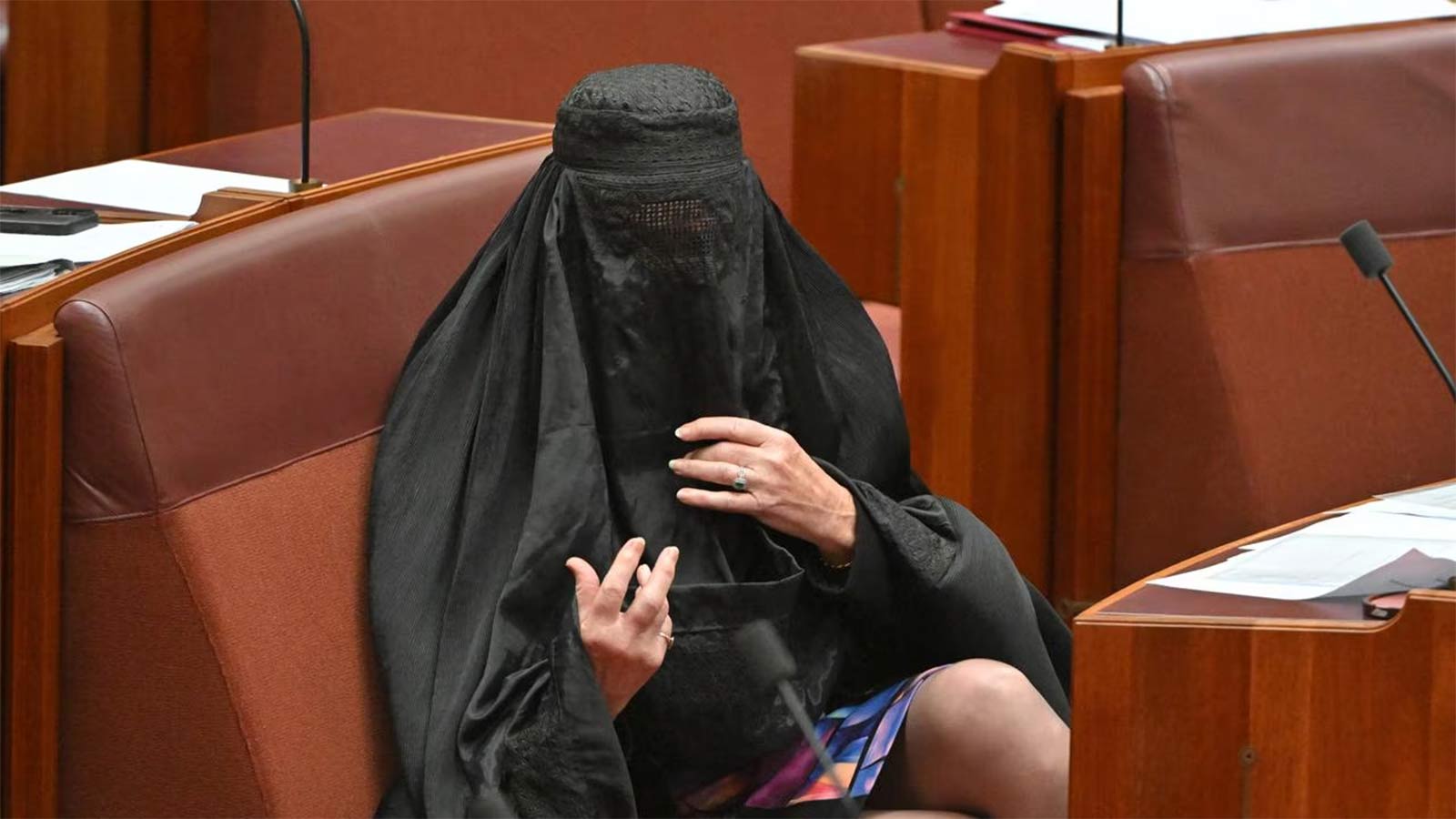
It was a moment that stopped the Australian Senate in its tracks. On a Monday afternoon in November 2025, Pauline Hanson—leader of the nationalist One Nation party—strode into the chamber shrouded in a full-body burqa. The act was intended as a protest, a visual demand for fellow senators to consider her bill proposing a national ban on the burqa and similar face coverings in public. Instead, it sent shockwaves through the country’s political heart, igniting accusations of racism and disrespect that dominated headlines and parliamentary debate for days.
The Senate’s response was swift and decisive. In a rare show of unity, members from Labor, the Coalition, the Greens, and independents joined forces to pass a censure motion against Hanson. The vote was overwhelming: 55 to five. Only Hanson herself, her three One Nation colleagues, and United Australia senator Ralph Babet opposed it. The censure went beyond mere criticism, describing Hanson’s stunt as “intended to vilify and mock people on the basis of their religion” and “disrespectful to Muslim Australians.”
Consequences and Reactions: A Parliament Divided
The motion didn’t stop at condemnation. Hanson was suspended from the Senate for seven consecutive sitting days—a penalty described by government sources as one of the harshest in recent decades. She’s also barred from representing the chamber on any overseas delegations during this parliamentary term. The timing means her suspension will extend into 2026 when the Senate resumes after the holiday break.
Hanson, 71, is no stranger to controversy. Her political career has been marked by provocative statements and stunts, many targeting Australia’s multicultural communities. In 2017, she pulled a similar burqa stunt in the Senate, but escaped punishment. This time, the chamber’s patience had run out.
Refusing to apologize, Hanson doubled down in a five-minute address, defending her right to protest and accusing her colleagues of hypocrisy. “They didn’t want to ban the burqa, yet they denied me the right to wear it on the floor of Parliament. There is no dress code on the floor of Parliament, yet I’m not allowed to wear it. So to me, it’s been hypocritical,” she told reporters, insisting she’d be judged by voters at the next election, not her peers.
Deepening Fault Lines: Racism, Religion, and Representation
The fallout from Hanson’s actions exposed deep divisions in the Senate. Greens senator Mehreen Faruqi, herself a Muslim, delivered a powerful speech before the censure vote. “This parliament drips now in racism,” she declared, pointing to decades of “piling on hate and racism, on Muslims, on Asians, on people of colour.” Faruqi argued that the major parties had allowed such attitudes to fester unchecked.
Labor’s Penny Wong, who moved the censure motion, called Hanson’s protest “prejudice parading as protest.” Wong recounted a conversation with a friend’s seven-year-old daughter, who had asked, “Mummy, do all Christians hate Muslims?”—a question that, for Wong, underscored the harmful consequences of Hanson’s actions for the social fabric, especially among vulnerable Australians.
Ralph Babet, the United Australia senator, interjected during Wong’s speech with “I do,” later clarifying he hated “radical Islam.” His comments, picked up faintly on Senate video recordings and confirmed by several present, added fuel to the ongoing debate about religious intolerance and the boundaries of political expression.
Senator Fatima Payman, who wears a hijab, confronted Hanson directly, calling the stunt “disgraceful” and “a shame.” The Australian Federation of Islamic Councils, represented by Rateb Jneid, condemned Hanson’s act as “part of a pattern of behaviour that has repeatedly vilified Muslims, migrants and minorities.”
A History of Controversy and Calls for Change
Hanson’s controversial stance on race and immigration is hardly new. In her first speech to parliament in 1996, she warned that Australia was “in danger of being swamped by Asians.” Her anti-immigration, anti-Muslim rhetoric has been a constant thread, drawing criticism and legal challenges. Just last year, a judge ruled that Hanson had breached racial anti-discrimination laws by telling Faruqi in a social media post to “return to her homeland.” Hanson is appealing that decision.
This latest incident has reignited calls for parliament to confront not just individual acts of bigotry, but systemic and structural racism. Faruqi and Payman, both immigrants and the only Muslims currently serving in the Senate, called for real change. “Let this be the start of actually dealing with structural and systemic racism that pervades this country,” Faruqi said.
For many Australians watching from afar, the Senate’s response was a watershed moment. The overwhelming vote, the public condemnation, and the willingness of leaders to speak openly about racism marked a significant shift from the often muted reactions of the past.
Where Does Parliament Go From Here?
The suspension of Hanson raises broader questions about the standards of conduct expected in Australia’s highest legislative body. Is the censure and suspension enough? Will it set a new precedent for how the parliament handles acts of vilification and disrespect? Or will it prove a temporary measure, with old divisions resurfacing when the chamber reconvenes?
Hanson remains defiant, betting that public opinion, not parliamentary discipline, will ultimately decide her fate. Her supporters argue she is exercising free speech; her critics say she is undermining the values of respect and inclusion that parliament should embody.
As the Senate prepares to rise for the year, the reverberations of Hanson’s burqa stunt linger. The incident has forced a reckoning—not just with one senator’s actions, but with the broader culture and climate of Australian politics.
The suspension of Pauline Hanson reflects a rare bipartisan moment where the Australian Senate put principle above party, drawing a clear line against religious vilification and public mockery. Yet, the underlying tensions—around race, religion, and representation—remain unresolved, demanding ongoing vigilance and honest dialogue if parliament is to truly serve a diverse nation.