
Quick Read
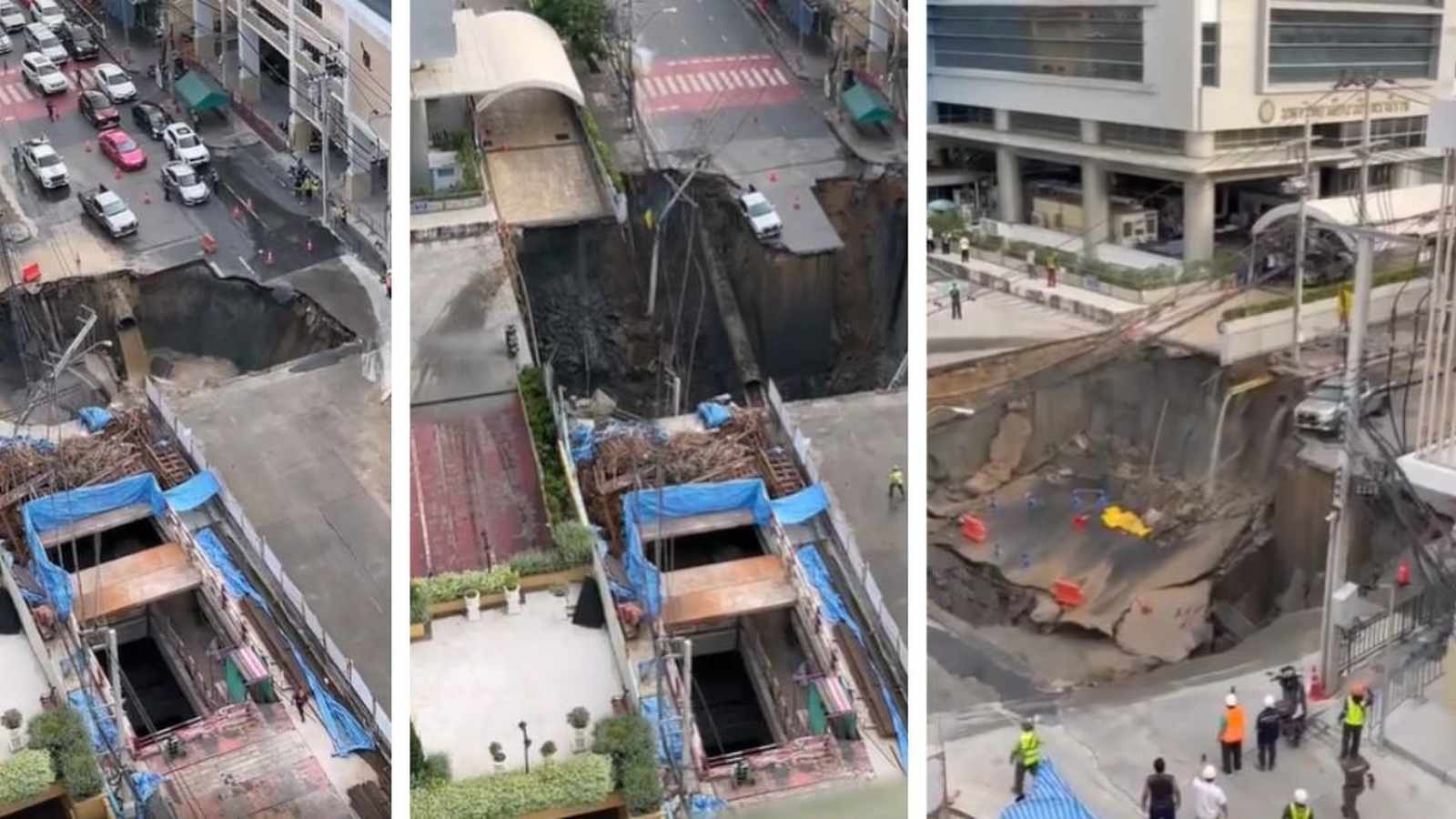
- A massive sinkhole opened on Samsen Road, Bangkok, on Sept. 24, 2025, after heavy monsoon rains.
- Three vehicles were swallowed, but no injuries were reported.
- Evacuations affected a hospital, police station, and nearby residences.
- The likely causes include subway construction and a leaking water pipe.
- Repairs are expected to take up to a year.
Bangkok’s Busy Heart Ripped Open: A Sinkhole’s Sudden Descent
On an ordinary Wednesday morning, the pulse of Bangkok’s Samsen Road was interrupted by an extraordinary force of nature. At approximately 7 a.m., as the city’s monsoon rains battered the streets, a section of the bustling thoroughfare outside Vajira Hospital and a local police station collapsed. In a matter of seconds, the world’s attention was drawn to a gaping, water-filled sinkhole—stretching an estimated 160 feet long and plunging up to 98 feet deep—right in the heart of Thailand’s capital.
Eyewitnesses watched in disbelief as the street fractured and gave way, power lines shuddered and fell, and a burst water pipe sent torrents into the void. Three vehicles—two cars and a truck—were claimed by the earth, their disappearance captured in viral videos that quickly spread across social media. For those nearby, the moment was surreal and terrifying. “The sound was like an electricity pole collapsing and my whole flat shook,” recalled Noppadech Pitpeng, a hospital staffer, to Agence France-Presse.
Evacuations, Disruptions, and the City’s Response
The aftermath was as dramatic as the collapse itself. Fearing further instability, officials swiftly evacuated the police station and Vajira Hospital, which suspended outpatient services until Thursday. Emergency personnel cordoned off the area, while a precariously perched pickup truck was removed by crane. City workers raced to cut electricity and water supplies to prevent further hazards. Police officers set up a temporary base 2.4 kilometers away, and nearby apartment blocks were also cleared out of caution.
Prime Minister Anutin Charnvirakul arrived at the site, expressing deep concern and ordering all at-risk residents to evacuate. “Repairs to the collapsed subway tunnel could take about a year,” he told reporters, reflecting the scale of the disruption. Students from the adjacent Suan Dusit University were instructed to attend online classes, and hospital staff scrambled to adjust to the unfolding crisis.
Unraveling the Cause: Monsoon, Infrastructure, and Human Error
As the city grappled with the immediate shock, attention quickly turned to the cause. The director of Bangkok’s disaster prevention department, Suriyachai Rawiwan, suggested a confluence of factors: relentless monsoon rains, a leaky water pipe that eroded the underlying soil, and ongoing construction work for a new subway line. “The water that eroded brought some soil that dropped down to an under-construction subway station, causing the collapse,” he explained, as cited by The Nation.
Bangkok’s governor, Chadchart Sittipunt, echoed this, noting the subway tunnel under construction by the Mass Rapid Transit Authority was the likely trigger. As water from the burst pipe seeped through the ground, it carried soil into the void of the tunnel, undermining the road above until it finally gave way. The Mass Rapid Transit Authority has launched a formal investigation, but the incident has already exposed vulnerabilities in the city’s infrastructure—an unsettling prospect as the monsoon season continues.
The Science of Sinkholes: When the Ground Gives Way
What makes a sinkhole so sudden and so devastating? According to the U.S. Geological Survey (USGS), sinkholes form when water dissolves soluble rocks—like limestone or gypsum—beneath the surface, creating underground caverns. Heavy rains accelerate this process, especially when combined with human-made disturbances such as leaking pipes or construction. The result: the ground above collapses, often without warning.
The Bangkok sinkhole, while massive, is not the largest recorded. In China’s Fengjie County, the “Heavenly Pit” plunges over 2,100 feet deep, while Alabama’s “Golly Hole” in the U.S. remains a testament to the sheer scale these phenomena can reach. Still, the psychological impact of such events is profound. For Bangkok residents, the suddenness of the collapse—right outside crucial institutions—was a stark reminder of the city’s hidden geological risks.
Aftermath and the Road Ahead: Repairs, Fears, and Resilience
In the immediate aftermath, city engineers and disaster teams have been working around the clock to stabilize the site and assess damage. The sinkhole severed a vital four-lane artery, upended daily routines, and prompted a reckoning with the city’s preparedness for natural and human-induced disasters. The repair timeline remains uncertain, with officials estimating up to a year for full restoration of the subway tunnel and road.
For now, life in this corner of Bangkok has been upended. Local businesses and residents face months of disruption, while city planners confront difficult questions about building safety and the risks posed by rapid urban development in a region prone to heavy rains and flooding.
Yet, amid the chaos, there is a sense of relief—no fatalities or serious injuries were reported, thanks in large part to swift evacuations and the vigilance of emergency services. The city’s resilience is being tested, but so far, Bangkok is meeting the challenge head-on.
Bangkok’s sinkhole is a jarring illustration of how urban life teeters atop unseen risks—natural, infrastructural, and human. As the city moves to repair and rebuild, the lessons from this collapse should drive a more cautious approach to development and a renewed focus on safeguarding public infrastructure in the face of nature’s unpredictability.