

Quick Read
- Over 3,000 graduates participated in four ceremonies at the Ferrell Center in May 2026.
- The 4-ceremony format was expanded in 2022 to accommodate growing enrollment across specialized schools.
- Graduates join a global network of 170,000+ Baylor alumni.
- Academic honors required GPAs ranging from 3.75 to 3.95.
Institutional Expansion and the Four-Ceremony Framework
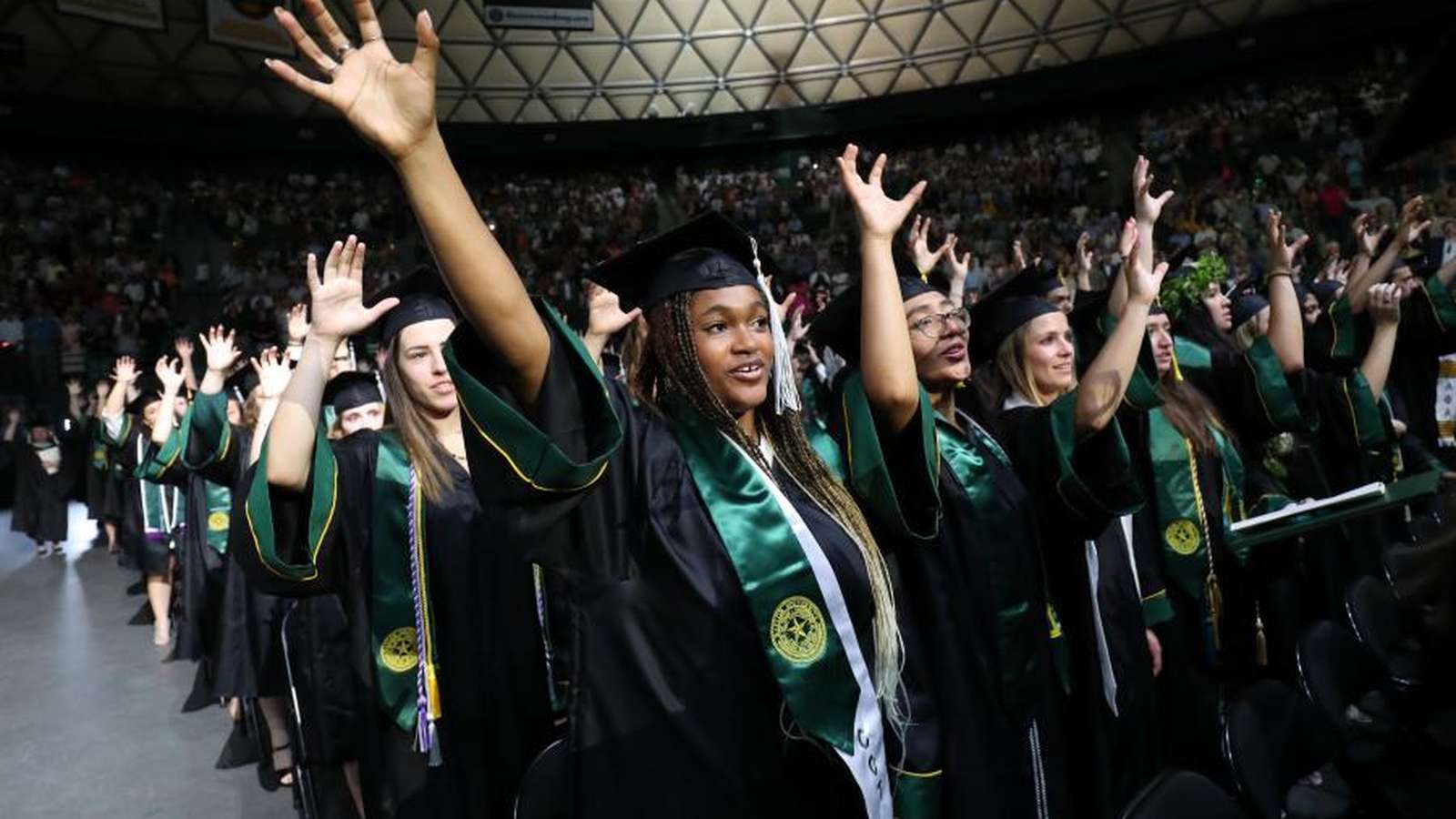
Between May 15 and 16, 2026, Baylor University executed a complex logistical and academic operation in Waco, Texas, hosting four separate commencement ceremonies to honor over 3,000 graduates. This multi-event format, which the university officially adopted as a standard in 2022, reflects a strategic response to the institution’s growing student body and the diversification of its academic programs. Held at the Ferrell Center—a venue that has served as the university’s primary commencement site since 1988—the 2026 ceremonies underscore Baylor’s commitment to maintaining an intimate, graduate-focused experience despite its expanding scale. According to university records, the shift from a three-ceremony schedule to the current four-part structure was necessitated by the increasing number of degree candidates across specialized colleges, ensuring that each graduate receives individual recognition from the university leadership (Baylor University Commencement Office, 2026).
Academic Specialization and Workforce Integration
The distribution of the ceremonies across two days allowed for a focused celebration of specific academic disciplines, highlighting the university’s role in producing high-level human capital for the global economy. The Friday morning session focused on the Honors College, the School of Engineering and Computer Science, and the College of Arts and Sciences, while the afternoon session transitioned to the Robbins College of Health and Human Sciences and the Diana R. Garland School of Social Work. Saturday’s events continued this granular approach, honoring the Louise Herrington School of Nursing and the Hankamer School of Business. This departmental segmentation is not merely logistical; it represents the university’s internal policy of fostering distinct professional identities within the broader ‘Baylor Family’ framework. President Linda A. Livingstone, the university’s 15th president, presided over the conferrals, emphasizing the transition from academic rigor to professional service.
Historical Context and Tradition Preservation
While the 2026 ceremonies utilized modern facilities and scheduling, they remained anchored in 172 years of institutional history. Founded in 1845, Baylor has navigated various historical shifts, from holding ceremonies in the Carroll Library chapel in 1903 to the 1943 wartime commencement where a significant portion of degrees were conferred in absentia due to World War II. The current era of Baylor commencement is characterized by the ‘Baylor Ring’ tradition—a practice where graduates turn the seal of their rings toward the world upon graduation, symbolizing their readiness to apply their education externally. The diploma itself, featuring a pen-and-ink drawing of Pat Neff Hall, remains a high-stakes credential, signed by the Board of Regents and the Provost, serving as a formal validation of the graduate’s entry into a network of over 170,000 alumni worldwide (Baylor Alumni Office, 2026).
Economic and Social Stakes of the 2026 Cohort
The graduation of over 3,000 students represents a significant infusion of skilled labor into various sectors, particularly in health sciences, business, and technology. The university’s rigorous standards for Latin honors—requiring GPAs as high as 3.95 for summa cum laude—ensure that the top tier of the 2026 class is positioned for competitive placement in graduate schools and global corporations. As these new alumni join the broader network, the institutional impact of Baylor extends beyond Waco, influencing policy and industry through its graduates. The 2026 cycle also marks a period of stability following the disruptions of previous years, such as the 2021 outdoor ceremonies at McLane Stadium necessitated by the COVID-19 pandemic, signaling a return to the institutional norms that define the university’s public identity.
The expansion to a four-ceremony format at Baylor University serves as a case study in institutional scaling. By balancing the need for mass administrative efficiency with the traditional requirements of academic prestige, the university maintains its standing as a premier research institution while reinforcing the communal identity of its student body. The successful execution of the May 2026 commencement confirms Baylor’s capacity to manage growth without diluting the symbolic or practical value of its degrees in an increasingly competitive higher education landscape.