
Quick Read
- Justice Department released photos and documents showing Bill Clinton with Jeffrey Epstein and Ghislaine Maxwell.
- Clinton maintains he cut ties with Epstein before the financier’s crimes were public and has not been accused of wrongdoing.
- White House and Congress are pushing for depositions and further investigation into Clinton’s ties to Epstein.
- Many files remain heavily redacted, leading to criticism from victims and lawmakers.
- Political rivalry and calls for transparency continue to fuel debate.
- Justice Department released new photos and documents linking Bill Clinton to Jeffrey Epstein, sparking controversy and renewed public interest.
- White House officials and supporters of President $1 have used the release to call for further scrutiny and media attention on Clinton’s relationship with Epstein.
- Clinton has maintained that he cut ties with Epstein before the financier’s criminal activities were publicly known, and has not been accused of any wrongdoing.
- Many of the released files are heavily redacted, leading to criticism from victims and lawmakers demanding greater transparency.
- Upcoming congressional depositions of Bill and Hillary Clinton are set to further probe their connections to Epstein.
Justice Department Release Sparks Political Firestorm
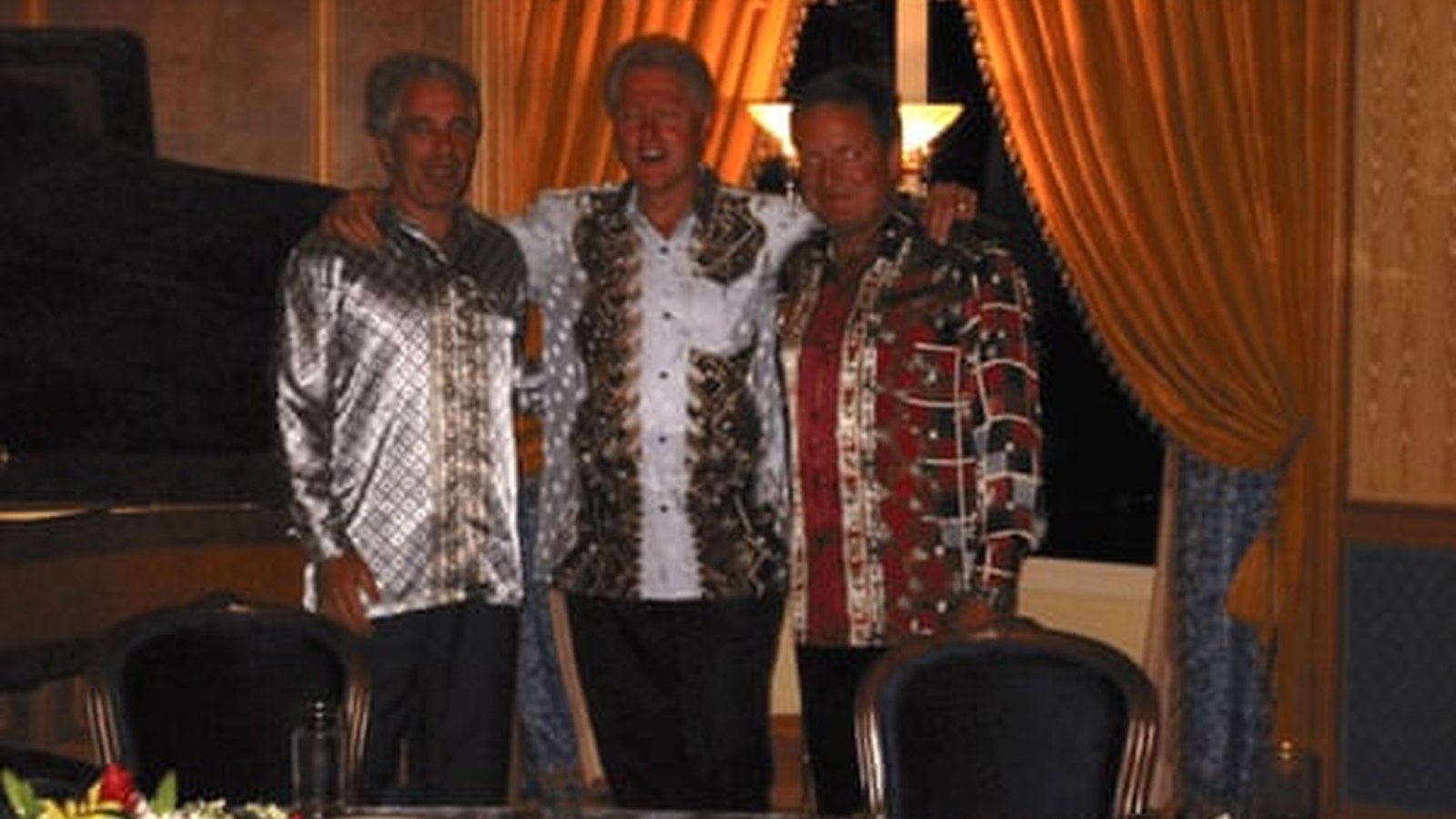
On December 19, 2025, the Justice Department’s release of previously unseen files related to Jeffrey Epstein sent shockwaves through Washington and beyond. Among the trove were undated photographs showing $1 Bill Clinton in a swimming pool with Ghislaine Maxwell—Epstein’s convicted co-conspirator—and an unidentified woman whose face was redacted. Other images captured Clinton at dinners and events, sitting alongside public figures such as Mick Jagger and the late Michael Jackson.
While the files were part of a long-anticipated disclosure, their timing and content immediately became the focus of political debate. The White House, led by Trump administration veterans and communications officials, wasted no time in amplifying the narrative. “I wonder why the Biden DOJ refused to release the files…,” mused DOJ spokesperson Chad Gilmartin on X, posting a partially redacted photo of Clinton in the pool. White House press secretary Karoline Leavitt followed suit, sharing the same photo with a pointed “Oh my!” and a red-faced emoji.
Clinton’s Relationship with Epstein: Timeline and Denials
Bill Clinton’s connection to Epstein has long been a subject of speculation. According to statements from Clinton’s spokesperson, Angel Ureña, the $1 cut ties with Epstein around 2005, well before the financier’s criminal activities became public. Ureña distinguished between those who severed relationships early and those who maintained connections after Epstein’s crimes were known, placing Clinton firmly in the former category. “There are two types of people here. The first group knew nothing and cut Epstein off before his crimes came to light. The second group continued relationships with him after. We’re in the first,” Ureña stated on X.
Clinton’s trips on Epstein’s private jet, including visits to Asia and Africa, were reportedly related to work for the Clinton Foundation and the Clinton Global Initiative. Despite persistent insinuations from Trump and his supporters, Clinton has never been formally accused of wrongdoing in connection with Epstein, and continues to deny any knowledge of his illicit activities.
Media, Congress, and the Partisan Divide
The release of the Epstein files has stoked partisan tensions on Capitol Hill. Democrats on the House Oversight Committee recently published additional photos from Epstein’s estate featuring Clinton, while Republicans have used the occasion to press for further investigation. Both Bill and Hillary Clinton are scheduled to give depositions to the committee in mid-January 2025, after initial dates were postponed. Committee chair James Comer has threatened contempt proceedings if the Clintons do not comply.
Within the broader national conversation, the revelations have deepened existing fractures in the political landscape. Some see the focus on Clinton as an attempt to deflect attention from other aspects of the Epstein case, while others argue that transparency is essential—regardless of political fallout.
Redactions and Calls for Transparency
Despite the attention-grabbing headlines, many of the released documents remain heavily redacted. The Justice Department cited the need to protect the identities of victims, minors, and individuals linked to ongoing investigations. Yet this approach has drawn criticism from victims, advocates, and lawmakers who argue that the public deserves full disclosure. “Much of this does not answer questions,” observed Bartlett, a prominent victims’ advocate, as quoted by BBC. “It probably raises even more.”
Others warn that the political nature of the release threatens to overshadow the pursuit of justice for Epstein’s victims. “There are two tracks here—one is transparency and justice for the victims. The other unfortunately is a partisan lens, and it seems increasingly we are going much more to a partisan posture,” Bartlett added.
Scapegoating and the Struggle for Truth
In the aftermath of the file dump, Clinton’s team has accused the White House of using the $1 as a scapegoat. “Everyone, especially MAGA, expects answers, not scapegoats,” Ureña said. The debate over Clinton’s involvement has become emblematic of a wider struggle between demands for accountability and the reality of entrenched political divisions.
As hundreds of thousands of additional documents are slated for release in the coming weeks, the story is far from over. The upcoming congressional depositions could provide new insights—or further fuel partisan fire. For now, the public is left to sift through grainy photographs, conflicting statements, and a cloud of unanswered questions.
Bill Clinton’s public image is once again caught in the crossfire of political rivalry and the quest for transparency. While no evidence has implicated him in Epstein’s crimes, the release of these files underscores how unresolved questions and selective disclosures can shape narratives—and leave the public searching for clarity in a fog of suspicion and politics.
Sources: Politico, The Guardian, BBC.