
Quick Read
- Bill Gates compared the current AI investment boom to the dot-com bubble of the late 1990s, not the 17th-century tulip mania.
- Gates views AI as “the biggest technical thing ever in my lifetime” but warns many investments will be “dead ends.”
- He organized a private summit in Madrid with Spanish and Portuguese utility executives to support a major data center buildout.
- Microsoft plans approximately €20 billion in data center investments in the Iberian Peninsula.
- Industry experts like Bridgewater CIOs and venture capitalist Bill Gurley also voice concerns about AI market overvaluation and high “burn rates” among startups.
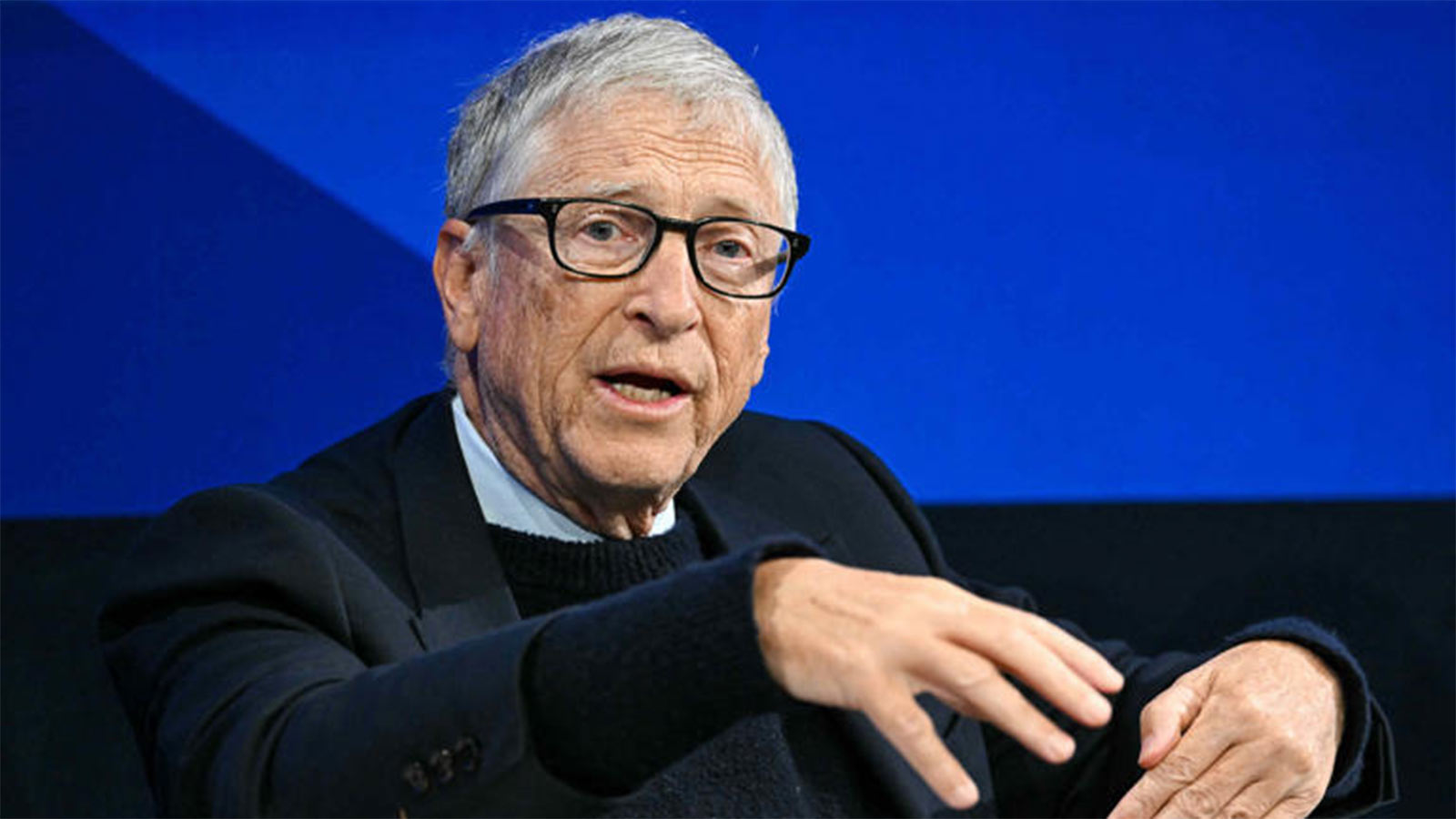
MADRID (Azat TV) – Microsoft co-founder Bill Gates recently convened a private summit in Madrid with top Spanish and Portuguese utility executives to galvanize support for a massive data center buildout across the Iberian Peninsula, a critical move amid Microsoft’s estimated €20 billion investment plans in the region. This strategic push for infrastructure coincides with Gates’s public statements warning that the burgeoning artificial intelligence sector is experiencing an investment frenzy akin to the late 1990s dot-com bubble, signaling both profound technological transformation and potential overvaluation in the market.
Gates on the AI Investment Frenzy
Speaking on CNBC’s “Squawk Box” on Tuesday, Bill Gates clarified that while the current AI boom shares characteristics with the dot-com era, it is distinct from speculative manias like the 17th-century Dutch “tulip mania.” He noted that the dot-com bubble, despite its eventual crash, fundamentally reshaped the world. “In the end, something very profound happened. The world was very different,” Gates stated. He drew parallels, asserting that “absolutely, there are a ton of these investments that will be dead ends.” Gates also described AI as “the biggest technical thing ever in my lifetime,” acknowledging its immense inherent value, comparable to the creation of the internet, but cautioned against the accompanying “frenzy” where some companies might regret significant capital outlays on data centers with unsustainable electricity costs.
Data Center Demands and European Infrastructure
The Madrid summit, organized by Gates, brought together key figures including Hugh Elliot, executive chairman of Iberdrola Energía Internacional, Beatriz Corredor, president of Redeia, and Miguel Stilwell, CEO of EDP, alongside Portuguese Energy Minister Maria da Graça Carvalho. The Spanish Minister for Ecological Transition, Sara Aagesen, canceled her attendance due to a train accident, which also led to the suspension of a planned meeting between Gates and President Pedro Sánchez. The meeting’s primary objective was to prepare Spanish and Portuguese utilities for the significant increase in demand for network capacity and electricity that Microsoft’s expansion will entail. Microsoft has formally communicated its concerns to the European Union regarding potential bureaucratic hurdles and insufficient network capacity, warning that such issues could compel the company to reallocate some of its more than 200 planned data centers to regions with more agile regulatory processes. This summit occurs amid increasing regulatory scrutiny across Europe regarding the energy footprint of large data centers.
Industry Voices on the AI Market
Concerns about an AI bubble have been growing, with figures like OpenAI CEO Sam Altman previously warning of investor overexcitement. Conversely, some argue that current investor enthusiasm accurately reflects the technology’s transformative potential. However, leading investment firms and venture capitalists echo Gates’s caution. Bridgewater Associates’ co-chief investment officers, Bob Prince, Greg Jensen, and Karen Karniol-Tambour, stated in a client note that while corporate AI spending will grow exponentially and reshape the economy, it also risks increasing inflation due to higher demand for components like chips and electricity. They noted that “straightforward game-theoretic calculations make it unacceptable for these companies to accept falling behind rivals,” compelling aggressive spending. Veteran venture capitalist Bill Gurley of Benchmark also predicted an “inevitable correction” for AI valuations, pointing to unprecedented “burn rates” among many AI startups, which are losing massive amounts of money. Gurley, known for early investments in companies like Uber and Twitter, emphasized that these companies will eventually need to transition from capital-intensive growth to cash-flow positive operations, a shift he believes will trigger a market adjustment. Despite these warnings, corporate earnings from major AI players like Nvidia and Taiwan Semiconductor Manufacturing have so far shown strong revenue growth and demand, providing some counterpoint to immediate bubble fears, though overall valuations remain high.
Bill Gates’s dual engagement—publicly cautioning against speculative AI investments while privately orchestrating the physical infrastructure necessary for AI’s expansion—underscores the complex tension between the technology’s long-term, transformative potential and the short-term market dynamics. His actions reflect a strategic effort to ensure the foundational elements are in place for AI’s sustained growth, even as he acknowledges the inevitable correction for companies that fail to convert investment into sustainable profitability.