
Quick Read
- Bonnie Crombie received 57% support in a leadership review, falling short of expectations.
- She announced her intention to resign once a new leader is chosen.
- The Ontario Liberal Party faces internal divisions and questions about its future direction.
- Crombie’s resignation aligns with Canadian political precedent for leaders with slim support.
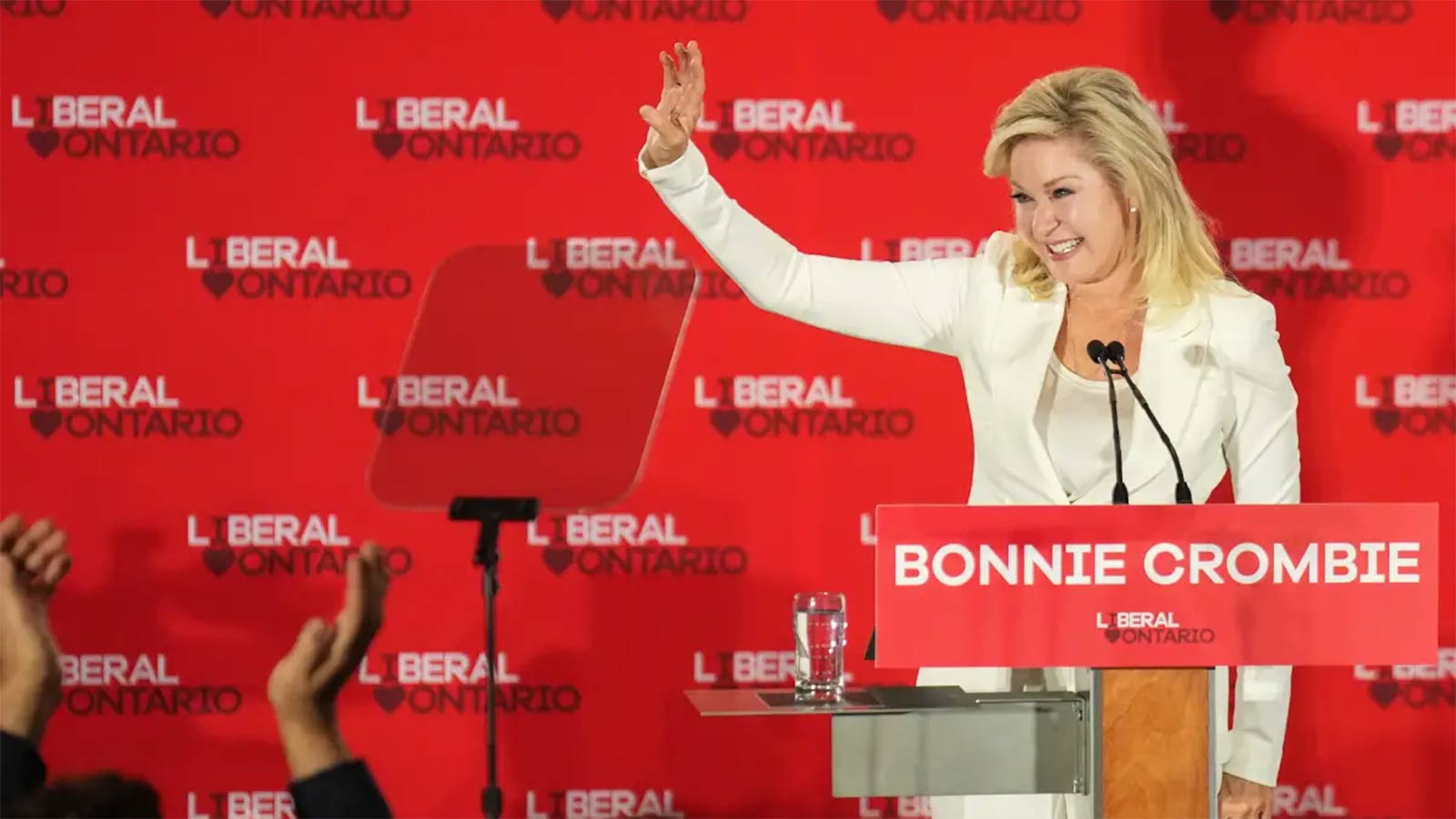
In a weekend filled with tension and reflection, Bonnie Crombie, leader of the Ontario Liberal Party, announced her intention to step down after receiving only 57% support in a leadership review vote. While technically a majority, the result fell far short of the two-thirds threshold her critics had set as the measure of her continued leadership.
A Divided Party Faces Critical Decisions
The leadership review, held at a party convention in Toronto, highlighted deep divisions within the Ontario Liberal Party. Crombie’s 57% support, while enough to technically retain her position, raised questions about her ability to unite the party moving forward. Critics, such as the organized group calling themselves the “New Leaf Liberals,” had campaigned vigorously for a leadership race, arguing that anything less than a two-thirds majority would indicate a lack of confidence in Crombie’s leadership.
Speaking to delegates, Crombie initially expressed her intention to stay on, saying, “Let’s be clear, it’s not the number I wanted, but it is not the finish line for me.” She underscored her belief that a leadership race at this juncture would do more harm than good to the party’s rebuilding efforts. However, the backlash from within the party and the lukewarm support from key caucus members quickly shifted the narrative.
In a later statement, Crombie announced her decision to resign once a new leader is selected. “Even though I received a majority of support from the delegates, I believe it is the best decision for the Ontario Liberal Party to facilitate an orderly transition towards a leadership vote,” she stated.
The Fallout: Reactions from Within
Reactions to Crombie’s announcement were mixed, reflecting the fractured state of the Ontario Liberal Party. MPP Tyler Watt described the 57% result as “a tough number,” acknowledging that the party had hoped for stronger support. Others, like MPP Ted Hsu, emphasized the importance of unity, stating, “We’re a good team… we really gelled in the spring session.” Yet, even Hsu admitted that questions about Crombie’s leadership were inevitable.
Former interim leader John Fraser offered a pragmatic view, noting that successful leaders often need time to grow into their roles. “What it really says is she’s got work to do,” he commented, highlighting that Crombie has only been at the helm for two years. However, for many younger Liberals, the result signaled a need for immediate change. Some expressed frustration that Crombie had initially decided to stay on, arguing that the party’s resources could be better spent mobilizing volunteers and preparing for the next election rather than navigating internal disputes.
The Role of Precedent in Canadian Politics
Crombie’s decision to resign aligns with a broader precedent in Canadian politics, where leaders often step down after failing to secure overwhelming support in leadership reviews. Historical examples abound: former federal Progressive Conservative leader Joe Clark resigned after receiving 66.9% support in 1983, and Alberta premiers Ralph Klein and Jason Kenney both stepped down after garnering 55.4% and 51.4% support, respectively. These cases underscore the unofficial but widely understood expectation that leaders require more than a slim majority to maintain credibility and authority.
For Crombie, the 57% vote serves as a reminder of these political norms. While the Ontario Liberal Party’s constitution allows a leader to stay on with just over 50% support, the unwritten rules of Canadian politics suggest otherwise. Kim Wright, an NDP strategist, pointedly remarked, “Bonnie got 57% of the vote here, and that’s not a good place to build from for her.”
What’s Next for the Ontario Liberals?
As the Ontario Liberal Party prepares for a leadership race, questions loom about its ability to regroup and challenge Doug Ford’s Progressive Conservatives in the next provincial election. The “New Leaf Liberals,” who played a significant role in the leadership review, have signaled their intention to remain active in shaping the party’s future. Co-founder Nathaniel Arfin noted, “Bonnie Crombie is going to need to take the time with the executive, with her leadership team, and with the rest of caucus to make the best decision in the best interest of the Ontario Liberal Party and the rest of Ontario.”
Meanwhile, party insiders have emphasized the importance of unity. Regional vice-president Noah Parker expressed optimism about bringing dissenters back into the fold, stating, “There is a clear amount of dissent in our party, but the million-dollar question is, will those dissenters be welcomed back in? I’m optimistic they will.”
For now, the focus shifts to the selection of a new leader and the broader effort to rebuild the party’s image and infrastructure. The stakes are high; another leadership race will require significant resources and could further delay efforts to position the Ontario Liberals as a viable alternative to the current government.
Bonnie Crombie’s decision to resign marks a pivotal moment for the Ontario Liberal Party. While her leadership faced significant challenges, her departure opens the door for renewal and reinvention. Whether the party can seize this opportunity remains to be seen.