
Quick Read
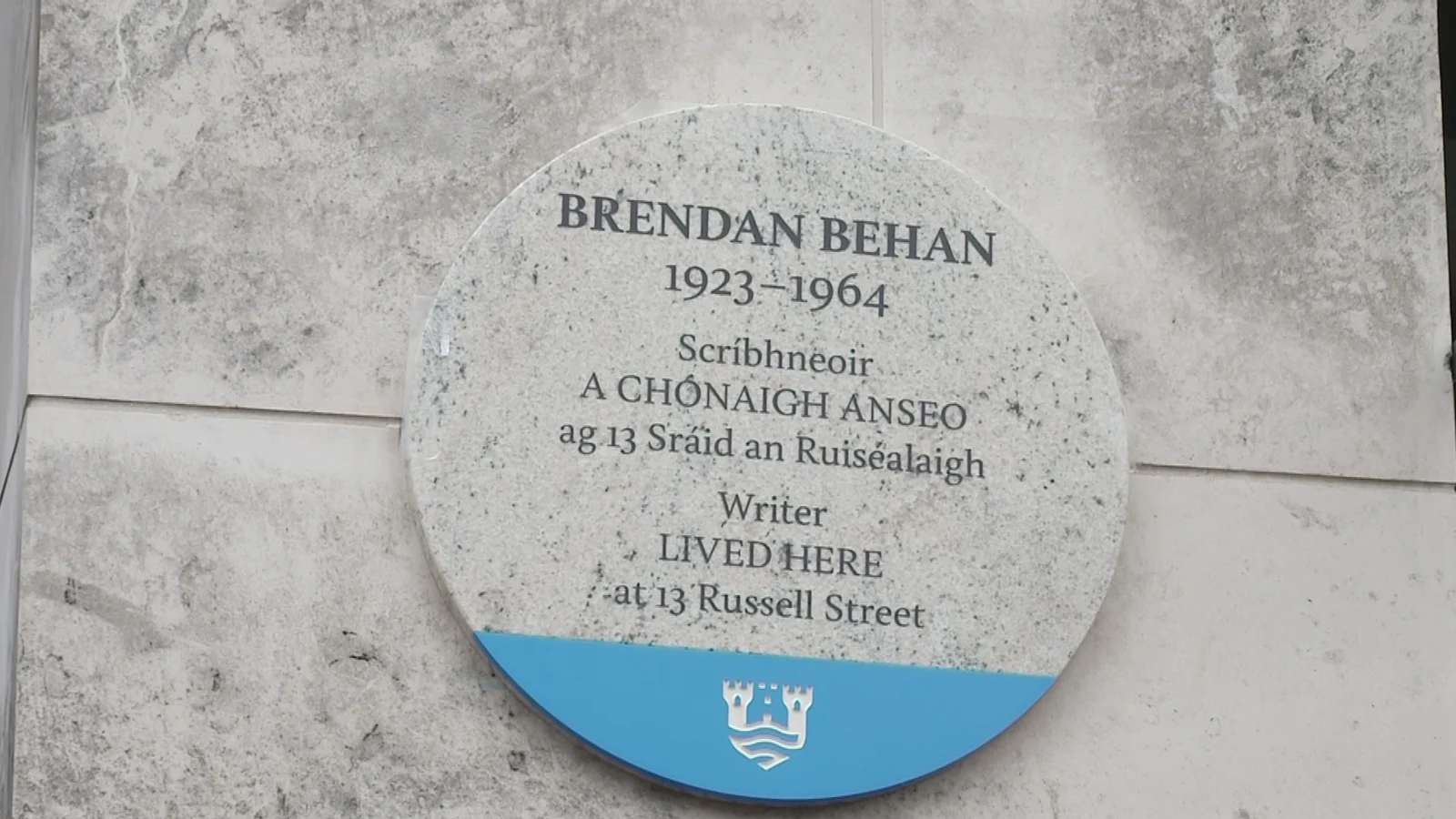
- A commemorative plaque for Brendan Behan was unveiled on Saturday, February 7, 2026, at his birthplace on Russell Street, Dublin.
- Behan’s grandsons, Guy and Rupert Walker, attended the ceremony, expressing pride for their grandfather’s public recognition.
- Musician Glen Hansard performed Behan’s famous song, “The Auld Triangle,” during the event.
- The plaque is the 73rd commemorative marker erected by the Dublin City Council Commemorations and Naming Committee.
- Speakers highlighted Behan’s role in giving voice to working-class Dublin and preserving the city’s literary heritage.
DUBLIN (Azat TV) – A commemorative plaque honoring acclaimed Irish writer and playwright Brendan Behan was unveiled on Saturday at his birthplace on Russell Street in north inner-city Dublin, marking a significant act of public recognition for his enduring legacy. The ceremony brought together family members, prominent cultural figures, and local dignitaries to celebrate a voice that profoundly shaped Irish literature.
The plaque now stands at the site of No. 13 Russell Street, where Behan was born, a location described by attendees as fitting for a writer who drew heavily from the lived experiences and language of working-class Dublin. The event featured a lively rendition of Behan’s famous song, “The Auld Triangle,” performed by musician Glen Hansard, with the author’s grandsons, Guy and Rupert Walker, joining in.
Dublin’s Enduring Tribute to Brendan Behan
The decision to erect the plaque was made by the Dublin City Council Commemorations and Naming Committee, making Behan’s the 73rd such commemorative marker across the city. This initiative underscores Dublin’s commitment to honoring its literary giants and preserving its rich cultural narrative, especially as a UNESCO City of Literature.
Speaking at the event, a Fine Gael councillor highlighted Behan’s unique contribution: “His work gave voice to lived experience and working-class Dublin, with all its wit, tenderness and hard truth.” The councillor added, “Dublin has always been a city that lives by its stories. They are carried in our streets and in our conversations … that is why our designation as a Unesco City of Literature feels less like a title and more like recognition of who we already are.” This sentiment reinforces the idea that Behan’s work is not merely historical but remains deeply embedded in the city’s identity.
Family and Cultural Figures Celebrate Behan’s Impact
Brendan Behan’s grandsons, Guy and Rupert Walker, were central figures at the ceremony. Guy Walker expressed immense pride, stating that the family was “extremely proud to have our grandfather honoured in this way.” He shared a personal connection to his grandfather’s work, having never met him before Behan’s death in 1964 at the age of 41. Walker noted it had been a “privilege to get to know him through his writings, his plays, his songs, and his poetry.”
Walker, who spent years living in East Wall not far from Russell Street, recounted hearing stories from those who knew Behan. He emphasized the importance of such reminders for future generations: “Every year, those people get fewer, and many of the stories get forgotten. So the more reminders there are of this city’s great artists, the better for all future generations, so they can remember those who have made Dublin so unique.”
The event also drew other notable personalities from Ireland’s cultural scene, including poet Theo Dorgan, screenwriter Peter Sheridan, and film-maker Alan Gilsenan, all of whom spoke about Behan’s lasting influence. Glen Hansard’s performance of “The Auld Triangle” resonated deeply, a song written by Dick Shannon but popularized by Behan when he included it in his 1954 play The Quare Fellow.
Brendan Behan’s Enduring Literary Voice
Behan’s literary contributions span plays, novels, and poetry, often characterized by his sharp wit, social commentary, and authentic portrayal of Irish life. Guy Walker cited some of his favorites, including Borstal Boy, Behan’s autobiographical novel detailing his incarceration in England at 16, and his short story The Confirmation Suit. Walker affirmed that even Behan’s “jokey remarks, his comments, his books are still very relevant for people.”
The unveiling serves as a powerful testament to Behan’s ability to take “the language of the streets and proved it belonged on the page,” as The Irish Times noted. His ability to capture the essence of working-class Dublin, with its humor and harsh realities, ensured his place as a pivotal figure in 20th-century Irish literature.
The public recognition of Brendan Behan at his birthplace underscores the ongoing societal value placed on literary figures who articulate a nation’s identity and struggles, ensuring that their contributions continue to resonate across generations.