

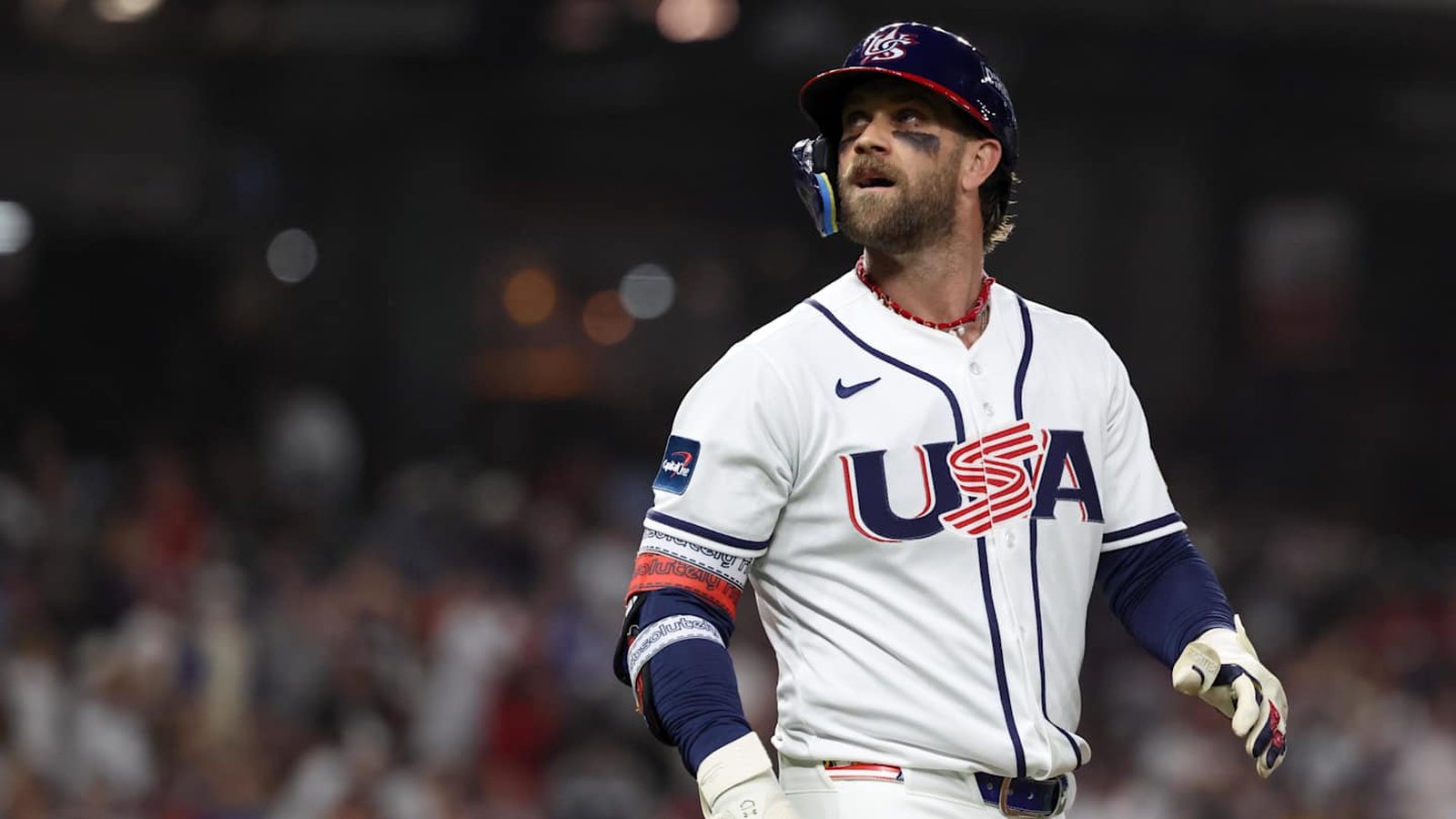
Quick Read
- Bryce Harper is actively advocating for baseball’s inclusion in the 2028 Los Angeles Olympics.
- Team USA is rotating its roster for the WBC, with Paul Goldschmidt starting at first base against Italy.
- Harper views the Olympics as the necessary next step to grow baseball’s global audience beyond the current WBC success.
HOUSTON (Azat TV) – Philadelphia Phillies superstar Bryce Harper has spent the current World Baseball Classic not only competing on the diamond but also aggressively advocating for the future of the sport. While his participation in Team USA’s roster has generated significant excitement, his recent remarks regarding the 2028 Los Angeles Olympic Games have sparked a debate about the trajectory of professional baseball on the global stage.
Expanding Baseball’s Global Reach
Harper, a long-time proponent of growing the game, has made it clear that he views the World Baseball Classic as a vital component of baseball’s international expansion. However, he maintains that the Olympics represent the ultimate platform for the sport. During recent media availability, Harper emphasized that his desire to see baseball in the 2028 Olympics is rooted in a career-long ambition to elevate the game’s visibility.
“I’ve been fighting for LA ’28 for a long time,” Harper stated. “The WBC’s been great, but it’s not the Olympics, right? Everybody knows that when the Olympics are on, everybody’s watching.” While some observers interpreted these comments as a critique of the WBC, associates of the star slugger maintain that his intent is to emphasize the unique, gold-standard status of the Olympic Games as the next logical step for MLB’s global branding.
Strategic Roster Management at WBC
The discourse surrounding Harper’s commentary coincides with tactical shifts within Team USA’s lineup. As the team prepares for a critical matchup against Italy, team management has opted to rotate personnel, with Paul Goldschmidt taking over at first base. This decision, while standard in high-stakes tournament play, highlights the deep talent pool available to the U.S. squad.
Despite sitting out the upcoming game, Harper’s influence on the team remains substantial. His presence in the lineup alongside power hitters like Aaron Judge has been a focal point for fans and analysts alike. The rotation strategy underscores the competitive nature of the 2026 tournament, where depth is as critical as individual star power.
The Future of Olympic Baseball
Harper’s push for Olympic inclusion aligns with a broader industry push to capitalize on the momentum generated by international tournaments. Supporters argue that participation from the world’s brightest stars in an Olympic setting would mirror the success seen in other sports, potentially drawing record-breaking viewership numbers. By positioning himself as a vocal advocate, Harper is leveraging his personal brand to push league officials and international bodies toward a more unified global strategy.
The ongoing dialogue around Harper’s Olympic advocacy suggests a shift in how modern MLB stars perceive their roles; they are no longer just competitors within the league, but active stakeholders in the expansion and marketing of baseball as an essential global institution.