


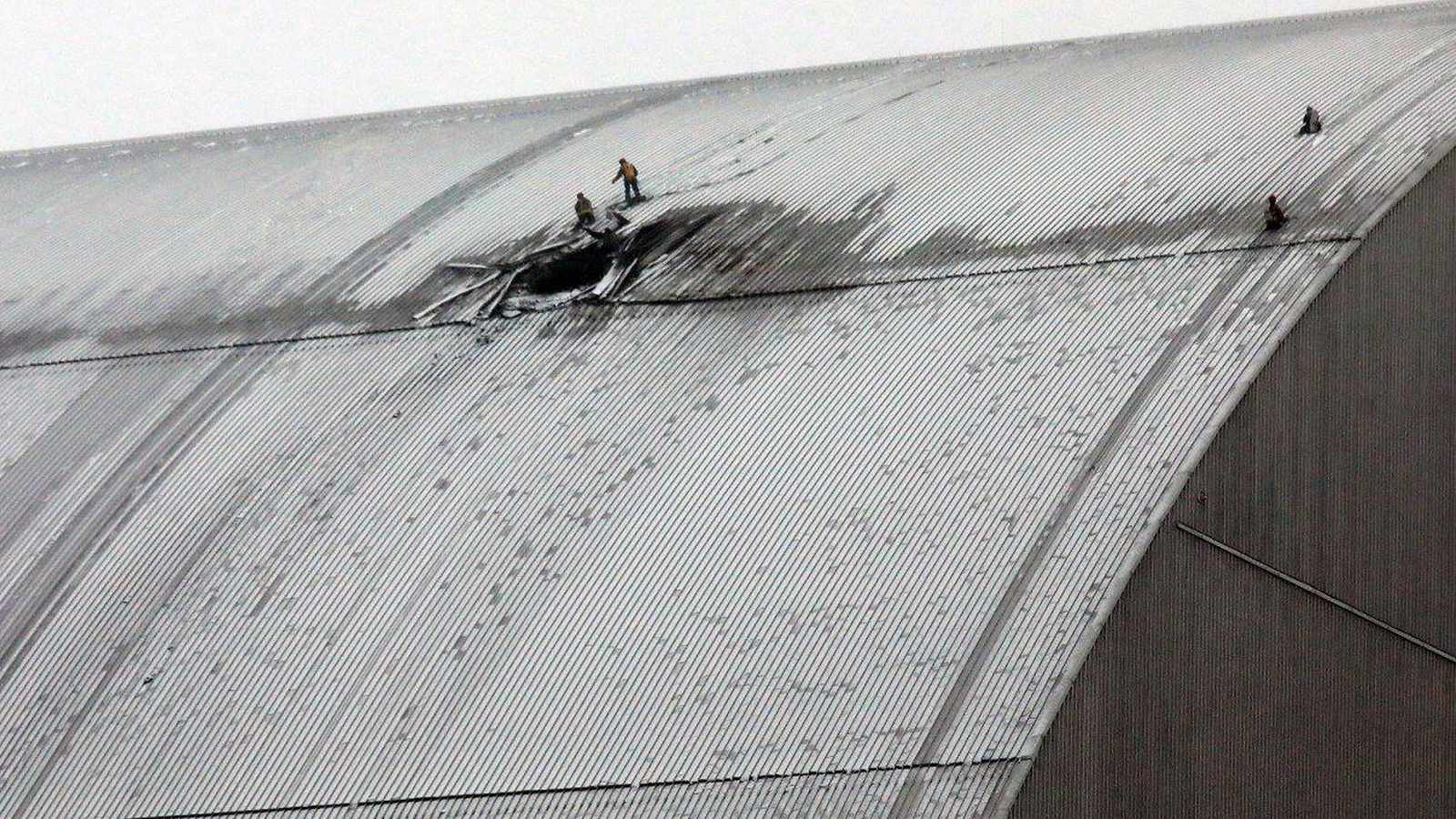
KYIV (Azat TV) – The structural integrity of the containment building over Reactor 4 at the Chernobyl Nuclear Power Plant is facing renewed scrutiny, with environmental group Greenpeace warning of a potential collapse that could release dangerous radioactive material. The concerns stem from damage sustained during a Russian drone strike in February 2025 and subsequent delays in essential repairs, just weeks before the 40th anniversary of the original 1986 disaster.
Damage to New Safe Confinement
A Russian drone struck the outer shell of the New Safe Confinement (NSC) structure in February 2025, an incident that has since been confirmed by the International Atomic Energy Agency (IAEA) to have degraded the steel structure. While the IAEA initially reported no radiation leaks, its Director General Rafael Grossi later confirmed that the protective shield had lost its primary safety functions, including its confinement capability. Although some repairs have been undertaken, comprehensive restoration remains critical, according to Grossi, to prevent further degradation.
Expert Warnings and Financial Estimates
Shaun Burnie, a senior nuclear specialist for Greenpeace Ukraine, expressed grave concern, stating that the internal radiation shelter contains approximately four tonnes of highly radioactive dust and fuel pellets. He warned that because the NSC cannot currently be repaired to its designed operational status, there is a possibility of radioactive releases. “That would be catastrophic,” Burnie told AFP, emphasizing that radioactive particles “do not recognise borders.” French Foreign Minister Jean-Noël Barrot estimated in March that the dome requires nearly €500 million in repairs. Ukrainian officials cited by UNIAN suggest that restoring the structure could cost up to €500 million, with repair timelines potentially extending to 2030.
Hindered Repairs and Ongoing Risks
Greenpeace highlighted that further works to the site have been impeded by Russia’s ongoing attacks, complicating the deconstruction of unstable elements within the original sarcophagus, which is crucial to prevent an uncontrolled collapse. The power plant’s director, Sergiy Tarakanov, has also cautioned that a direct rocket impact near the facility could risk structural collapse. The damage to the NSC marks the first known instance of direct damage to the structure since its installation in 2016, adding to broader concerns over nuclear safety risks during the ongoing conflict. While Burnie assessed that widespread contamination over long distances remains unlikely, the potential for localized releases due to structural failure presents a persistent threat.
The current situation at Chernobyl underscores the persistent, multifaceted risks associated with aging nuclear infrastructure in conflict zones. The combination of direct military damage, the complexities of maintaining critical safety structures under duress, and the significant financial and logistical hurdles to repair highlights the urgent need for sustained international cooperation and de-escalation to ensure nuclear safety and prevent transboundary environmental hazards.