
Quick Read
- Snowboarding star Chloe Kim responded to President Donald Trump’s criticism of Olympian Hunter Hess.
- Trump called Hess a ‘real loser’ after Hess expressed ‘mixed emotions’ about representing the US.
- Kim emphasized the need for ‘love and compassion’ and stated the incident ‘hits pretty close to home’.
- Teammates Maddie Mastro and Bea Kim echoed support, highlighting national pride amidst division.
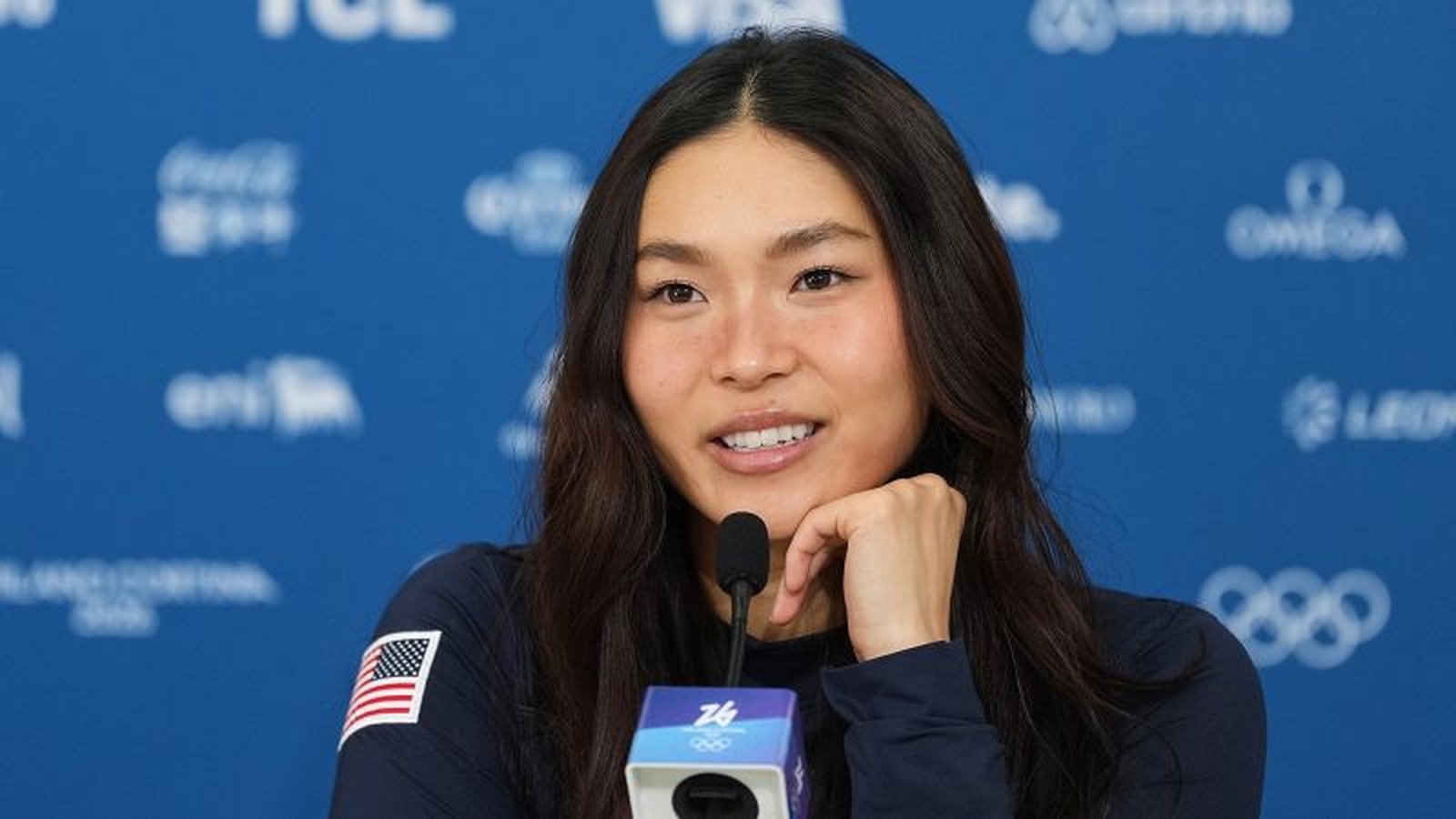
LIVIGNO (Azat TV) – US snowboarding icon Chloe Kim publicly challenged President Donald Trump’s recent remarks calling fellow Olympian Hunter Hess a “real loser” during the 2026 Winter Olympics. Kim, speaking from Livigno, Italy, on Monday, February 9, 2026, emphasized the need for “love and compassion” while affirming her pride in representing the United States, a statement that underscores growing tensions between political rhetoric and athlete expression at the global event.
The controversy erupted after freeski Olympian Hunter Hess, during a Friday news conference, shared that representing the United States in the current domestic and international climate brought up “mixed emotions.” Hess, whose Olympic debut in the men’s freeski halfpipe is scheduled for February 19, did not state he would not represent the country, but his nuanced comments quickly drew a sharp rebuke from President Trump.
Olympian Hunter Hess’s ‘Mixed Emotions’ Spark Controversy
Hunter Hess’s initial comments, made just days before his first Olympic appearance, highlighted a sentiment of internal conflict. Asked about the significance of representing the US, Hess candidly acknowledged the complex feelings. This statement, while not a rejection of his national team, was swiftly interpreted by some as a lack of patriotism, leading to President Trump’s strong condemnation. Trump took to social media, calling Hess a “real loser” and adding, “Very hard to root for someone like this. MAKE AMERICA GREAT AGAIN!”
The President’s remarks immediately put a spotlight on the delicate balance between athletes’ personal views and their public roles as national representatives. It also reignited debates about the extent to which athletes should be expected to compartmentalize their political or social opinions while competing on an international stage.
Chloe Kim Advocates for ‘Love and Compassion’
In response to the escalating rhetoric, Chloe Kim, a prominent and highly decorated athlete, offered a measured yet firm rebuttal. “I’m really proud to represent the United States,” Kim stated, reiterating her commitment to Team USA. However, she quickly pivoted to address the President’s comments directly, asserting that “we need to lead with love and compassion.”
Kim further elaborated on the broader purpose of sports, emphasizing its unifying power. “The whole point of sport is to bring people together,” she explained, highlighting the competitive spirit and the capacity to push human limits as a “common language.” She added a personal note, saying that Trump’s criticism of Hess “hits pretty close to home,” suggesting a shared understanding of the pressures and scrutiny faced by Olympians.
Teammates Echo Support Amidst Division
Kim’s sentiments were echoed by other US Olympians, signaling a broader feeling of solidarity among athletes. Maddie Mastro, a 25-year-old snowboarder from California, voiced similar concerns. “I’m proud to represent Team USA and my country,” Mastro said, aligning with Kim’s national pride. She then added, “I’m also saddened about what’s happening at home. I think there are a lot of different opinions in the U.S. now. Obviously, we’re very divided.” Another athlete, Bea Kim, also expressed pride in representing the United States, underscoring the collective desire to transcend domestic divisions through sport.
The collective responses from these athletes underscore a nuanced stance: a deep pride in representing their nation, coupled with a desire for open dialogue and empathy, even when facing political criticism. This incident highlights the ongoing challenge for athletes navigating their roles as both competitors and public figures in an increasingly polarized global environment.
This public exchange during the 2026 Winter Olympics highlights the enduring tension between an athlete’s right to individual expression and the often-unspoken expectation of unwavering national unity, particularly when political figures weigh in with strong opinions.