
Quick Read
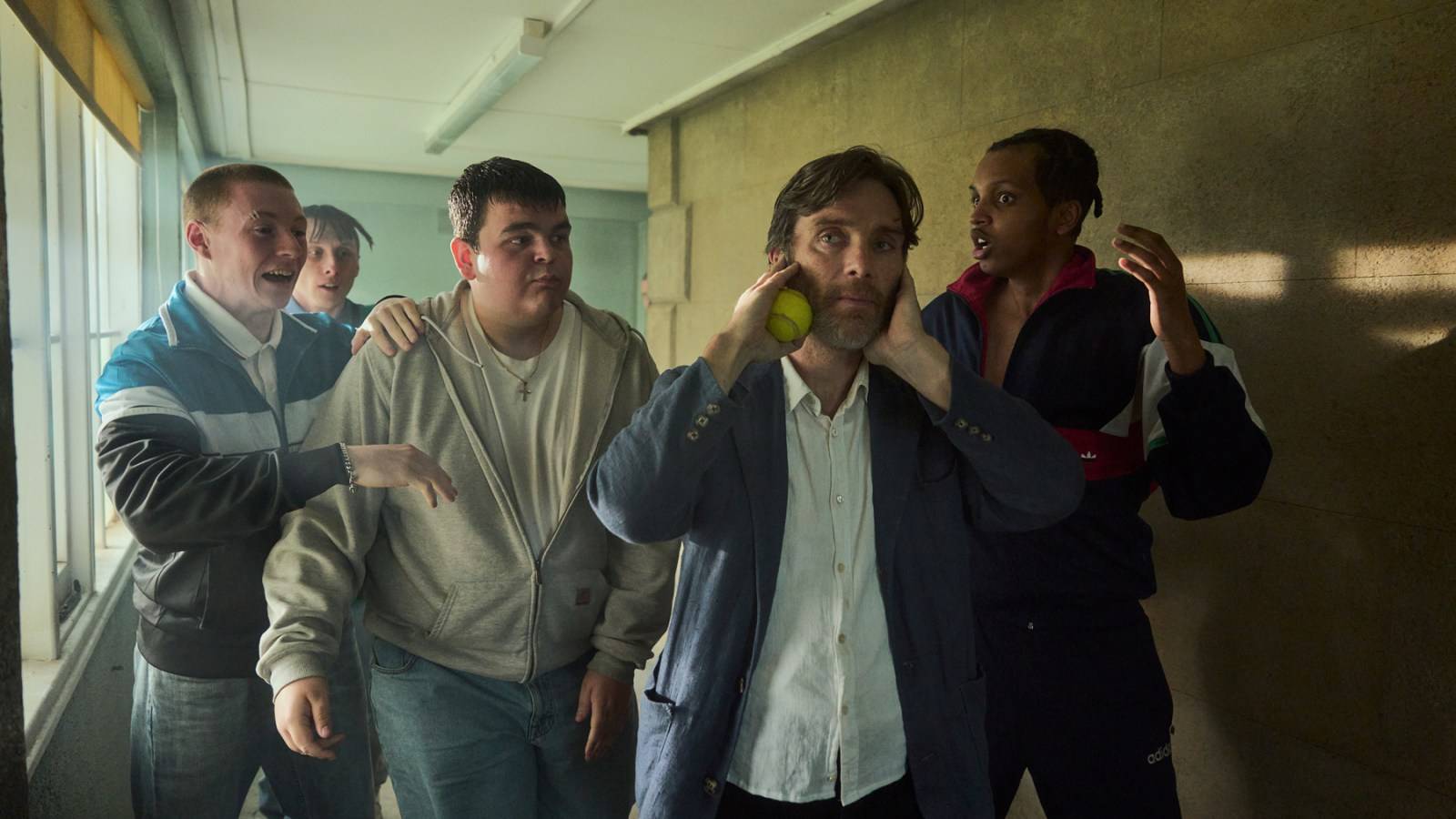
- Steve stars Cillian Murphy as a school administrator in a struggling 1990s British youth center.
- The film blends social critique, satire, and personal breakdown, with Murphy’s character at its core.
- Supporting performances by Tracey Ullman and Emily Watson add depth, but Murphy’s portrayal stands out.
- Satirical and trauma-driven plot elements compete, sometimes weakening the overall narrative.
- Steve is now streaming on Netflix.
Inside the Chaos: Steve’s Setting and Social Commentary
Netflix’s latest British drama, Steve, plunges viewers into the tumult of Stanton Wood, a youth facility on the edge of collapse in the mid-1990s. From the opening, the film sets its stage with a news crew poking through the cracks of the institution, searching for a headline in the lives of at-risk teens. The reporter’s probing—asking whether the center is a ‘dumping ground for society’s waste product, a radical progressive educational intervention, or maybe… all of the above’—immediately frames Stanton Wood as a battleground for public perception and policy. It’s an overture that’s less subtle than satirical, yet it places the audience squarely in the crosshairs of Britain’s social issues of the era.
The facility, barely clinging to its funding, is a hive of troubled energy. Parliamentary officials and media types parade through, their presence more disruptive than enlightening. Director Tim Mielants attempts to balance social critique with personal stories, using the mockumentary format to highlight the tension between public scrutiny and private struggle. These attempts are sometimes heavy-handed, but they lay the groundwork for the film’s deeper exploration of human vulnerability.
Young Rebels: The Teens Behind the Turmoil
At the heart of Stanton Wood are its residents—a group of young men battling inner demons and societal expectations. Among them, Jamie (Luke Ayres) and Tarone (Tut Nyuot) stand out for their volatility and defiance. Their stories offer glimpses into the real stakes of institutional life: accusations of violence, moments of raw anger, and the constant threat of being labeled and discarded. Yet, despite the ensemble cast, most of the boys remain symbolic more than fully fleshed out. They’re echoes of the ‘troubled youth’ archetype, brought to life with energy but sometimes lacking depth.
The exception is Shy (Jay Lycurgo), whose quiet intensity makes him the film’s emotional anchor. Drowning out chaos with drum and bass on his Walkman, Shy is a walking contradiction—reserved yet unpredictable, broken yet resilient. His silent battles with rage and isolation speak volumes about the unseen struggles that define life inside Stanton Wood. Lycurgo’s performance is understated but memorable, hinting at a history of violence and trauma that the film never fully unpacks, leaving viewers to piece together his pain from gestures and silences.
Murphy’s Steve: The Center of the Storm
If the students are the heart of the story, Cillian Murphy’s Steve is its pulse. Murphy inhabits the role of the school administrator with a rawness that is both magnetic and unsettling. Steve is no mere authority figure—he’s a man crumbling under the weight of responsibility and personal demons. In one moment, he’s the compassionate mentor, trying to break through hardened shells and offer hope. In the next, he’s spiraling—popping pills, sneaking sips of liquor, and chasing moments of oblivion between chaos and calm.
The film is at its strongest when Murphy is given space to breathe. His exchanges with Tracey Ullman’s supervisor and Emily Watson’s therapist are charged with tension and empathy, though they never quite reach the emotional heights of his previous collaboration in Small Things Like These. Still, Murphy’s ability to communicate volumes through silence—his haunted glances, his measured pauses—anchors the film’s emotional core. The viewer is invited not just to observe Steve, but to inhabit his anxiety, frustration, and desperate hope.
Satire, Trauma, and the Limits of Narrative
Yet, for all its compelling performances, Steve struggles with narrative excess. The film juggles satire, social critique, and personal trauma, sometimes to its own detriment. The satirical elements—politicians seeking photo ops, media caricatures—are painted with broad strokes, lacking the nuance that might make them truly biting. The trauma-drama backstory assigned to Steve feels tacked on, a narrative device that never quite meshes with the rest of the story. Instead of deepening our understanding, it risks distracting from the film’s genuine moments of connection.
The result is a movie that can feel cluttered, its best parts fighting for attention amid sound and fury. Some scenes—especially those that let Murphy’s performance speak for itself—shine with raw authenticity. Others, weighed down by forced exposition or heavy-handed symbolism, miss their mark. It’s a survival-of-the-fittest contest between storylines, with Murphy’s character study emerging as the clear winner.
A Showcase for Murphy, A Challenge for Viewers
Ultimately, Steve is a film that asks viewers to confront discomfort. It’s not easy watching a gifted actor unravel onscreen, especially when the narrative itself seems uncertain. But for those willing to sift through the noise, there are moments of genuine insight—a glimpse into the struggle of caring for society’s most vulnerable, the frustration of fighting systemic neglect, and the quiet dignity of those who refuse to give up.
As Rolling Stone notes, the film’s strengths lie in its character work, not its plotting. The supporting cast, including Ullman and Watson, elevate the drama, but it’s Murphy who commands attention. His portrayal of Steve is messy, flawed, and deeply human—a reminder that sometimes, the real story isn’t in the headlines or the policy debates, but in the silent battles we fight every day.
Assessment: Steve is a compelling showcase for Cillian Murphy’s talents, offering moments of piercing authenticity within a film that often struggles to find its footing. While its attempts at satire and social critique sometimes falter, Murphy’s performance and the film’s raw emotional honesty make it a worthwhile—if uneven—exploration of the cost of caring.