
Quick Read
- Stephen Colbert publicly rejected CBS’s statement regarding the pulled James Talarico interview on “The Late Show.”
- CBS had cited concerns over the FCC’s “equal time” rule for pulling the Texas Senate hopeful’s segment.
- Colbert called CBS’s statement “crap” on air and crumpled it into a dog poop bag.
- The Talarico interview was still streamed to a significant audience on YouTube despite not airing on TV.
- “The Late Show” is scheduled to end in May 2026, a decision CBS previously stated was financial.
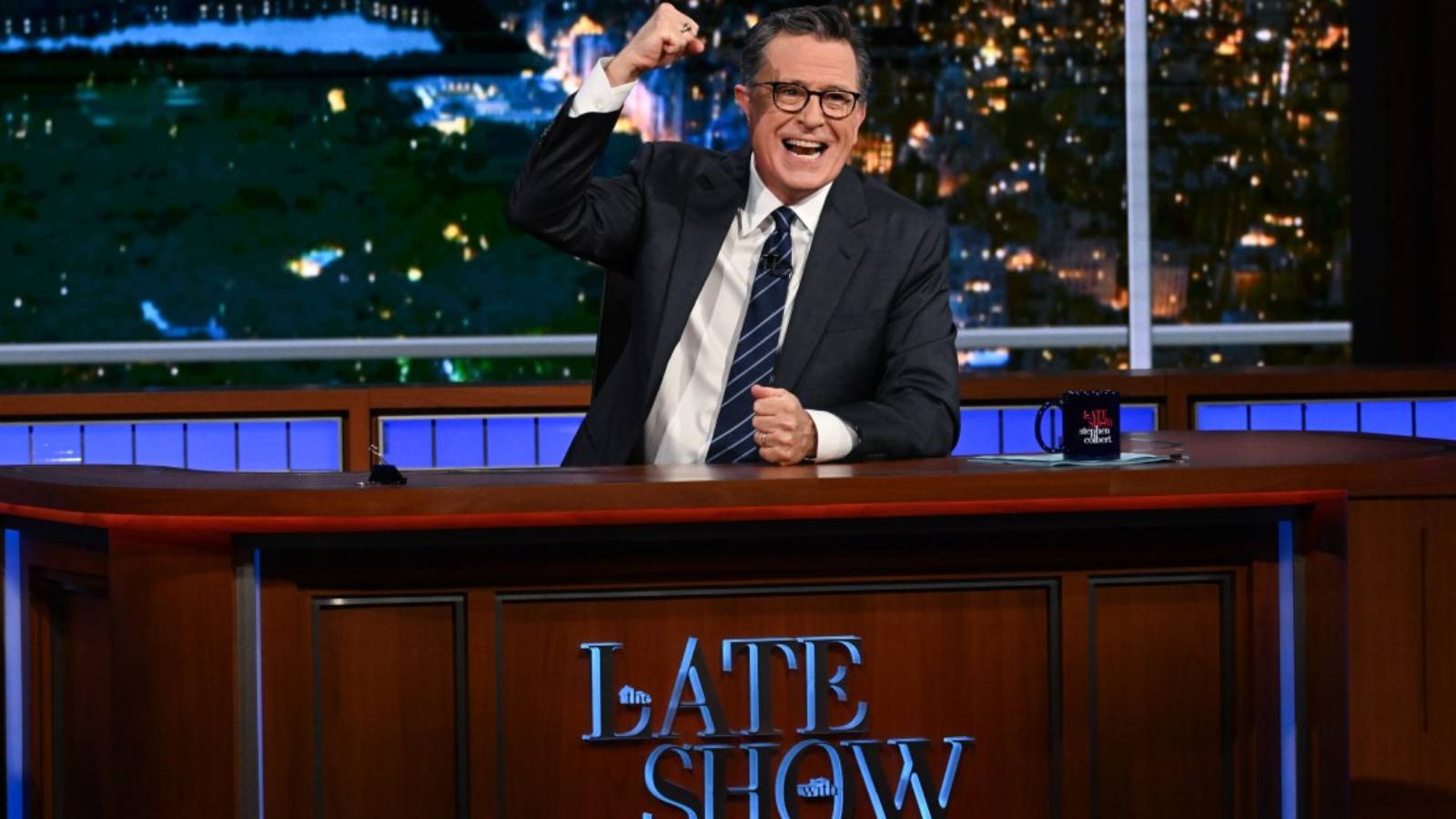
LOS ANGELES (Azat TV) – Stephen Colbert publicly slammed CBS’s explanation regarding its decision to pull a recent interview with Texas Senate hopeful James Talarico from “The Late Show,” escalating a dispute that highlights tensions between network oversight, host autonomy, and federal broadcasting regulations. Colbert’s on-air rebuttal, delivered Tuesday, directly contradicted CBS’s statement denying it “prohibited” the segment, framing the network’s position as an attempt to “cover butts” concerning the Federal Communications Commission’s (FCC) “equal time” rule.
The controversy began earlier this week when the interview with Talarico, a Democrat running for Senate in Texas, was yanked from broadcast. CBS cited concerns that airing the segment could trigger the FCC’s long-standing “equal time” rule, which mandates that if a broadcaster provides airtime to one legally qualified political candidate, it must offer comparable airtime to all opposing candidates. Colbert initially informed his audience that the network had barred him from airing the interview.
Colbert’s On-Air Rebuttal and CBS’s Stance
In response to Colbert’s initial comments, CBS issued a statement asserting, “THE LATE SHOW was not prohibited by CBS from broadcasting the interview with Rep. James Talarico.” The network clarified that it had provided Colbert with legal guidance regarding the potential activation of the FCC rule and offered options on how to proceed. However, Colbert dismissed this explanation on Tuesday’s show, holding up the CBS statement and quipping, “Now, this is a surprisingly small piece of paper considering how many butts it’s trying to cover.”
The late-night host directly challenged the network’s phrasing, stating he was “well aware that we can book other guests” and pointing to previous appearances by politicians like Jasmine Crockett on his show. To underscore his disdain for CBS’s explanation, Colbert crumpled the statement into a dog poop bag and tossed it away. Despite the public disagreement, Colbert emphasized that he does not want an “adversary relationship” with the network, which is part of Paramount.
The FCC’s “Equal Time” Rule and Political Appearances
The FCC’s “equal time” rule, formally known as Section 315 of the Communications Act, has been a contentious point for broadcasters and political campaigns for decades. While intended to ensure fairness in political discourse, critics argue it can stifle free speech by making it logistically and financially challenging for networks to feature political candidates without incurring obligations to their opponents. In Talarico’s case, although the interview was not broadcast on CBS, it was streamed online to a “considerable audience on YouTube,” circumventing traditional broadcast regulations.
This incident reignites a broader debate about the role of politicians on entertainment programs. Historically, politicians have frequently used late-night talk shows as a platform, from Ronald Reagan’s regular appearances to more recent examples like Jimmy Fallon tussling Donald Trump’s hair. These appearances often aim to humanize candidates and reach a wider, often less politically engaged, audience than traditional news segments. However, some commentators argue that such segments often devolve into political platitudes rather than genuine entertainment, suggesting that audiences prefer genuine comedy, especially amidst current national and global challenges, according to The Daily Beast.
The Future of “The Late Show” and Editorial Control
The public spat between Stephen Colbert and CBS occurs against the backdrop of the impending conclusion of “The Late Show with Stephen Colbert.” Last year, CBS announced that the show would end in May 2026, citing a “purely financial decision.” This timeline adds a layer of complexity to the current dispute, potentially influencing the dynamics of editorial control and host autonomy as the show approaches its final year on air. The incident also highlights the evolving landscape of media, where network broadcast decisions can be bypassed by online platforms, allowing content to reach audiences despite traditional regulatory hurdles.
The public clash between a prominent host and his network over regulatory compliance, particularly as the show nears its end, underscores the inherent tension between commercial broadcasting’s legal obligations and its creative talent’s desire for editorial freedom.