
Quick Read
- Pope Leo XIV rejected President Trump’s invitation to join his ‘Board of Peace’ on Tuesday.
- The Vatican cited concerns that the UN should primarily manage global crises, not a new body.
- The ‘Board of Peace’ was formed to oversee Gaza reconstruction and address global disputes, chaired by Trump.
- The board faces criticism for its controversial members (Putin, Netanyahu) and lack of Palestinian representation.
- Armenia, Azerbaijan, Egypt, Hungary, and UAE are among the countries that have committed to joining the board.
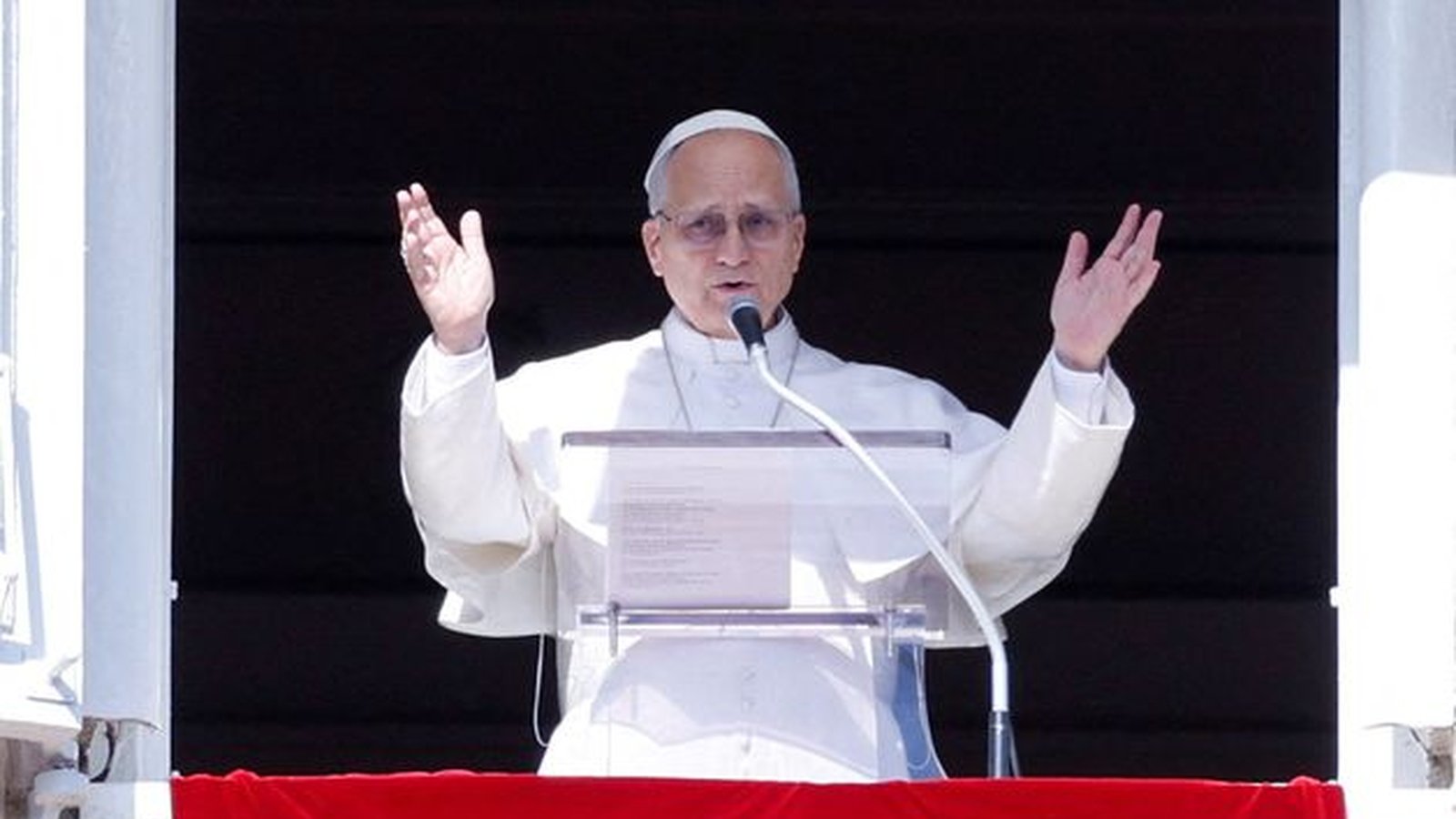
WASHINGTON (Azat TV) – Pope Leo XIV has officially rejected an invitation from U.S. President Donald Trump to join his newly formed “Board of Peace,” citing fundamental concerns about its structure and the United Nations’ established role in global crisis management. The Vatican’s decision, confirmed by Cardinal Pietro Parolin, the Vatican’s secretary of state, on Tuesday, marks the latest significant rebuff in the ongoing contentious relationship between the pontiff and the American president.
Cardinal Parolin informed reporters that while the invitation had been under consideration since January, the Pope would not participate due to “critical issues that should be resolved.” A primary concern, he stated, is the Vatican’s insistence that “at the international level, it should above all be the UN that manages these crisis situations.” This stance underscores the Holy See’s long-standing commitment to multilateral institutions as the primary forums for addressing global disputes.
Trump’s ‘Board of Peace’ Initiative
President Trump initially conceived the “Board of Peace” as a body to oversee the ceasefire in Gaza and coordinate the strip’s reconstruction following the conflict between Hamas and Israel. Its scope has since expanded to address a wider range of global disputes, with President Trump positioning it as an alternative multilateral forum to the United Nations, which he has frequently criticized as ineffective. The Board of Peace was formally established last month, and its administrative center is located in the recently renamed Donald J. Trump Institute of Peace.
President Trump, who chairs the board, claims it has already secured more than $5 billion in commitments from its members to aid in Gaza’s rebuilding efforts. The board is also reportedly advocating for Hamas to disarm, a demand the group has consistently rejected.
Controversies and International Skepticism
The “Board of Peace” has faced considerable international scrutiny and skepticism since its inception. Concerns have been raised regarding its controversial lineup, which includes Russia’s Vladimir Putin, whose country has been at war with Ukraine since 2022, and Israel’s Benjamin Netanyahu, amidst the ongoing Gaza war that has resulted in the deaths of over 72,000 Palestinians. The prominent role of former UK Prime Minister Sir Tony Blair, despite criticism over Britain’s involvement in the Iraq war, has also drawn fire.
European governments and rights experts have expressed surprise and concern that the board could undermine the authority and legitimacy of the United Nations. Critics also point to the initiative’s resemblance to a “colonial structure” and its notable lack of Palestinian representation, particularly given its stated focus on Gaza. The Gaza truce, which began in October, has been repeatedly violated, with hundreds of Palestinians and four Israeli soldiers reported killed since its implementation.
Despite the controversies, dozens of countries have reportedly committed to joining the board, including Armenia, Azerbaijan, Egypt, Hungary, and the United Arab Emirates. The board is scheduled to hold its first meeting in Washington on Thursday to discuss Gaza’s reconstruction.
A History of Disagreement Between Pope Leo and Trump
Pope Leo XIV, the first American pontiff, has repeatedly voiced criticism of President Trump’s policies throughout his presidency, making this rejection part of a broader pattern of disagreement. Last October, the Pope questioned whether the President’s hardline immigration policies aligned with the Catholic Church’s “pro-life” values, stating, “Someone who says I am against abortion but I am in agreement with the inhuman treatment of immigrants in the United States, I don’t know if that’s pro-life.” The White House, through press secretary Karoline Leavitt, pushed back on these comments, asserting the administration was enforcing laws “in the most humane way possible.”
In November, the Pope supported a message from U.S. bishops criticizing the Trump administration’s immigration crackdown, including mass deportations. He urged respectful and humane treatment for all individuals, regardless of their legal status. More recently, in January of this year, Pope Leo delivered a powerful speech condemning a growing global “zeal for war,” a statement that followed a U.S. military operation to forcibly remove Venezuela’s president Nicolás Maduro. He lamented that “a diplomacy that promotes dialogue and seeks consensus among all parties is being replaced by a diplomacy based on force.” The Pope, as leader of the world’s 1.4 billion Catholics, rarely joins international boards, with the Vatican maintaining its own extensive diplomatic service and permanent observer status at the United Nations.
The Vatican’s rejection of the “Board of Peace” not only signals a firm endorsement of the United Nations as the primary arbiter of international crises but also highlights the enduring ideological chasm between Pope Leo XIV’s vision for global diplomacy and President Trump’s approach to international relations.