
Quick Read
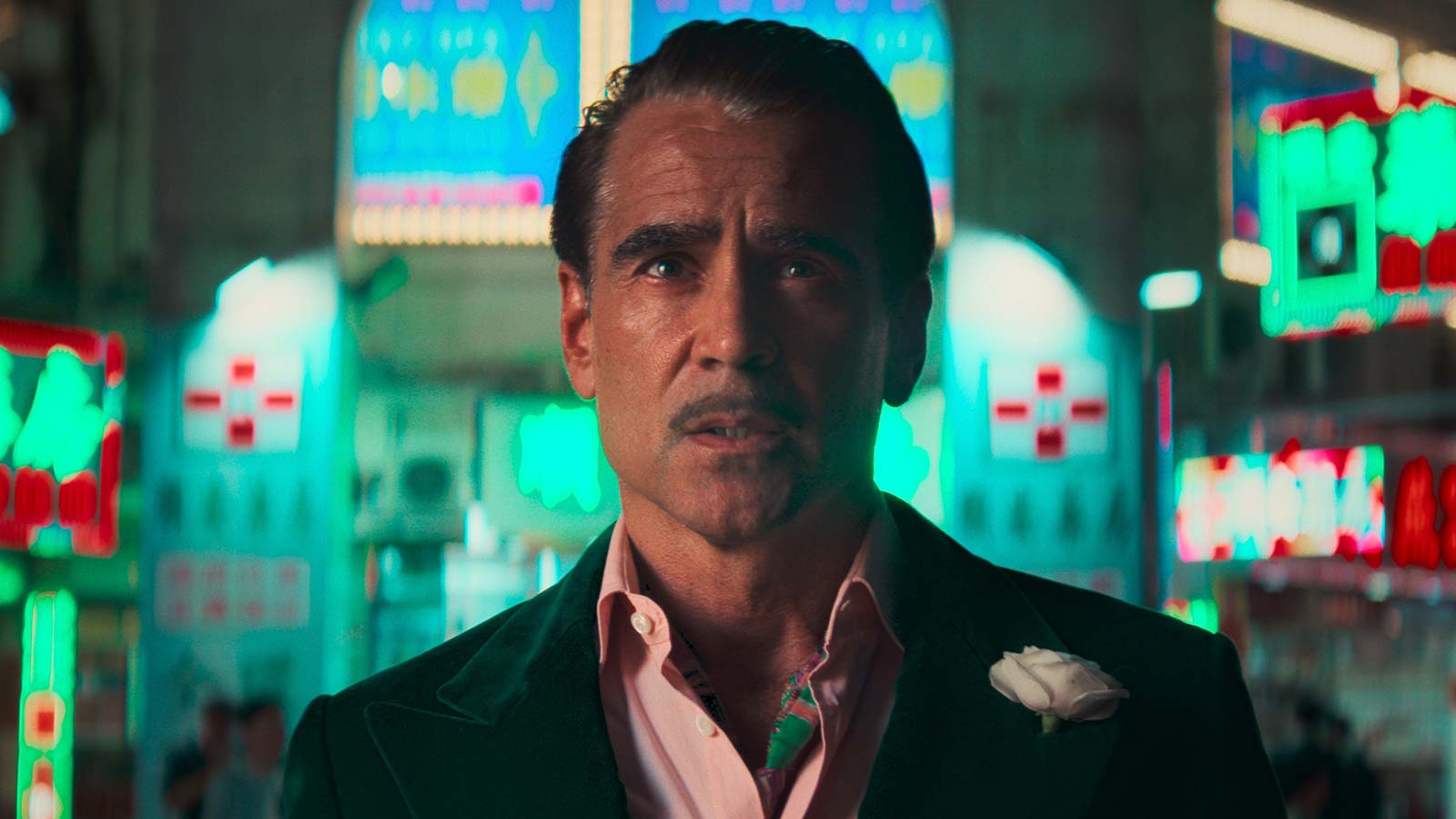
- Colin Farrell stars as Lord Doyle in Netflix’s ‘Ballad of a Small Player’, a psychological thriller set in Macau.
- The film is directed by Edward Berger and adapted from Lawrence Osborne’s novel.
- Farrell’s intense performance left him exhausted but fulfilled each day.
- Real Macau casinos and luxury suites were used for filming, adding authenticity but causing logistical challenges.
- Critics praise Farrell’s acting but note the film’s narrative struggles and underutilization of supporting cast.
Colin Farrell’s Most Intense Role Yet: The Making of a Modern Thriller
When Colin Farrell stepped onto the Macau set of Netflix’s Ballad of a Small Player, few could have predicted the physical and emotional toll the role would take on him. The Irish Oscar nominee, now 49, has played his share of complex characters, but Lord Doyle—a flamboyant, debt-ridden expat spiraling through the city’s dazzling casinos—demanded something else entirely. Farrell has openly admitted, “I was wrecked by the end of every day – but utterly fulfilled.”
Directed by Edward Berger, whose previous works include the Oscar-winning All Quiet on the Western Front and Conclave, the film adapts Lawrence Osborne’s 2014 novel into a psychological thriller that’s as frenetic as its neon-lit backdrop. Berger’s approach was ‘maximalist,’ using every cinematic tool—tight close-ups, kinetic pans, music that thunders and sighs—to mirror the protagonist’s internal implosion.
Behind the Scenes: Raw Commitment and Real-Life Challenges
Farrell’s performance is the gravitational center of the film. His commitment set a high bar on set, with crew members reportedly “snapping to attention” not out of fear, but out of respect for his artistry. Berger recalls, “The entire crew basically snapped to attention when Colin stepped on set… seeing how good he is and wanting to be as good and giving as much as he gives.” (Metro)
Filming wasn’t just emotionally taxing—it was logistically challenging. Shooting in Macau’s real-life luxury suites and casinos meant constant schedule changes, as spaces could be reclaimed at any moment by high-rolling gamblers. “They’re free if you lose millions,” Farrell joked, highlighting how the team sometimes had to scramble when a big spender appeared. The authenticity of these settings, however, adds to the film’s immersive atmosphere.
One of the movie’s most memorable scenes sees Doyle gorging on lobster and chocolate cake, pushing Farrell to consume over 10,000 calories before lunch. The madness of the shoot reached its peak here, but also inspired Berger: Farrell’s choice to listen to a Bach organ piece to get into character ended up soundtracking the scene itself.
Adaptation: From Novel to Screen
Ballad of a Small Player is based on Osborne’s novel, but the adaptation by Rowan Joffé (known for Before I Go to Sleep) takes liberties to heighten the tension and visual style. Farrell, though he bought the book, chose not to read it before filming—having already connected deeply with the script. “You spend a lot of time thinking about it, visualizing it and trying to figure out what it means to you and what it might mean to that character, until the ‘you’ fades away and the character becomes more pronounced,” Farrell explained.
While the film draws on the novel’s themes of loneliness, addiction, and self-destruction, it amplifies them through its ‘maximalist’ aesthetic. Berger’s direction embraces excess, from the flashy costumes to the swirling camera choreography reminiscent of Wes Anderson. Yet, as Cinemalogue notes, this style sometimes overshadows the narrative’s depth, leaving some secondary characters underdeveloped and the emotional stakes uneven.
The Gamble: High-Stakes Drama and Character Complexity
At the heart of the film is Lord Doyle—a con man whose charisma is matched only by his desperation. His exploits have left him exiled in Macau, running up debts and dodging authorities. Farrell’s portrayal balances quirky charm with quiet anguish, offering glimpses of a pitiful figure experiencing a surreal reckoning. The audience is invited to witness his spiral not just as spectacle, but as a study in flawed humanity.
Tilda Swinton co-stars as Cynthia Blithe, a relentless investigator on Doyle’s trail. Her character’s late introduction and sporadic presence has drawn criticism from reviewers like Tom’s Guide, who argue that the film’s trailer misleads viewers about the pacing and plot structure. Fala Chen’s Dao Ming, meanwhile, offers Doyle fleeting chances at redemption, though their rapport at times feels unearned.
The psychological thriller elements—hallucinations, dream sequences, and a final, nerve-wracking baccarat showdown—are underscored by Volker Bertelmann’s thunderous score. These moments ratchet up the tension, but as critics observe, the film sometimes wavers between taut action and moody introspection, risking narrative incoherence.
Critical Reception: Triumphs and Shortcomings
Farrell’s performance is widely regarded as the film’s strongest asset. He switches seamlessly between the genteel facade of Lord Doyle and the unraveling reality of Reilly, his true identity. “The fact that he is as lost and as pathetic and as tragic, almost, as he is, was something that I found quite moving,” Farrell reflected, careful never to judge his character too harshly.
Yet, not all critics are convinced. Cinemalogue describes the film as a “muddled fish-out-of-water psychological thriller” that “deals moviegoers a losing hand.” The screenplay, while stylish, is said to lack moral complexity, and some cast members—Swinton included—are underutilized.
Despite these criticisms, the film’s production values and Farrell’s dedication shine through. The real Macau locations, the meticulous set design, and Berger’s vision all contribute to an experience that, while imperfect, is undeniably immersive.
Ultimately, Ballad of a Small Player is a showcase for Farrell’s talent and Berger’s bold direction. It’s a chaotic, exhausting ride, both for those making it and for viewers swept up in Doyle’s descent.
In the end, the film stands as a testament to the risks and rewards of cinematic ambition. Colin Farrell’s raw, unfiltered performance anchors a visually striking but uneven narrative, reminding us that behind every dazzling façade lies the relentless grind of creative commitment—and that sometimes, the greatest gamble is giving everything to a role, regardless of the outcome.