


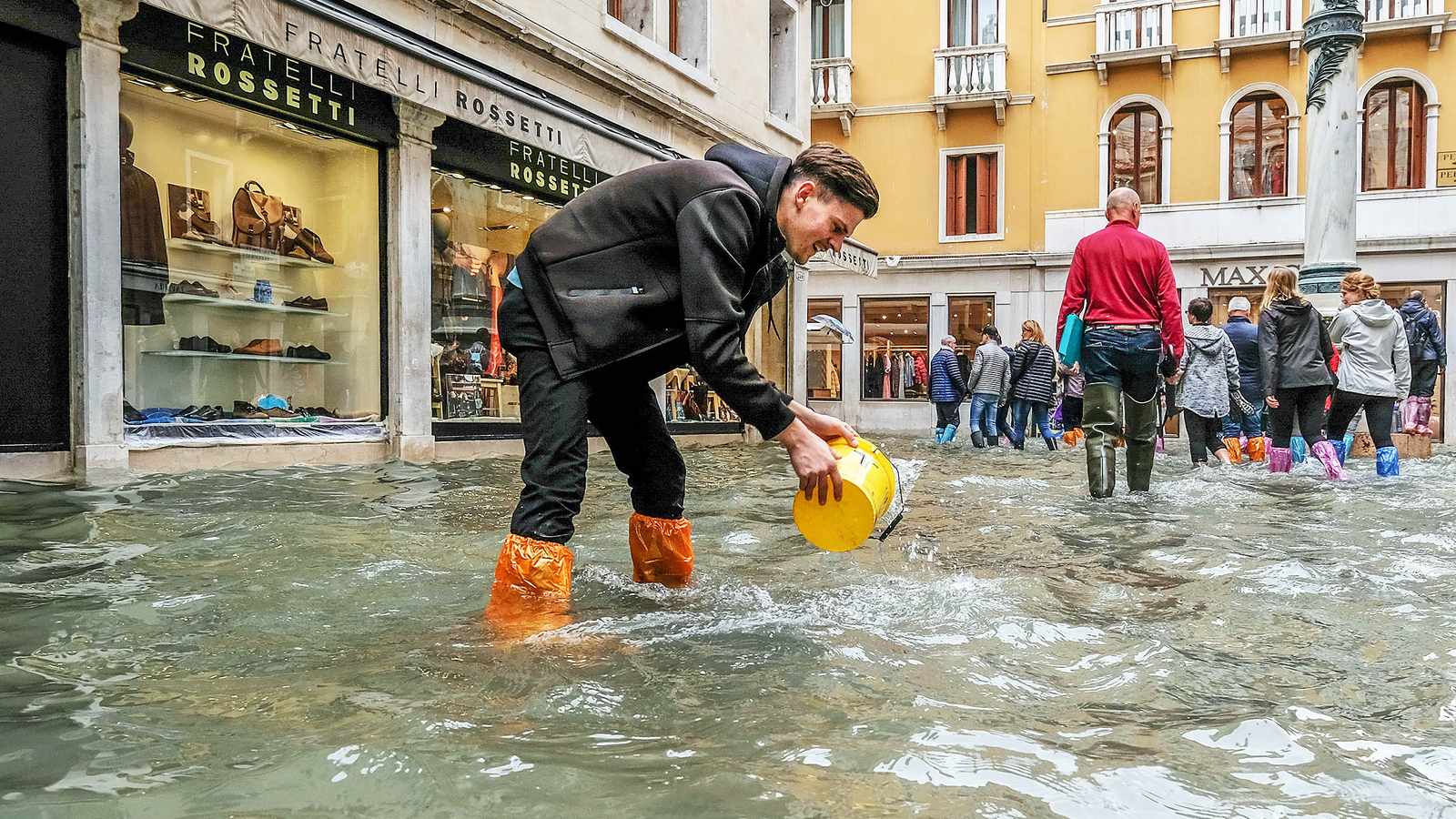
The Strain on Venice’s Defensive Shield
For over fifteen centuries, Venice has navigated a delicate coexistence with the Adriatic Sea. Today, however, that relationship has reached a critical tipping point. Recent scientific analysis highlights that the city’s current primary defense, the MOSE system—a complex of movable steel gates—is increasingly struggling to contain rising sea levels. While the six-billion-euro infrastructure project has successfully prevented catastrophic flooding, its operational frequency has surged, with the system deployed 30 times in the first two months of 2026 alone, following 108 activations between 2020 and 2025.
Engineering vs. Existential Reality
The intensifying pressure on the lagoon’s ecosystem forces a difficult conversation about the limitations of technical solutions. Researchers are now evaluating a spectrum of interventions, ranging from localized mechanical adjustments, such as injecting water into deep soil layers to counteract land subsidence, to the construction of massive perimeter barriers. These potential projects carry staggering price tags, with estimates for total lagoon isolation exceeding 30 billion euros. Beyond the financial burden lies a democratic and ethical dilemma: how much of the original, historic fabric of the city can be sacrificed to ensure its physical survival?
The Long-Term Cost of Preservation
The most extreme scenarios involve the potential for partial relocation of urban infrastructure as sea levels rise—a prospect that could become a necessity after the year 2300 should levels climb by five meters. Such a move would cost upwards of 100 billion euros and fundamentally alter the character of the city. Ultimately, the challenge for Italian authorities is not merely a matter of civil engineering but a question of cultural preservation. As the frequency of barrier usage increases, the city risks becoming a gated, isolated entity, effectively severed from the natural tidal rhythms that defined its identity for millennia. The transition from active protection to permanent isolation marks a shift where the goal is no longer just saving the city, but defining what a future Venice can look like in an era of irreversible climate change.