
Quick Read
- The UK’s negotiations to transfer the Chagos Archipelago, including Diego Garcia, to Mauritius have stalled.
- The US military base on Diego Garcia is considered vital for operations in the Indian Ocean and Middle East.
- US officials and some British lawmakers oppose the handover due to security concerns over potential Chinese influence.
- Mauritius has significant economic ties with China, including grants, debt relief, and a Free Trade Agreement.
- The International Court of Justice ruled the UK’s control of the islands unlawful in 2019, prompting UN action.
LONDON (Azat TV) – Negotiations for the United Kingdom to transfer sovereignty of the Chagos Archipelago, including the strategically vital island of Diego Garcia, to Mauritius have faced a significant setback, stalling amidst strong criticism from the United States and resistance from British lawmakers. The proposed handover, announced in late 2025, has ignited a fierce debate over regional security, with growing fears that Mauritius’s deep economic ties to China could pave the way for Beijing to establish a military presence near the critical US-UK base in the Indian Ocean.
A Pivotal US Military Outpost
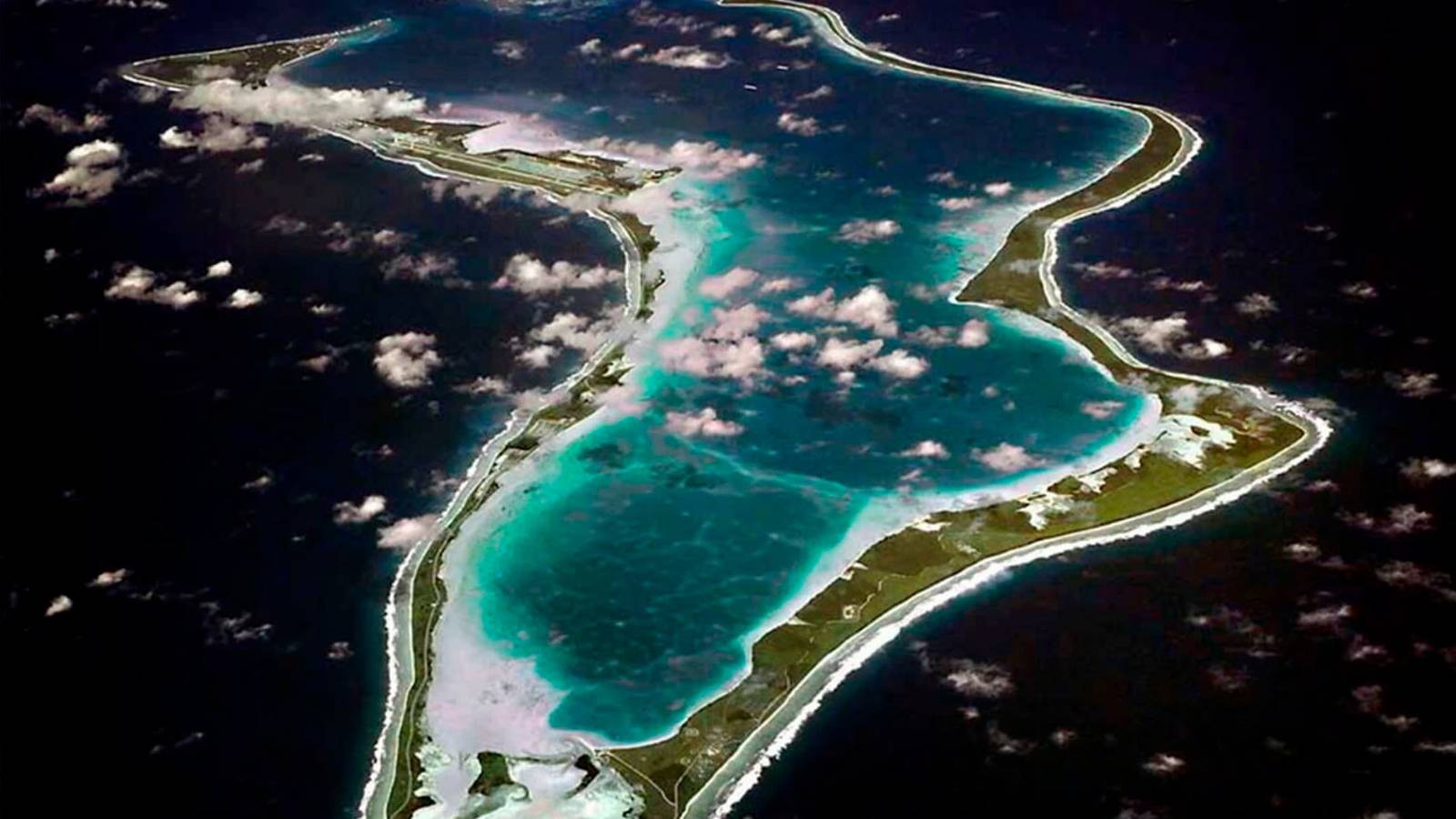
Diego Garcia, the largest island in the Chagos Archipelago, hosts a joint UK/US military base that is considered one of the most strategically important American military facilities outside its borders. Often dubbed the “unsinkable aircraft carrier,” the base has been instrumental in US operations across the Indian Ocean and the Middle East, supporting campaigns in Afghanistan and Iraq, and serving as a launchpad for long-range bombers like the B-52H Stratofortresses. Public documents confirm its use by nuclear submarines, aircraft carriers, and Special Operations Forces, underscoring its critical role in projecting US power and ensuring stability for allies in the region.
The current lease agreement for the US presence on Diego Garcia is set to continue until at least 2036. Approximately 2,500 personnel, primarily American with a British minority, reside on the base. Its remote location and the absence of a local population after the original inhabitants were forcibly removed in the 1960s have historically ensured uninterrupted military operations, a factor highlighted by Anamika Twyman-Ghoshal, Senior Lecturer at the University of Gloucestershire, who described the base as a critical element of US hegemony.
The UK-Mauritius Deal and International Pressure
The decision to negotiate the handover stemmed from an agreement between then-UK Prime Minister Liz Truss and Mauritius Prime Minister Pravind Jugnauth in September 2025, followed by an announcement from UK Secretary of State for Foreign, Commonwealth and Development Affairs, James Cleverly, on November 3, 2025. Cleverly stated that any agreement would not impact the operation of the joint military base at Diego Garcia and that the UK would keep the US and India informed of progress, with an agreement expected by early 2026.
However, the UK’s claim to the Chagos Islands has long been contested. The archipelago was detached from Mauritius in 1965, prior to Mauritius gaining independence, to create the British Indian Ocean Territory (BIOT). This separation was deemed unlawful by the International Court of Justice on February 25, 2019, and subsequently, the UN General Assembly passed Resolution 73/295 on May 22, 2019, obliging the UK to withdraw its colonial administration within six months. Mauritius has consistently demanded sovereignty, arguing it was coerced into relinquishing the islands in exchange for independence.
US Objections and Internal UK Resistance
The proposed handover has encountered significant opposition, particularly from the United States. While the US State Department initially welcomed the deal, former US President Donald Trump later voiced strong objections. Reports from ynetnews.com indicate that Trump, during a meeting with Labour leader Keir Starmer, expressed support for the deal but later changed his position, with Nigel Farage of the Reform UK party claiming Americans were ‘lied to’ about the necessity of surrendering the islands. Conservative Party opposition leader Kemi Badenoch called the deal ‘an act of total self-sabotage,’ and Priti Patel described it as ‘madness.’ The Financial Times confirmed that Tory peers have forced the UK to pause the passage of the Chagos Islands bill following US criticism, indicating that the agreement is far from finalized.
The core concern for the US and its allies is the potential for Chinese encroachment. British Conservative Member of Parliament Daniel Kawczynski, speaking to The Sunday Guardian, emphasized that the Chagos Islands are ‘vital to China’s strategic goals in the Indian Ocean.’ He warned that ceding sovereignty to Mauritius, given its growing economic dependence on Beijing, could significantly degrade Western interests in the region.
China’s Deepening Ties with Mauritius
Mauritius has cultivated extensive economic relationships with China, raising alarms among Western security analysts. In January 2019, Mauritius received a 100 million RMB grant from China and had 78 million RMB in debt annulled. Later that year, the two countries signed a Free Trade Agreement (FTA), China’s first with an African nation, which Chinese experts projected would create a market worth $3 trillion by the end of 2022. By the end of September 2022, Mauritius’s external debt had reached $180.9 billion, with over 10% dedicated to debt service payments, according to the International Monetary Fund. China’s cumulative investment in Mauritius reached $887 million by the end of 2020, primarily in finance, real estate, manufacturing, and tourism. China is also a major trading partner, supplying 18% of Mauritius’s total imports, projected to rise to 25% by next year.
These financial ties fuel fears that Mauritius, once in full control of the Chagos Archipelago, could be pressured to grant China access for military purposes, such as establishing naval bases or listening posts. Daniel Kawczynski highlighted this, stating that such a move would ‘decisively tilt the balance of power in the Indian Ocean towards China,’ posing a significant concern for India, which is already expanding its navy to counter Chinese influence.
The Chagossian Dilemma and Unresolved Future
The original inhabitants of the Chagos Islands, known as Chagossians, were forcibly removed by the UK in the 1960s to make way for the US base. Their right to return has been a central issue in the sovereignty dispute. The global Chagossian population, estimated at around 10,000, now primarily lives in Mauritius, the UK, and the Seychelles. A survey cited by CNN found that most Chagossians favor remaining under British rule, opposing a transfer of sovereignty to Mauritius. This complex human rights issue further complicates the geopolitical calculus, as Mauritius has previously offered Diego Garcia to the US on a 99-year lease in exchange for allowing locals to return to the other Chagos islands, an offer that remains on the table.
The ongoing dispute over the Chagos Archipelago underscores a complex interplay of post-colonial legacy, international law, and escalating geopolitical rivalries. While the UK cites legal obligations to transfer sovereignty, the formidable strategic interests of the United States and the growing influence of China in the Indian Ocean have transformed a bilateral dispute into a critical international security concern, with the future status of Diego Garcia remaining uncertain.