
Quick Read
- The Draconid meteor shower peaks on October 8, 2025.
- Meteors originate from comet 21P/Giacobini-Zinner’s debris.
- Up to 10 meteors per hour can be seen under dark skies.
- A bright waning gibbous moon will reduce visibility.
- The shower is best viewed soon after sunset, facing north.
What is the Draconid Meteor Shower?
Every October, the night sky offers a fleeting spectacle—the Draconid meteor shower. Unlike some of the more famous meteor showers that send hundreds of streaks across the sky, the Draconids are quieter, sometimes elusive, but never lacking in cosmic intrigue. Named after the constellation Draco, from which the meteors appear to radiate, the shower is the result of Earth’s annual passage through the debris trail left behind by comet 21P/Giacobini-Zinner. This year, the peak arrives on October 8, 2025, promising an evening of celestial fireworks for those who know where—and how—to look.
When and Where to Watch the 2025 Draconids
The Draconid shower is active from October 6 to October 10, but the best viewing comes during the peak, which occurs as Earth plows through the densest part of the comet’s debris at around 3 p.m. EDT (1900 GMT) on October 8 (Space.com). For North America and Europe, the optimal observation window falls on the evening of October 8 and early hours of October 9.
Unlike many meteor showers, the Draconids favor early night viewing. The radiant point, Draco the Dragon, sits high overhead shortly after sunset for northern hemisphere observers. That means you don’t need to stay up until the pre-dawn hours—just step outside soon after nightfall, find a dark spot with a clear view of the sky, and look up.
How Many Meteors Can You Expect?
Under ideal conditions—think rural skies free of light pollution—observers can see up to 10 meteors per hour. But 2025 brings a challenge: a 93%-lit waning gibbous moon, just two days past full, will saturate the sky with reflected sunlight, making fainter meteors hard to spot. Still, the brightest Draconids should cut through the moonlight, especially in areas where artificial lights are minimized.
The Draconids are notoriously unpredictable. Some years yield only a handful of meteors, while rare “outburst” years produce dazzling displays of hundreds or thousands per hour. These outbursts occur when Earth passes through denser clumps of debris shed by the comet during previous orbits. 2025 is not forecasted to be an outburst year, but as skywatchers know, the cosmos can surprise us.
The Science Behind the Show
What causes these shooting stars? The answer lies with comet 21P/Giacobini-Zinner, a periodic visitor to the inner solar system every 6.6 years. Each time it sweeps past the sun, the comet sheds dust and rocky fragments. Over centuries, this material spreads out along the comet’s orbit. When Earth’s path crosses this stream, tiny particles—many no larger than grains of sand—plunge into our atmosphere at speeds of about 20 kilometers per second. The friction heats the particles, causing them to vaporize in bright flashes we call meteors.
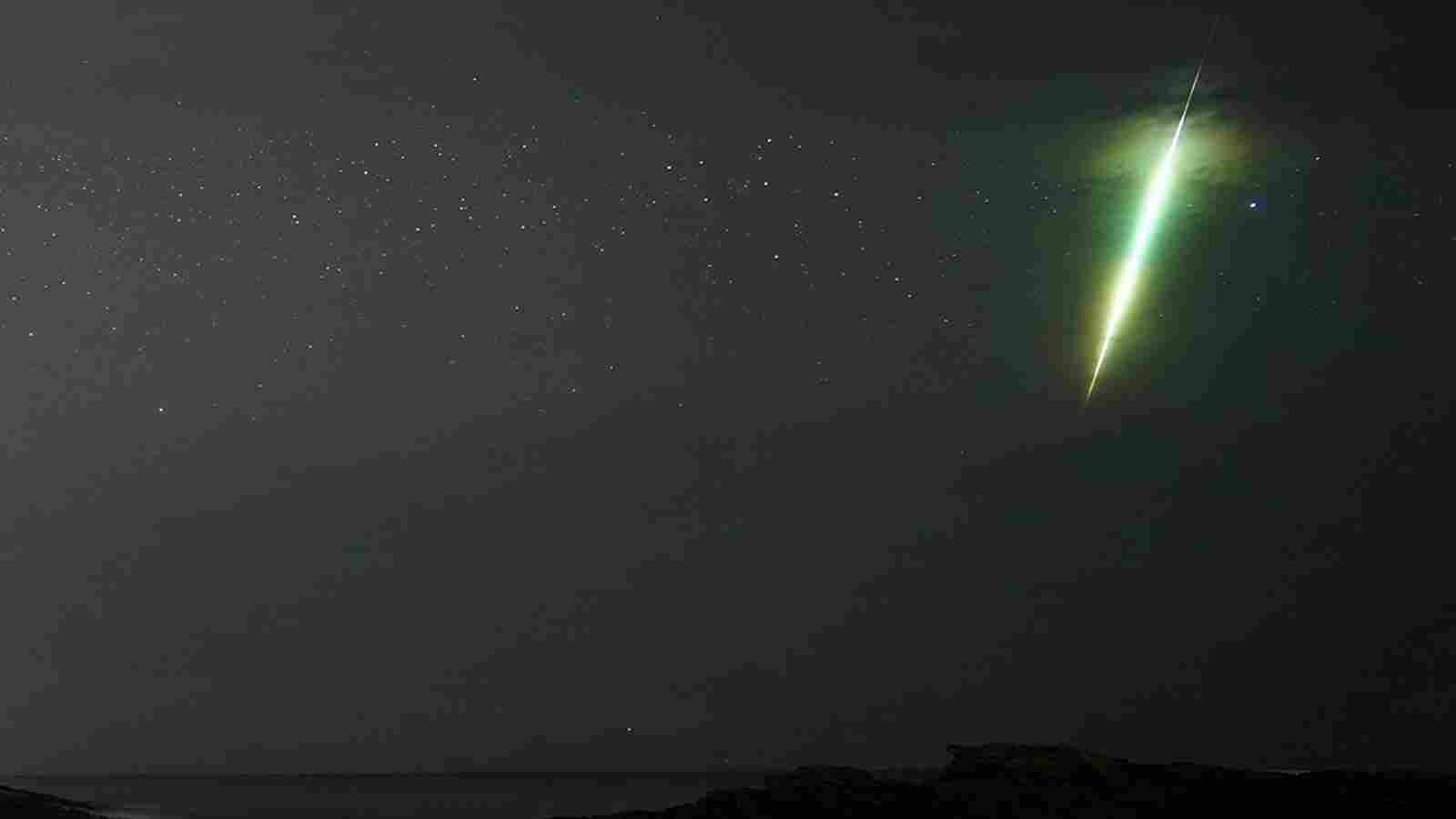
The Draconids are unique among meteor showers because they tend to be slow-moving. Their gentle pace, compared to the swift Perseids or Leonids, results in longer, lingering trails that sometimes appear to “float” across the sky. Occasionally, a larger fragment will produce a brighter fireball, briefly illuminating the darkness.
Tips for Best Viewing
- Find a spot away from city lights. Even a short drive into the countryside can dramatically improve visibility.
- Give your eyes 20-30 minutes to adjust to the darkness—avoid looking at your phone or other bright screens.
- Face north and let your gaze drift across the whole sky, as meteors can appear anywhere, not just near Draco.
- Dress warmly and bring a reclining chair or blanket for comfort.
Remember, patience is key. Meteor showers reward those who linger under the stars, letting their eyes and minds adjust to the rhythm of the night.
Why the Draconids Matter
Though less dramatic than some showers, the Draconids hold a special place in the hearts of astronomers and skywatchers. Their unpredictable nature and connection to a specific comet make each year’s display a kind of cosmic lottery. When an outburst does occur, it’s a reminder of the dynamic, ever-changing solar system we inhabit.
For scientists, the Draconids offer clues about cometary evolution and the processes that shape planetary atmospheres. Studying the composition and frequency of meteors helps researchers understand how comets age, fragment, and interact with solar radiation. Every meteor is a tiny sample of the early solar system, burning up before our eyes.
Other October Sky Highlights
This October brings more than just the Draconids. Comet Lemmon (C/2025 A6) is rapidly brightening and could become visible to the naked eye by late month, according to Space.com. Meanwhile, observers are still buzzing over the recent passage of asteroid 2025 TF, which zipped past Earth at a distance closer than most satellites.
These events underscore how October is a prime time for skywatchers, with the night sky serving as a stage for both regular and rare cosmic phenomena.
A Meteor Shower for Everyone
The Draconids are a reminder that you don’t need expensive equipment or deep scientific knowledge to enjoy astronomy. All that’s required is curiosity, a willingness to look up, and a bit of patience. Whether you catch a single meteor or a handful, each one is a direct connection to the ancient past—a fragment of a comet, thousands of years old, meeting its fiery end above our heads.
If clouds or moonlight block your view this year, there’s always next October. The Draconids return annually, a quiet promise from the universe that the show will go on.
While the 2025 Draconid meteor shower may be modest due to bright moonlight, its enduring allure lies in the stories written across the night sky—stories of ancient comets, cosmic debris, and the timeless human urge to witness the wonders above. For both casual stargazers and seasoned astronomers, the Draconids remain a gentle but profound reminder of our place in a universe that is vast, unpredictable, and always worth watching.