
Reported Drone Attack on Khmeimim Air Base in Syria
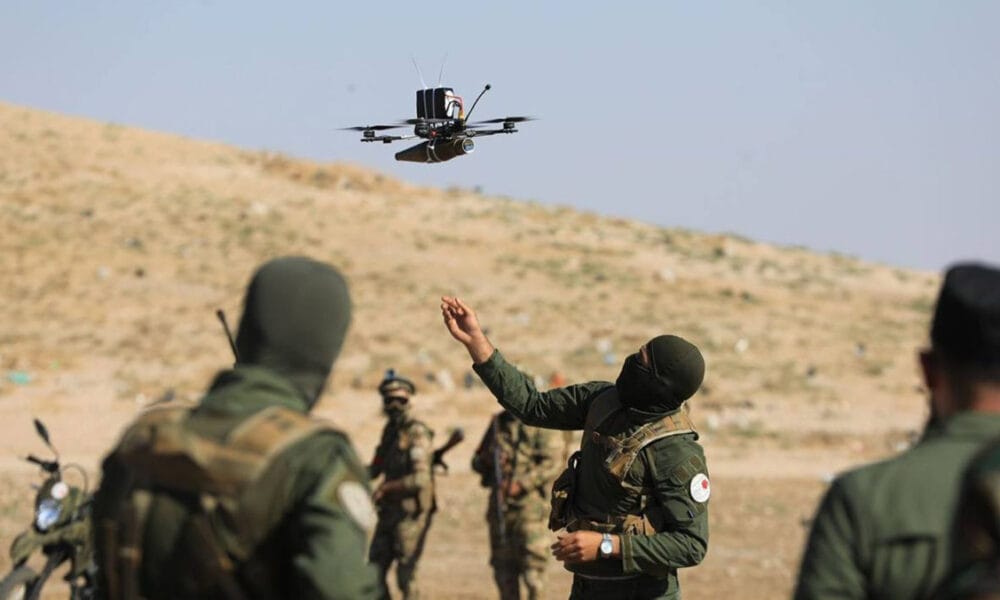
On February 18, 2025, reports surfaced detailing a drone attack targeting Russia’s Khmeimim Air Base in Syria. The airbase, a critical facility for Russian military operations in the region, reportedly came under aerial assault during the night, prompting immediate defensive measures.
Details of the Attack: Combat Alert and Air Defense Activation
Military sources, including correspondent Oleg Blokhin, indicated that a combat alert was triggered at 2:30 AM local time at Khmeimim Air Base. The incident was classified as a “ground enemy attack,” suggesting an initial assessment pointing towards a coordinated threat. In response to the attack, the airbase’s Pantsir air defense systems were activated, with reports of gunfire and explosions heard in the vicinity. While the intense phase of engagement lasted approximately an hour, a state of alert persisted for a significant duration afterward.
Sources and Confirmation Status: Unofficial Reports and MoD Silence
Information regarding the drone attack is currently based on reports from military correspondents like Oleg Blokhin and news outlets such as VChK-OGPU and Astra. As of the time of these reports, there has been no official confirmation or denial from the Russian Ministry of Defense (MoD). The absence of official comment from the MoD necessitates cautious interpretation of the currently available details, pending formal verification.
“Ground Enemy Attack” Assessment: Implications for Security
The preliminary categorization of the assault as a “ground enemy attack” suggests an initial evaluation by base security personnel. This classification may indicate a perceived threat originating from ground-based forces, potentially involving a combination of terrestrial infiltration attempts synchronized with aerial drone deployment. The swift engagement of the Pantsir system underscores the readiness and responsiveness of the air defense infrastructure at Khmeimim Air Base.
Possible Perpetrators: Focus on Hayat Tahrir al-Sham
Speculation regarding the perpetrators of the drone attack has centered on Hayat Tahrir al-Sham (HTS), a prominent militant group active in Syria. Oleg Blokhin posited that HTS could be responsible, framing the attack as a deliberate “provocation.” This interpretation suggests a motive to disrupt Russia’s ongoing efforts to stabilize its military presence in Syria, particularly in the context of recent political shifts and negotiations with the emergent Syrian leadership.
Geopolitical Context: Russia’s Syrian Strategy Post-Assad
The drone attack occurs against a backdrop of significant political transition in Syria. Following the reported decline of Bashar al-Assad’s regime, Russia has been engaged in diplomatic efforts with the new Syrian administration under Ahmed al-Sharaa. These discussions are reportedly focused on securing the long-term status of Russian military installations at Khmeimim and Tartus. The timing of the attack raises questions about its potential impact on these delicate negotiations and the broader regional stability.
Financial Aid and Regional Stability: Russia’s Role in Syria
In the days preceding the attack, diplomatic and economic engagements between Russia and the new Syrian leadership were evident. A phone call between Vladimir Putin and Ahmed al-Sharaa on February 12th emphasized Russia’s commitment to supporting Syria’s socio-economic recovery. Subsequently, a Russian aircraft delivered a substantial amount of Syrian currency to Damascus on February 14th. While the precise reasons for this financial injection remain unconfirmed, it is speculated to be part of a broader Russian strategy to bolster the new Syrian regime. This context underscores the complex interplay of military, political, and economic factors shaping the current situation in Syria and the region.
For deeper analysis of geopolitical developments in the Middle East, please refer to Azat TV World Section.