
Quick Read
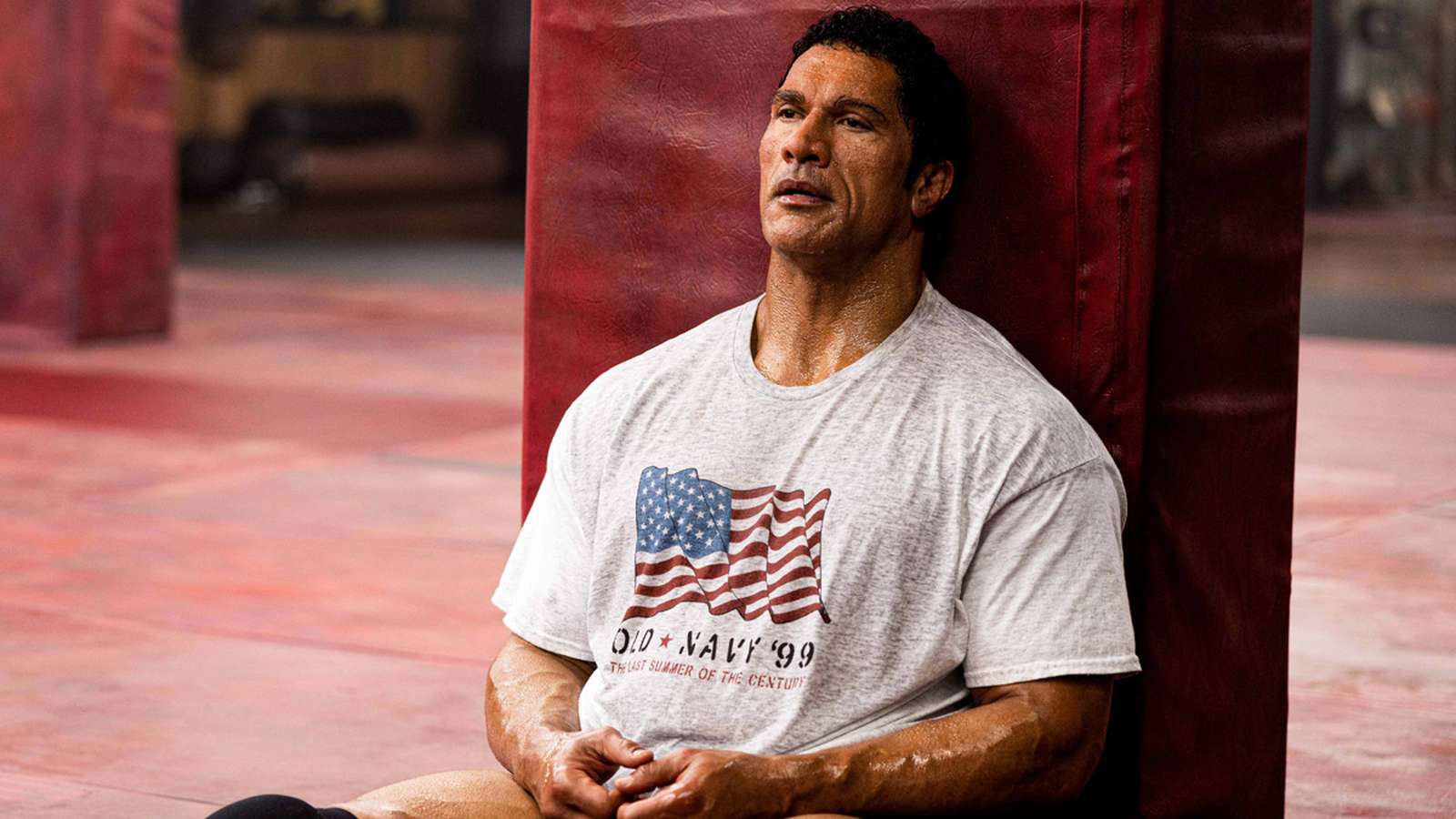
- Dwayne Johnson underwent a major transformation to portray UFC legend Mark Kerr in ‘The Smashing Machine’, with award-winning artists handling prosthetics and hair.
- Mia Neal crafted custom wigs for Johnson and Emily Blunt, overcoming technical challenges under intense time pressure and physical demands.
- The film disappointed at the box office, earning $6 million domestically against a $50 million budget.
- Critical reception was divided, with some praising Johnson’s commitment and others questioning his casting and the film’s narrative choices.
- Johnson publicly thanked director Benny Safdie and expressed pride in his work, despite commercial setbacks.
Johnson’s Meticulous Transformation: Crafting Mark Kerr
When Benny Safdie set out to direct “The Smashing Machine,” a biopic about UFC pioneer Mark Kerr, he envisioned a project that would demand both technical prowess and emotional commitment. Dwayne Johnson, stepping far outside his familiar territory of blockbuster heroics, took on the challenge to embody Kerr—a fighter whose battles stretched far beyond the octagon. The transformation was not just physical. Johnson worked intimately with Kerr, adopting everything from his fighting style to his subtle mannerisms and vocal cadence.
The film’s visual authenticity hinged on the expertise of Kazu Hiro, an Oscar-winning prosthetic designer, and Mia Neal, a hair department head also with an Academy Award to her name. Neal’s involvement became pivotal. Brought in initially to design the wig for Emily Blunt’s character, Dawn Staples, Neal found herself tasked with reworking Johnson’s wig at the eleventh hour. The technical challenges were immense: blending the hairpiece with Johnson’s skin tone, ensuring it survived intense fighting scenes, and overcoming the unique contours of Johnson’s head—all under high humidity and relentless physical exertion.
Neal recounted to IndieWire that she spent sleepless nights perfecting Johnson’s look, ventilating new extensions and customizing bands to hold the wig in place. Each day brought fresh obstacles, from sweat-soaked glue to the need for constant readjustments. The pressure was palpable, with Safdie’s hands-on approach demanding seamless results. Neal’s ingenuity proved essential, resulting in a transformation so complete that Johnson’s own wrestling persona, The Rock, was nowhere to be seen.
Emily Blunt and the Art of Subtlety
While Johnson’s physical metamorphosis grabbed headlines, Emily Blunt’s role as Dawn Staples required its own careful balancing act. Neal’s design choices for Blunt’s wig went beyond mere replication of the real Dawn’s appearance. Instead, she sought a shade and style that complemented Blunt’s complexion and preserved a sense of authenticity without sacrificing cinematic appeal. Blunt ultimately chose a lighter, highlighted option, which Neal adapted further to match director Safdie’s vision.
Safdie’s involvement in every aspect of production, from hairline tweaks to casting decisions, reflected his commitment to storytelling detail. Yet, some critics felt that this level of control might have come at the expense of narrative flow, a point that would surface in the film’s reception.
Box Office Blues and Public Response
Despite the painstaking craft behind “The Smashing Machine,” its opening weekend at the box office was disappointing. The film grossed just $6 million domestically—well below the $8-15 million projections, and marking Johnson’s lowest career opening since “Faster” in 2010. Produced by A24 at a cost of $50 million, the film’s weak commercial start was a blow for all involved.
Yet Johnson responded to the setback with characteristic positivity. In a heartfelt message shared on Instagram, he thanked Safdie for trusting him and expressed pride in his commitment to the role. “You can’t control box office results – but what I realized you can control is your performance, and your commitment to completely disappear and go elsewhere. And I will always run to that opportunity,” he wrote.
Despite the numbers, early reviews have not been uniformly negative. The movie holds a 72% critics’ score and a 77% audience rating on Rotten Tomatoes, with its IMDb rating at 7.0/10. Some, like MMA Junkie, have praised it as a film to appreciate in the context of MMA cinema. Johnson’s hope for an Oscar nomination remains alive, with Variety calling his performance “a revelation.”
Critical Reception: Casting and Storytelling Under the Microscope
Not all critics were convinced by Johnson’s dramatic pivot. A notable critique from Pajiba questioned whether Johnson was the right fit for Mark Kerr, pointing out that Johnson’s age and gravitas shifted the tone of the character. The film chronicles Kerr’s life from 1997 to 2000, when the real Kerr was in his early thirties, but Johnson—himself in his fifties—brought a maturity that some felt was at odds with the intended narrative.
Furthermore, the film’s structure drew criticism for its focus on Johnson’s performance at the expense of supporting characters, notably relegating Blunt’s Dawn to the margins. The ending, which jumps abruptly to the real Mark Kerr in 2025, felt jarring for some viewers and highlighted the tension between documentary realism and dramatic storytelling.
This debate is emblematic of broader questions about biopic casting: Does an actor’s star power overshadow the subject’s authenticity? Would a younger performer have better captured the raw energy and vulnerability of Kerr at his peak?
Behind the Scenes: The Real Cost of Authenticity
The making of “The Smashing Machine” was a marathon of adaptation and perseverance. From Neal’s all-night wig work to Johnson’s relentless drive to inhabit Kerr’s mindset, every department faced unique hurdles. The humid climate, the demands of MMA choreography, and the challenge of presenting real-life pain and addiction without resorting to cliché tested the cast and crew alike.
Safdie’s immersive approach—serving as producer, director, writer, and editor—ensured a unified vision but may have limited opportunities for dissenting voices. This singular control shaped every aspect of the film, for better or worse.
Looking Ahead: Legacy, Lessons, and Next Steps
“The Smashing Machine” is more than a sports drama; it’s a study in the cost of transformation, both onscreen and off. Johnson’s willingness to shed his familiar persona and embrace vulnerability stands as a testament to his evolving craft. The film’s mixed reception—lauded for technical achievement, questioned for narrative choices—reflects the complexity of translating real lives to cinema.
For Johnson, the experience was transformative, regardless of box office results. For Safdie, it was a chance to push boundaries and test the limits of creative control. For audiences, it was an invitation to reconsider what makes a biopic truly resonate.
The story of “The Smashing Machine” ultimately lies in its tension between authenticity and interpretation. Johnson’s transformation was real and hard-won, but the film’s reception reminds us that technical mastery and emotional truth must walk hand in hand. In the end, the success of such projects depends not just on dedication behind the scenes, but on the elusive alchemy that allows audiences to believe in the world unfolding before them.