

Quick Read
- John Clarke won the 2025 Nobel Prize in Physics for macroscopic quantum tunneling.
- His work laid the foundation for quantum computing and cryptography.
- Experiments demonstrated quantum properties in superconducting circuits.
- Clarke pioneered ultrasensitive SQUID detectors for diverse applications.
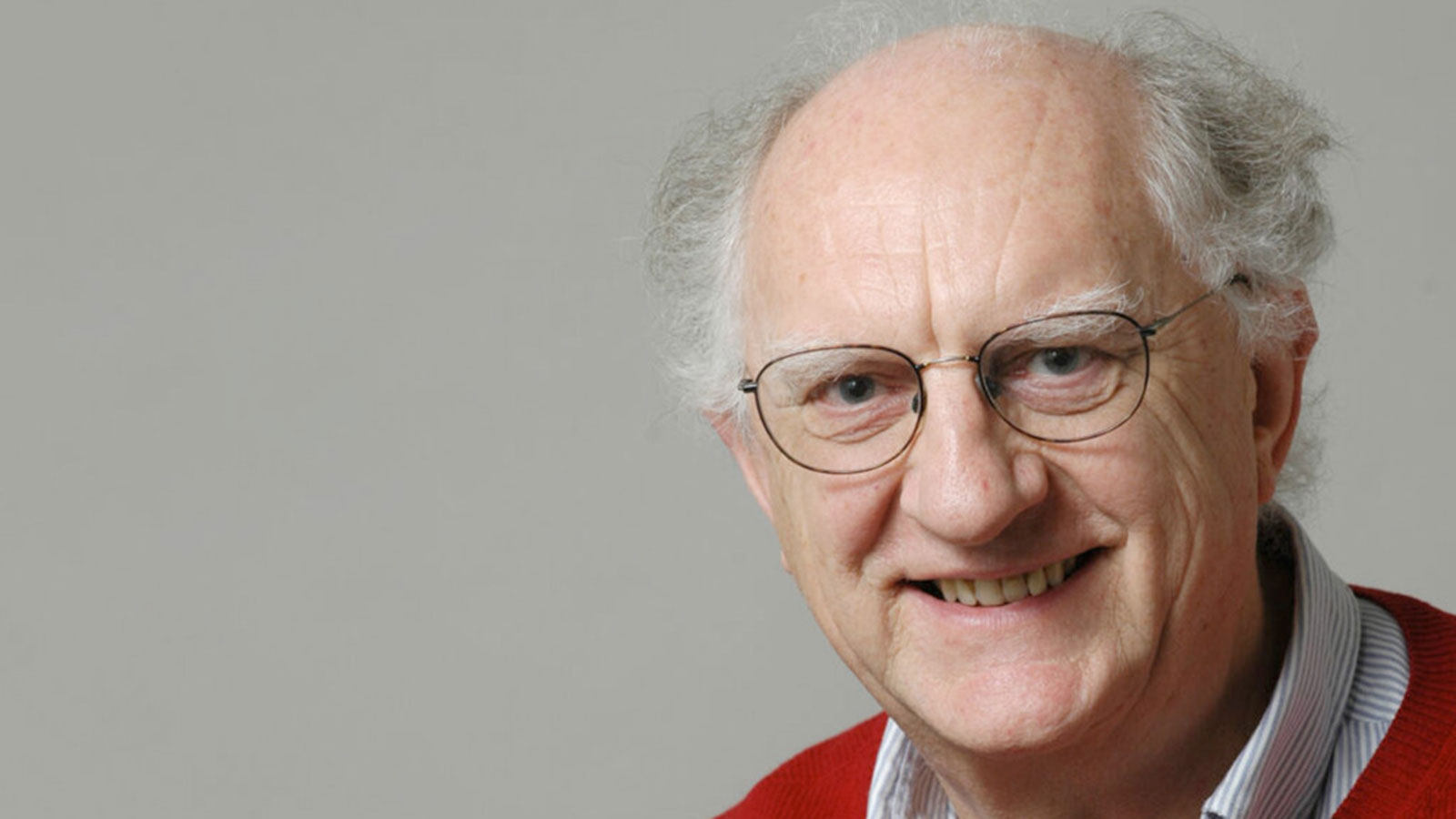
Quantum mechanics, often perceived as a realm restricted to the atomic scale, gained remarkable visibility in everyday physics due to the groundbreaking work of John Clarke, Michel H. Devoret, and John M. Martinis. The trio’s research in the 1980s laid the foundation for understanding macroscopic quantum mechanical phenomena, earning them the prestigious 2025 Nobel Prize in Physics. Their work not only challenged established notions of quantum mechanics but also unlocked doors to revolutionary advancements in quantum technology.
Discovering Quantum Mechanics on a Macroscopic Scale
Traditionally, quantum mechanics is confined to microscopic entities, such as particles and atoms. However, Clarke and his collaborators demonstrated quantum tunneling and energy quantization on a macroscopic scale using superconducting circuits. These circuits, constructed with Josephson junctions—a thin non-conductive barrier between superconducting materials—enabled the observation of quantum behaviors in systems large enough to hold in one’s hand.
The experiments conducted by Clarke’s team revealed that charged particles within the superconducting circuit behaved as a single macroscopic entity. This entity, initially trapped in a zero-voltage state, demonstrated quantum tunneling by transitioning to a state with detectable voltage. Moreover, their research confirmed the quantized absorption and emission of energy, affirming predictions of quantum mechanics.
Impact on Quantum Technology
The implications of these discoveries extend far beyond theoretical physics. Clarke’s work laid the groundwork for superconducting quantum bits, or qubits, which are the building blocks of modern quantum computers. Qubits leverage quantum properties such as superposition and entanglement to perform computations exponentially faster than classical systems.
The Nobel Committee highlighted how their research catalyzed the development of quantum cryptography, quantum sensors, and quantum computing—technologies poised to transform fields ranging from cybersecurity to drug discovery. Clarke’s contributions to ultrasensitive detectors like SQUIDs (superconducting quantum interference devices) further expanded quantum mechanics applications, enabling breakthroughs in geophysics, biosensing, and even dark matter research.
John Clarke’s Academic Journey and Legacy
Born in Cambridge, UK, in 1942, Clarke pursued his education at Cambridge University, earning his PhD in physics in 1968. Shortly after, he joined the University of California, Berkeley, where he became a pivotal figure in quantum research. His leadership in the field earned him numerous accolades, including the Fritz London Memorial Award and the National Academy of Sciences Comstock Prize.
Throughout his career, Clarke collaborated with remarkable minds like Devoret and Martinis, pushing the boundaries of quantum mechanics. His work on SQUIDs, capable of detecting magnetic fields billions of times weaker than a refrigerator magnet, exemplifies his innovative approach. These detectors not only advanced fundamental physics but also found practical applications in materials science and medical imaging.
The Next Quantum Revolution
The recognition of Clarke’s contributions underscores the transformative power of quantum mechanics. As quantum technology continues to evolve, the discoveries of Clarke and his colleagues remain central to the development of new devices and methodologies. Their work exemplifies how theoretical research can lead to tangible advancements, bridging the gap between science and everyday life.
John Clarke’s Nobel Prize win signifies a monumental achievement in physics, showcasing the ability of quantum mechanics to redefine technological possibilities. His legacy, rooted in groundbreaking experiments and collaborative innovation, continues to inspire future generations of scientists worldwide.