
Quick Read
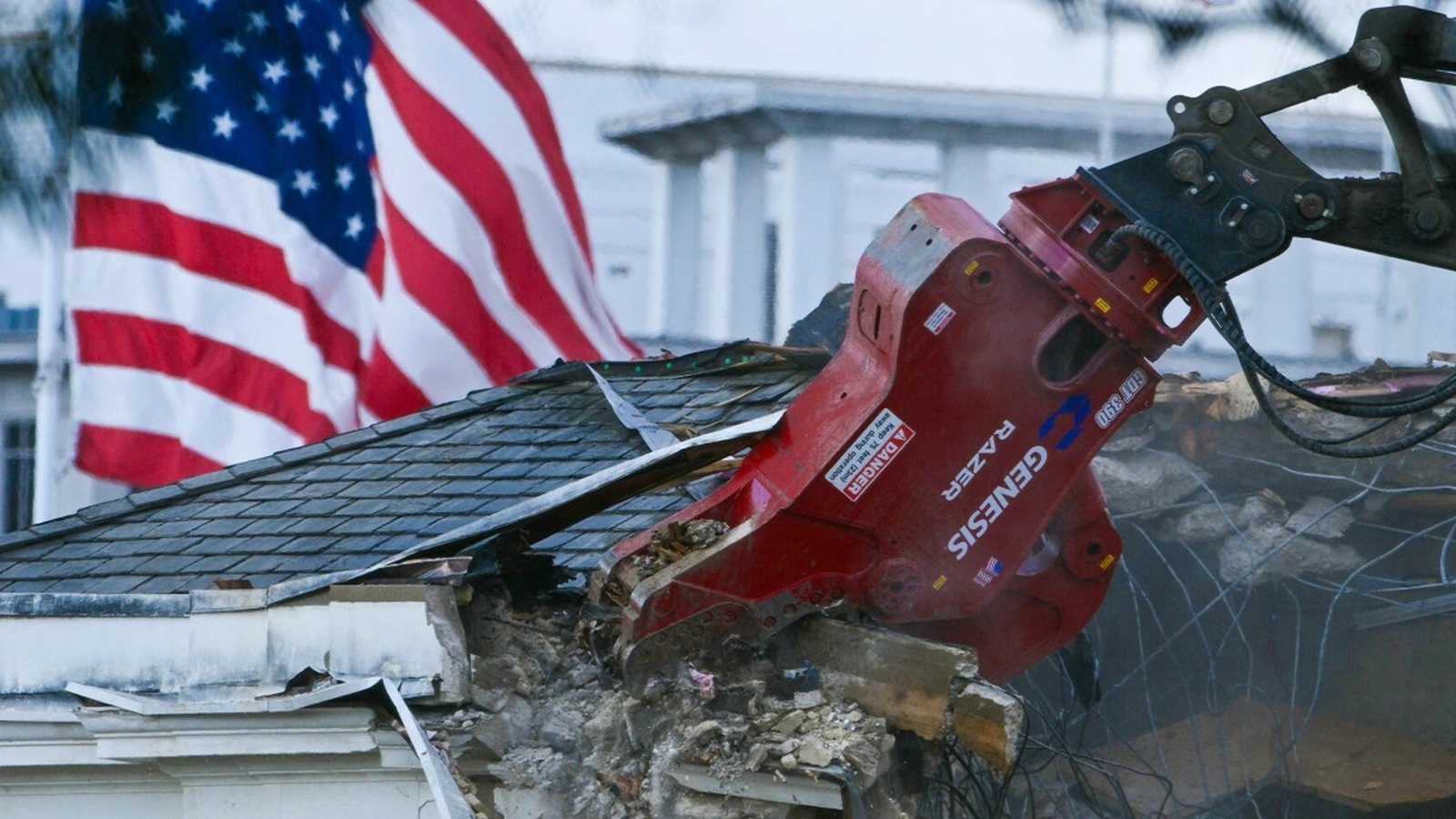
- The White House East Wing was demolished during President Trump’s second term.
- The demolition was for a massive new ballroom, set to overshadow the main residence.
- The project began without public consultation or conservation input.
- The East Wing historically housed First Lady offices and significant gardens.
- The timing coincided with a government shutdown and raised safety concerns.
Trump’s East Wing Demolition: A New Chapter for the White House?
For more than a century, the White House’s East Wing has stood as a quiet counterpoint to the grandeur of its main residence and the bustle of the West Wing. But in 2025, images of the East Wing reduced to rubble have come to symbolize a radically different approach to history under President Donald Trump’s second term.
What began as a renovation, with assurances that existing structures would remain untouched, quickly escalated into a full demolition of half the White House. The project’s ultimate goal? To construct a ballroom so large, so gilded, that it would dwarf the main residence and West Wing—a new monument to presidential vanity.
Opulence Over History: The Ballroom Vision
Trump’s plans are nothing short of extravagant. The proposed ballroom, modeled in spirit after the Russian Winter Palace in St. Petersburg, will be grand enough to house a football field. The iconic South Portico, long the focal point for visitors and dignitaries, will be overshadowed by a new structure that shouts for attention—likely emblazoned with the chunky gold letters that have become a trademark of Trump’s buildings: “TRUMP BALLROOM.”
Supporters argue that the expansion is overdue, citing the limited space for state dinners—just 140 seats in the State Dining Room and another 60 in the East Room. Trump, however, envisions a space capable of hosting over 1,000 guests, a scale of adoration that critics say reflects his personal appetite for grandeur more than any functional need.
Timing and Controversy: Government Shutdown and Safety Risks
Yet it’s not just the size or style of the project that has drawn criticism. The timing has been particularly contentious. The demolition commenced while the federal government was in the throes of a prolonged shutdown. Tens of millions of Americans faced the loss of SNAP benefits, while health care costs threatened to spike for millions more. Against this backdrop, the sight of bulldozers tearing through the historic East Wing struck many as tone-deaf.
Questions about safety also loom large. In the rush to demolish the old structure, concerns about asbestos and other hazardous materials appear to have been sidelined. Observers worry that the air around the White House may have been contaminated, further fueling public anxiety over the project’s disregard for health protocols.
The Loss of the First Ladies’ Legacy
The East Wing has long been more than just bricks and mortar—it has been the symbolic heart of the First Lady’s work. From Edith Roosevelt’s original Rose Garden, later redesigned by John F. Kennedy, to the offices that housed initiatives led by First Ladies from Kennedy to Michelle Obama, the wing has played a quiet but vital role in shaping American society.
Earlier this year, Trump paved over the Rose Garden and uprooted the Jacqueline Kennedy Garden, erasing features cherished by historians and advocates alike. Now, with the East Wing gone, the staff of First Lady Melania Trump has been scattered, their workspace relegated to temporary corners of the remaining structure. Melania herself has spent little time in Washington, choosing instead to remain in New York or Florida—a decision that some see as symbolic of the changing role of the First Lady under the current administration.
Unilateral Decisions and the Trump Style
Perhaps most striking is the process by which the East Wing demolition has unfolded. There was no consultation with conservationists, no formal application to other agencies, and no comment period for the public. The approach was simple: do it now, apologize never. It is a method reminiscent of New York power broker Robert Moses, who famously believed that once a shovel hit the ground, opposition was powerless.
In Trump’s case, this philosophy has translated into sweeping changes at the White House, with little regard for tradition or democratic norms. The ballroom project has become a metaphor for his leadership—bold, unfiltered, and often divisive.
Uncertainty and the Path Ahead
What comes next remains unclear. Despite the dramatic demolition, the public has seen little more than AI-generated renderings of the proposed ballroom. No blueprints or detailed plans have been released, leaving many to wonder whether the project is as developed as it seems. The construction promises to snarl traffic, disrupt the historic grounds, and extend security measures for years to come.
In an era defined by uncertainty, the fate of the East Wing—and the identity of the White House itself—hangs in the balance.
Trump’s demolition of the East Wing is more than a physical transformation; it represents a profound shift in how the presidency interacts with history, public space, and the legacy of those who came before. By prioritizing personal vision over collective memory, Trump has set a precedent that will likely shape debates over preservation, power, and the meaning of leadership for years to come.