
Quick Read
- El Salvador’s new Education Minister, Karla Trigueros, enforces strict dress and behavior codes in schools.
- Popular hairstyles like mohawks and ‘Edgar cuts’ are banned, sparking debates.
- Critics argue the measures symbolize the militarization of education.
- Supporters claim the changes promote discipline and order.
- President Nayib Bukele backs the reforms amidst ongoing political controversy.
In a bold and controversial move, El Salvador’s education system is undergoing a dramatic transformation under the leadership of Karla Trigueros, a military captain recently appointed as the nation’s Minister of Education. The reforms, which include strict dress codes, behavioral regulations, and the prohibition of popular hairstyles such as mohawks and “Edgar cuts,” have sparked debates about the militarization of education and its broader societal implications.
New Minister, New Rules
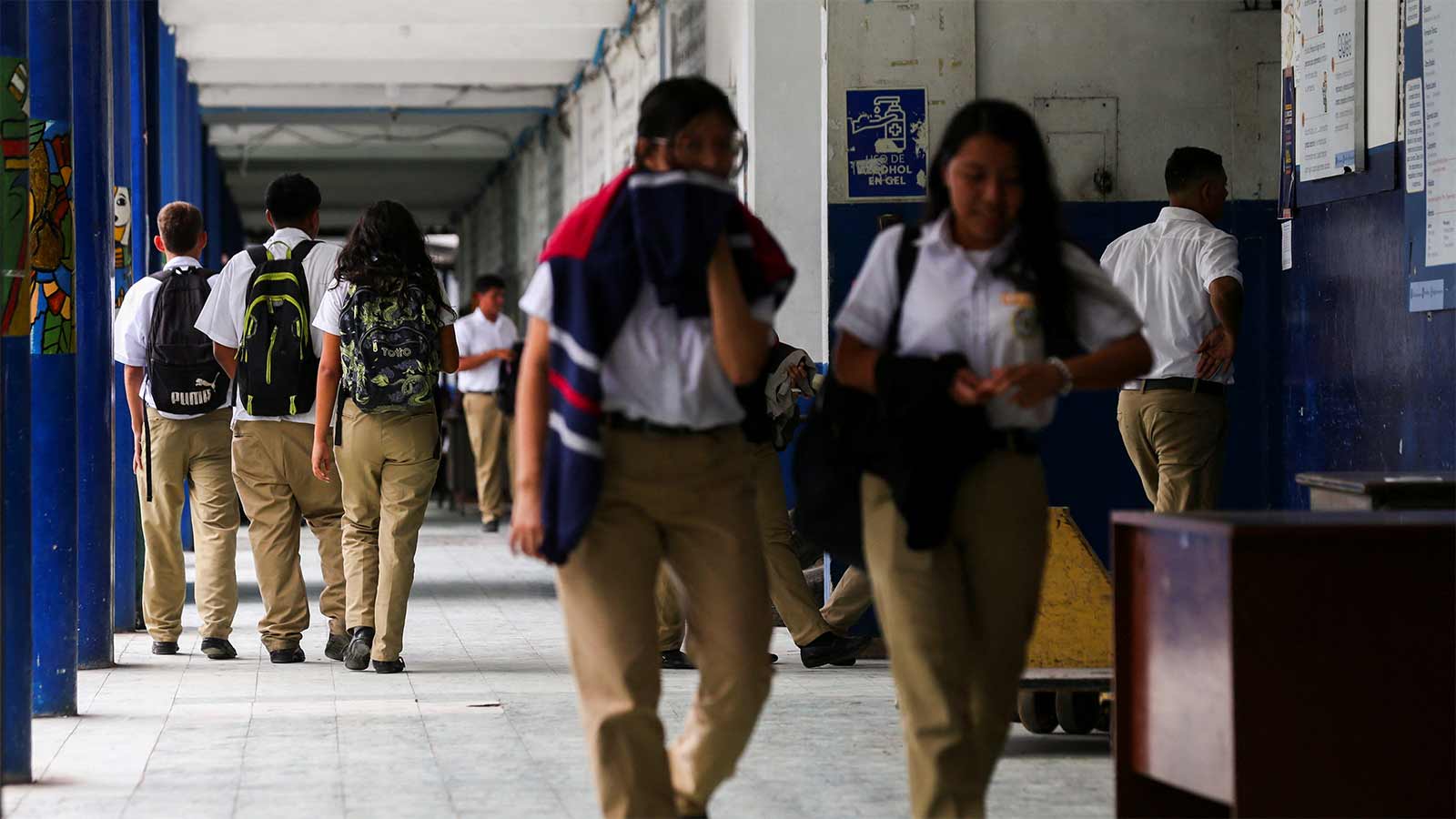
On August 21, 2025, Karla Trigueros, dressed in military fatigues with her hair in a slicked-back bun, toured public schools to ensure compliance with her newly issued directive. The memorandum, which mandates clean uniforms, proper monograms, and specific haircuts, has been met with mixed reactions from educators, students, and parents. Principal Oscar Melara of the Instituto Nacional Técnico Industrial in San Salvador has embraced the changes, stationing himself at the school gates each morning to inspect students’ attire and appearance. “We thank the minister because this allows us to correct and better our students,” Melara said in an interview with Reuters.
While dress codes have long been a part of El Salvador’s public schools, the new regulations go further, empowering administrators to penalize non-compliance with grade deductions or mandatory community service. Videos circulating on social media showed long lines at barber shops, as students rushed to comply with the rules before the start of the school year. Some businesses even offered discounts to capitalize on the sudden demand for haircuts.
Public Reactions and Political Context
President Nayib Bukele, a polarizing figure known for his hardline policies, has publicly supported the reforms. Sharing the memorandum on X (formerly Twitter), Bukele argued that such measures are part of a broader effort to overhaul El Salvador’s education system. “This is about instilling discipline and order in our schools,” he stated. Bukele’s administration has gained popularity for its aggressive crackdown on gang violence, which has significantly reduced crime rates in the country. However, human rights organizations have criticized his methods, citing instances of arbitrary arrests and the erosion of democratic norms.
The appointment of a military officer to oversee education has drawn sharp criticism from teachers’ unions and civil society groups. The Salvadoran Teachers’ Front, in a statement released last week, condemned the move as “absurd” and reminiscent of the nation’s decades-long military dictatorship. “Education should be a space for freedom and creativity, not militarization,” the statement read.
Historical Echoes and Comparisons
The militarization of education in El Salvador brings to mind other instances where crises have reshaped educational systems. For example, in the aftermath of Hurricane Katrina in 2005, New Orleans underwent a complete overhaul of its school system, transitioning to an all-charter model. As highlighted by The Associated Press, the disaster prompted educators to rethink traditional approaches, though the changes were not without controversy. Similarly, El Salvador’s current reforms raise questions about the long-term impact of authoritarian policies on students and educators.
Unlike New Orleans, where the changes were driven by natural disaster recovery, El Salvador’s education reforms are a top-down initiative. Critics argue that such measures could stifle individuality and creativity among students, while proponents claim they are necessary to restore order and discipline in a system plagued by gang influence and societal instability.
As the new academic year unfolds, the effectiveness of Trigueros’ policies remains to be seen. Supporters believe the reforms will create a more disciplined and focused learning environment, while detractors warn of potential negative consequences, such as increased dropout rates or resistance from students and parents. The debate underscores a larger issue: the balance between discipline and freedom in education.
El Salvador’s education system stands at a crossroads, with its future direction likely to have lasting implications for the nation’s youth and society as a whole. Only time will tell whether these reforms will achieve their intended goals or serve as a cautionary tale for other nations.