
Quick Read
- Emilia Clarke stars in ‘Ponies,’ a new Cold War spy thriller alongside Haley Lu Richardson.
- The series uses 1970s Soviet and American interior design as a key narrative tool to solve mysteries and challenge historical stereotypes.
- Production designer Sara K. White incorporated vibrant palettes and specific decor to represent nuanced realities and embed plot clues, like the identity of a mole.
- Clarke highlighted the significance of two female leads in the series, while also addressing persistent gender pay gaps in Hollywood.
- The show’s design contrasts American ‘open’ spaces with Soviet ‘partitioned’ ones, reflecting societal structures and human nature.
Emilia Clarke, globally recognized for her iconic role in Game of Thrones, is once again captivating audiences in the new Cold War-era spy thriller, ‘Ponies.’ Premiering on Peacock this January, the series casts Clarke and Haley Lu Richardson as two widows who become CIA operatives in 1970s Moscow, seeking the truth behind their spy husbands’ disappearances. Beyond the adrenaline-fueled plot, ‘Ponies’ distinguishes itself through a groundbreaking approach to storytelling, where the vibrant, tangible interiors of the 1970s are not merely a backdrop but a crucial narrative device, subtly guiding viewers to solve the mystery.
The series, created by Susanna Fogel and David Iserson, challenges long-held preconceptions about the Soviet era, aiming to “restitute the manifold textures — cultural, political, emotional, and architectural — of 1970s Soviet life,” as production designer Sara K. White revealed to Livingetc. Instead of the typical desaturated, cool-toned aesthetic often associated with the Cold War, ‘Ponies’ embraces a rich palette, highlighting the everyday human experience even amidst political upheaval. This deliberate choice underscores a core theme: the shared human desire for joy, connection, and normalcy, regardless of geopolitical divides.
Decoding the Cold War Through Color and Design
Sara K. White, an Emmy-nominated production designer, brought her expertise to ‘Ponies’ with a vision to infuse the 1970s Soviet Union with unexpected vibrancy. She explained that the creators wanted a world with “color, there’s pattern, and that the crossover between the Soviet and the American world is a lot more porous than people would have known.” This perspective suggests that the “Iron Curtain” was perhaps more permeable than commonly believed, with influences flowing both ways.
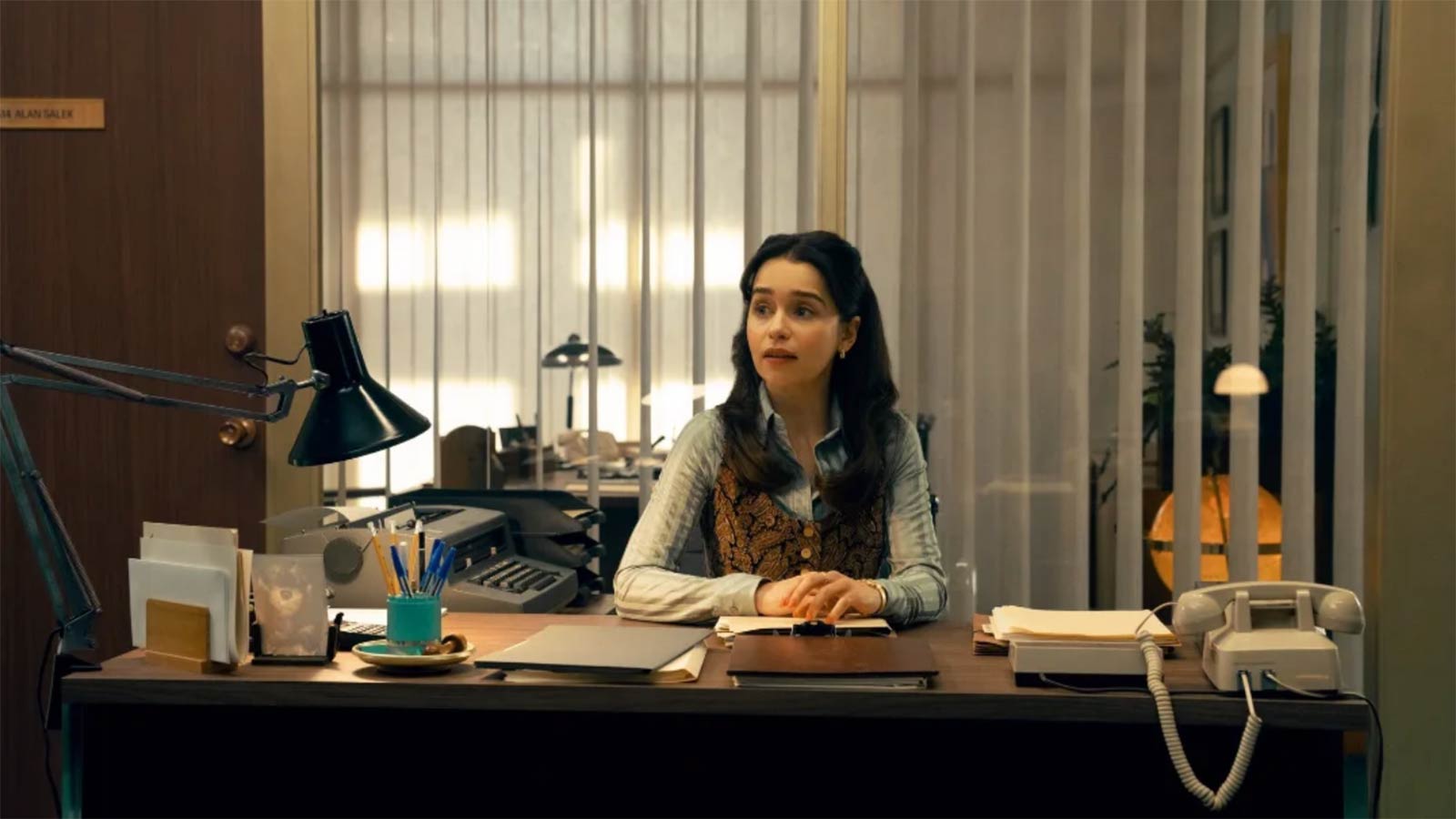
White’s research delved into an extensive archive of 1970s Russian films from Mosfilm and photographs from Western journalists who documented life in Moscow as the city began to open up. These sources revealed a much broader color palette and a more nuanced reality than typically portrayed in American cinema. Brutalism, while a significant architectural style of the era, was not the sole focus. White also incorporated elements of grander, older Russian architecture from the Czar era, some of which remained intact and were featured in the series. Filming in Budapest, with a 60% on-location to 40% built-set ratio, required a meticulous blending of aesthetics, often informed by local crew members who had firsthand experience of Soviet rule.
Color plays a pivotal role in revealing character and plot. While concrete and gray tones were present, White strategically wove in local stones and marbles, creating a “rich, ruddy aesthetic” with deep oranges, reds, and pinks for Soviet spaces. This warm palette thematically aligned with the Russian flag, contrasting sharply with the cool tones used to represent the American experience. Intriguingly, characters’ color palettes evolve based on their proximity to either the American or Soviet experience, irrespective of their origin. For instance, some Russian characters’ homes feature American-inspired palettes, signaling a closeness to Western influences that the KGB would have disapproved of.
Interior Clues and Social Commentary
The production design of ‘Ponies’ takes on an even deeper layer of significance by embedding clues within the interiors themselves. As White detailed, the show features a mole in the American Embassy, and discerning viewers will find hints of this betrayal in the character’s living environment. “In the headboard of the bed that two of the characters in Ponies share, for example, we have inset the marble from the Soviet buildings that we’ve been exploiting in the visual language of the show,” White explained. Custom-created wallpaper featuring red stars and bears further reinforces this connection, subtly linking the protagonist to the Soviet environment and hinting at their longer, deeper ties.
Beyond the narrative utility, the 1970s decor serves as a powerful commentary on human nature and societal structures. The era, characterized by a tangible culture of physical objects—records, books, media—allowed for a more immediate understanding of individual personalities. Unlike today’s digital world, where preferences are hidden behind apps, the 1970s provided “physical representations of people’s characters” on open display. This tangibility, White notes, offered a more direct connection to the quirks of each person, a facet she believes is often missing in contemporary life.
The contrast between American and Soviet design philosophies also serves as a poignant metaphor for their respective societies. American spaces, like the Embassy offices and apartments, are depicted as open-plan, reflecting an ideal of freedom and transparency. In stark contrast, Soviet environments feature tight, partitioned spaces, each enclosed by a door, symbolizing a system of hiddenness and control. White thoughtfully poses the question: “what’s scarier — or better — hiding yourself in the open, or locking yourself in a closet?” This architectural dichotomy highlights how two seemingly opposite systems might ultimately aim for similar goals, albeit through radically different means.
Emilia Clarke on Female Leads and Hollywood’s Persistent Challenges
For Emilia Clarke, ‘Ponies’ offers more than just an exciting spy thriller; it’s an opportunity to challenge industry norms. Speaking to NDTV, Clarke expressed her appreciation for sharing a central role with another woman, Haley Lu Richardson. “It’s a big thing,” she stated, underscoring the significance of having two female leads in a series, especially in a genre often dominated by male characters.
Despite her international fame and standing, Clarke remains a vocal advocate for gender equality in Hollywood. She candidly noted, “The gender disparity is not fixed by any means. There is still a wild pay gap difference.” Her personal experience over time has reinforced this conviction, leading her to feel that she is “always in a backroom with fame,” suggesting that even at the pinnacle of her career, the struggle for true equality persists. Her involvement in ‘Ponies’ not only delivers an engaging narrative but also subtly champions the representation she believes is still sorely needed in the entertainment industry.
‘Ponies’ masterfully blends thrilling espionage with profound social commentary, using the often-overlooked details of interior design to tell a richer, more human story of the Cold War era. Emilia Clarke’s presence, coupled with her commitment to highlighting gender disparity, adds an essential contemporary layer to a show that is as intellectually stimulating as it is entertaining. By revealing the porousness of the Iron Curtain and the shared human experiences across divides, the series offers a timely reminder that even in times of global tension, our interconnectedness remains undeniable.