
Quick Read
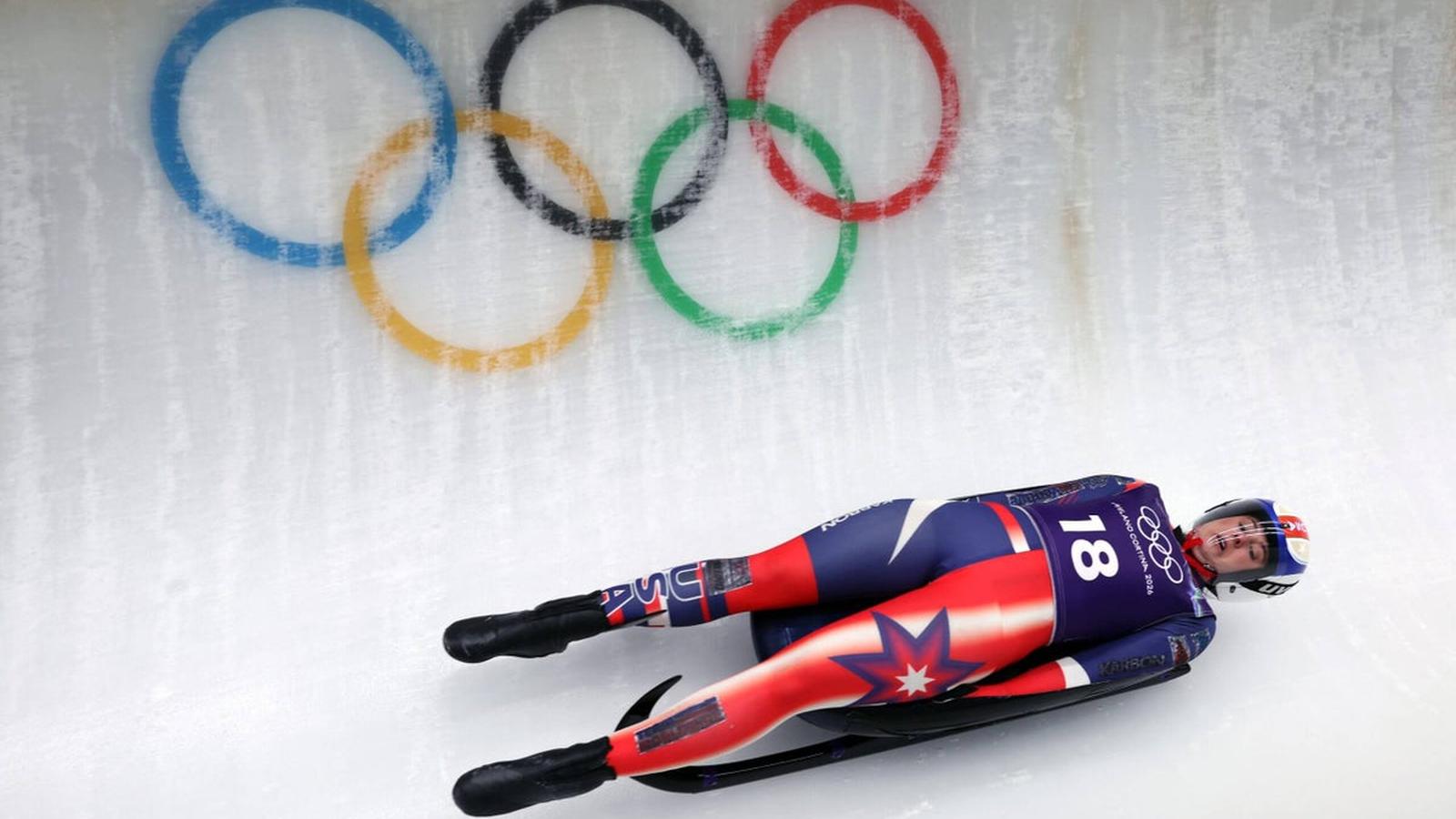
- Emily Fischnaller is competing in the women’s singles luge at the 2026 Winter Olympics in Cortina d’Ampezzo, Italy.
- She suffered a broken neck, back, and pinky finger in a horrific crash at the 2018 Pyeongchang Olympics.
- Fischnaller returned to competition within months of her injury, battling both physical pain and profound fear.
- She earned a bronze medal at the 2019 World Championships, less than a year after her crash.
- Currently ranked 14th in the world, Fischnaller is still pursuing an Olympic medal in her third Games.
CORTINA D’AMPEZZO, Italy (Azat TV) – American luger Emily Fischnaller is currently competing in the women’s singles event at the 2026 Winter Olympics in Cortina d’Ampezzo, Italy. Her participation marks her third Olympic appearance, a remarkable feat made even more significant by her journey back to the sport after sustaining a career-threatening broken neck and back at the 2018 Pyeongchang Games, as she continues her unwavering pursuit of an Olympic medal.
Fischnaller, 32, began her women’s singles luge runs on Monday, February 9, 2026, on the icy track in Cortina, her new home. Her return to the Olympic stage is a testament to her resilience, overcoming not only severe physical injuries but also the profound fear that followed her traumatic 2018 crash.
The Pyeongchang Crash and Its Aftermath
The incident at the 2018 Pyeongchang Olympics was a catastrophic moment that reshaped Fischnaller’s career. During her fourth and final run, she lost control on the ninth curve, her sled detaching from the ice at speeds exceeding 90 miles per hour. She slammed into the ice, a crash that medical personnel immediately rushed to attend. Later tests revealed she had broken her neck, back, and a pinky finger. In a split-second, she instinctively tucked her head, a decision credited with preventing a severe concussion.
The physical pain was immense, making the journey home to upstate New York agonizing despite painkillers. Further medical evaluations confirmed that surgery would not be necessary, but a long period of healing and recovery lay ahead. Her sister, Megan Sweeney, herself a 2010 luge Olympian, witnessed the crash live and described the visceral fear she felt, unable to watch the replay to this day. Megan noted that Emily, the youngest of three siblings, always possessed a ‘fly or die’ mentality, pushing limits even as a child.
A Grueling Comeback and Mental Battle
Despite the severity of her injuries, Fischnaller’s determination saw her return to training within months, a decision she now acknowledges was ‘way too early.’ The comeback was fraught with both physical and psychological challenges. The sport that had never previously scared her now instilled fear on multiple levels. Her nervous system struggled to re-acclimate to sliding, causing her to throw up after every practice run. This period, she recalled, was ‘physical, mental — I’m not even religious, but it was spiritual, too.’
Her stubbornness, coupled with a robust support system, proved crucial. She leaned on her family, teammates, and coaches, as well as her then-boyfriend and now husband, Italian luger Dominik Fischnaller, who recently earned a bronze medal in the men’s singles event on Sunday. Emily also sought professional help, meeting with a psychologist for a year to navigate the trauma. She learned to relinquish a degree of control, understanding that in luge, ‘As soon as you pull off, you’re in it.’ Less than a year after her crash, in January 2019, she achieved a bronze medal at the World Championships in Winterberg, Germany, a remarkable indicator of her progress.
Road to Cortina 2026 and Medal Pursuit
Fischnaller continued her Olympic journey at the 2022 Beijing Games, finishing 26th in an experience she and many athletes described as disappointing due to strict COVID-19 restrictions. The prospect of the 2026 Games in Cortina d’Ampezzo, near her new home in Meransen, Italy, provided a powerful motivation for her to continue. She and Dominik built a house near the Austrian border, approximately 90 minutes from the new Cortina track, making these Games a true home event.
Living with a baseline of chronic neck pain, Fischnaller has adapted her training and routines, constantly monitoring her fatigue levels to prevent spasms. Off the track, she has also found new purpose, establishing Champions 4 Change, a non-profit connecting Olympians and Paralympians with disabled individuals. She also excelled in German language courses last summer, eager to integrate into her local community.
Despite these achievements and the monumental effort of her comeback, Fischnaller remains singularly focused on her ultimate goal: an Olympic medal. Currently ranked 14th in the world, she acknowledges that simply finishing a race could be considered a victory after her ordeal, but her competitive spirit drives her for more. Her teammate Summer Britcher, a four-time Olympian and currently ranked No. 2, has observed Fischnaller’s ‘strong mentality’ and ‘work ethic’ over the past seven years, recognizing her unique drive.
Emily Fischnaller’s journey exemplifies an extraordinary human capacity for resilience, transforming a devastating professional setback into a deeply personal narrative of overcoming fear and trauma, making her story universally relatable beyond the realm of elite athletics.