
Quick Read
- Estonia requested NATO Article 4 consultations after Russian MiG-31 jets violated its airspace.
- NATO condemned the incident as ‘reckless Russian behaviour’.
- Article 4 allows NATO members to consult when their security is threatened.
- The incident marks a serious escalation in tensions along NATO’s eastern flank.
- NATO’s North Atlantic Council will formally discuss the perceived threat.
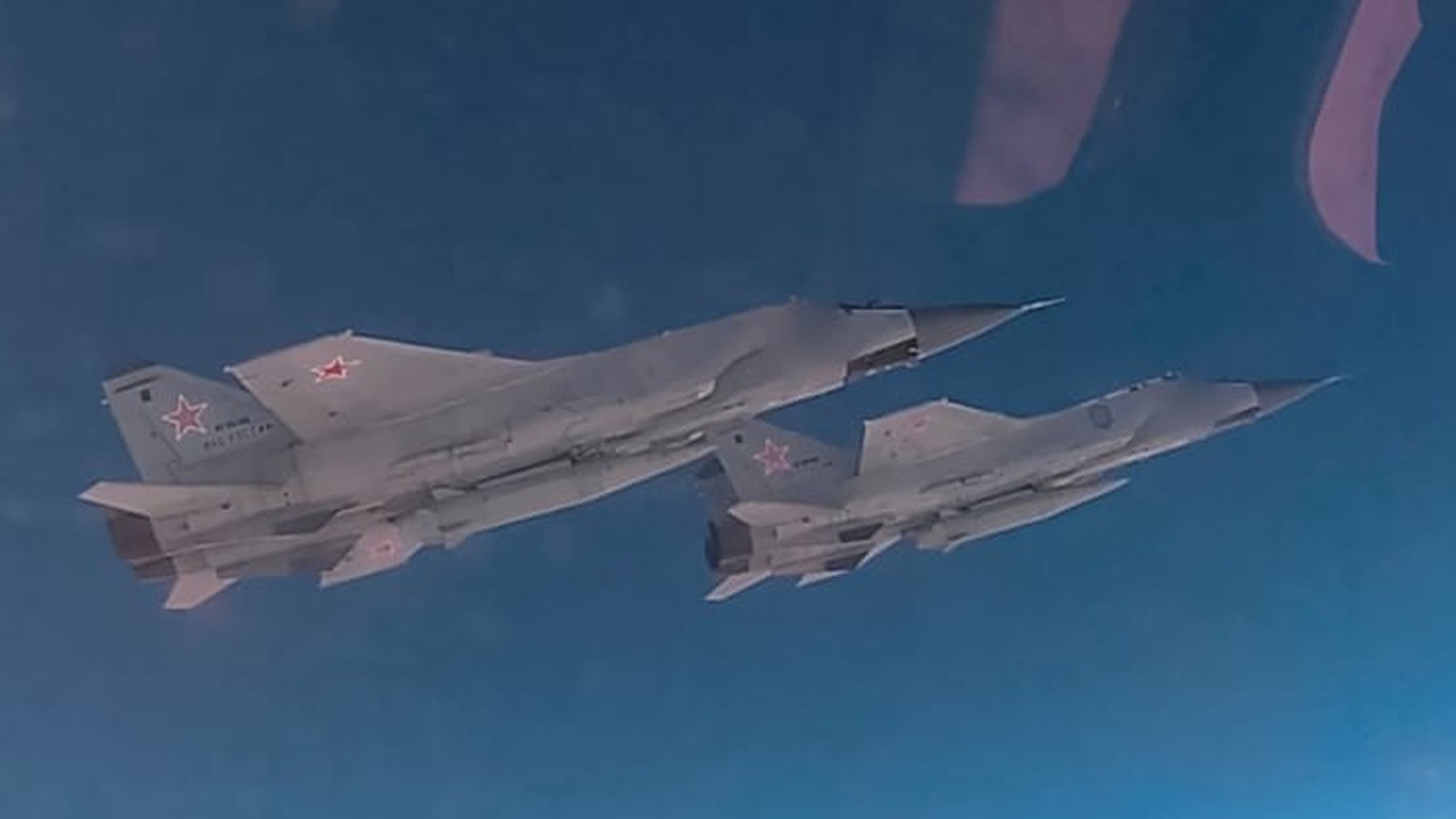
TALLINN (Azat TV) – Estonia has formally requested NATO Article 4 consultations following a significant violation of its airspace by Russian MiG-31 fighter jets, an incident that NATO swiftly condemned as ‘reckless Russian behaviour’. This development, occurring just recently, marks a serious escalation in tensions along NATO’s eastern flank and signals a renewed urgency in addressing Russia’s military conduct near allied borders.
The incident saw Russian MiG-31 aircraft, known for their high speed and operational capabilities, reportedly enter Estonian airspace without authorization. While the exact duration and depth of the intrusion were not immediately clear, the gravity of such a violation prompted Tallinn to invoke Article 4 of the North Atlantic Treaty, a crucial mechanism for alliance solidarity and consultation.
Estonia Invokes NATO Article 4 Following Airspace Breach
Article 4 of the NATO treaty states that member countries ‘will consult together whenever, in the opinion of any of them, the territorial integrity, political independence or security of any of the Parties is threatened.’ Estonia’s decision to invoke this article underscores its assessment of a direct threat to its sovereignty and security. This is not merely a procedural step but a clear signal that Tallinn views the Russian action as a destabilizing act requiring a collective alliance response.
The invocation of Article 4 does not automatically trigger military action, but it mandates a formal meeting of the North Atlantic Council, NATO’s principal political decision-making body. During these consultations, member states will discuss the perceived threat and explore potential responses, which could range from increased surveillance and enhanced air policing to diplomatic démarches.
NATO Condemns ‘Reckless Russian Behaviour’
In response to Estonia’s request, NATO issued a strong condemnation of the Russian action, explicitly labeling it ‘reckless Russian behaviour’. This statement from the alliance leadership highlights the collective concern among member states regarding Moscow’s increasingly assertive and unpredictable military maneuvers near NATO territory. The condemnation serves as a public warning, emphasizing that such actions are viewed as provocative and detrimental to regional stability.
NATO’s response is consistent with its long-standing policy of robust deterrence and defense, particularly in the Baltic region. The alliance has significantly bolstered its presence in Eastern Europe since Russia’s full-scale invasion of Ukraine, deploying additional troops, aircraft, and naval assets. The latest airspace violation by Russian jets will likely intensify calls for further strengthening these defensive measures to prevent future incursions and reassure frontline allies.
Implications for Baltic and European Security
The incident over Estonian airspace is not isolated but part of a broader pattern of Russian military activity that challenges the security of NATO members and their partners. While routine intercepts of Russian aircraft near NATO airspace are common, an unprovoked violation of sovereign airspace, especially by advanced fighter jets, represents a more serious breach of international norms and national sovereignty.
For Estonia, a former Soviet republic that shares a long border with Russia and is deeply integrated into NATO and the European Union, such incidents carry significant historical and geopolitical weight. The violation reinforces concerns about Russian intentions and its willingness to test the resolve of the Western alliance. It also places renewed focus on the critical importance of collective defense for smaller member states situated geographically close to Russia.
The formal request for NATO Article 4 consultations by Estonia following a Russian airspace violation underscores the persistent and immediate security challenges facing the alliance’s eastern flank, demanding a unified and strategic response to deter further provocative actions.