
Quick Read
- Ethan Hawke stars as lyricist Lorenz Hart in Richard Linklater’s ‘Blue Moon’.
- The film unfolds in a single night at Sardi’s bar, exploring creative rivalry and personal heartbreak.
- Hart reflects on his lost partnership with Richard Rodgers and the rise of ‘Oklahoma!’.
- Margaret Qualley and Andrew Scott deliver standout performances as Elizabeth Weiland and Richard Rodgers.
- Inspired by real letters, ‘Blue Moon’ captures a bittersweet moment in Broadway history.
Ethan Hawke as Lorenz Hart: Channeling Vulnerability and Creative Fire
There are moments in film where an actor dissolves into their role so completely that the audience forgets they’re watching a performance. Ethan Hawke’s turn as the legendary lyricist Lorenz Hart in Richard Linklater’s Blue Moon is one of those moments. The story begins on a rain-soaked street in New York, where Hart, at just 48, collapses—ushering in a night of reflection, regret, and raw honesty that unfolds entirely within the walls of Sardi’s restaurant. It’s a setting as iconic as the figures who populate it, and for Hawke, it’s fertile ground to explore the wounded heart of a man who once helped shape the very sound of American musical theater.
Inside Sardi’s: Creative Rivalry and Lost Affection
As the film pivots to the plush, smoky bar at Sardi’s, the narrative zeroes in on the aftermath of Oklahoma!’s triumphant opening night—a show that Hart, both bitter and envious, dismisses as “shallow Americana kitsch.” It’s a pointed jab, not just at the musical, but at its composer, Richard Rodgers, Hart’s former partner and now rival. The two were, until recently, a powerhouse duo responsible for timeless classics like “My Funny Valentine” and “The Lady Is a Tramp.” But Rodgers, tired of Hart’s unreliability and struggles with alcoholism, has moved on to collaborate with Oscar Hammerstein II, launching a new era with Oklahoma! and other legendary shows.
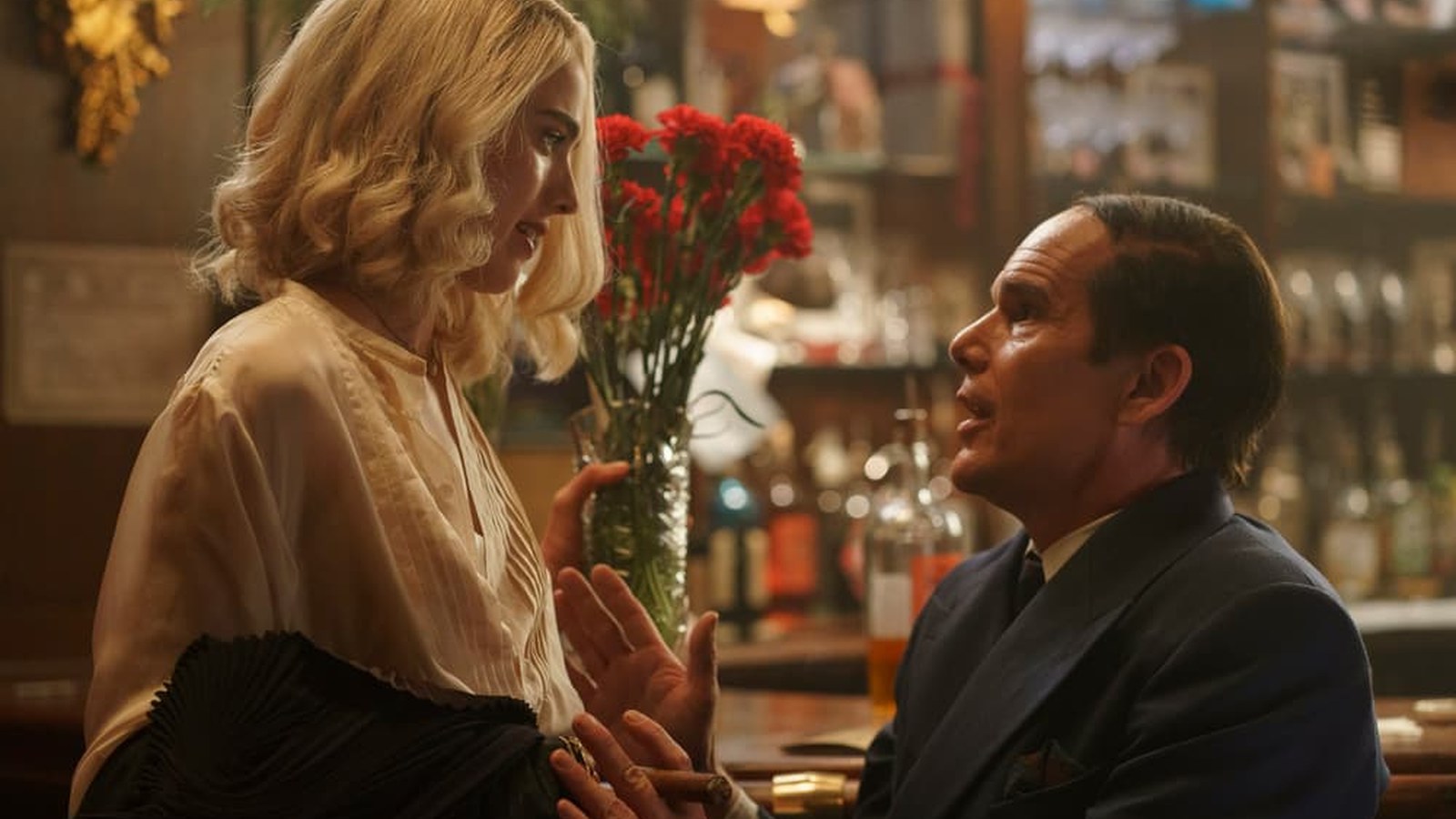
Hawke’s portrayal is layered. He gives Hart a palpable sense of loss—not just of artistic partnership, but of relevance. The bar becomes a crucible for these emotions, with Hart surrounded by a handful of confidants: a bartender (Bobby Cannavale), a visiting pianist (Jonah Lees), and the writer E.B. White (Patrick Kennedy). Their conversations swirl with song, stage, and the sting of success that has slipped away.
Margaret Qualley and Andrew Scott: New Blood, Old Wounds
When Elizabeth Weiland (Margaret Qualley), a Yale student and Hart’s unrequited muse, arrives, the dynamic shifts. Qualley brings an “old Hollywood glamour” that feels both out of place and perfectly at home among Broadway’s elite. Hart’s infatuation is hopeless—she’s half his age and does not return his affection. Yet their exchanges add another note of vulnerability to Hawke’s performance, revealing the lyricist’s desperate longing for connection and validation.
Andrew Scott enters as Richard Rodgers, his demeanor gracious but unmistakably buoyed by the early rave reviews of Oklahoma!. The tension between Hawke and Scott is electric; their scenes together crackle with unresolved creative and emotional friction. Hart wants to write “emotionally complex” works, to lampoon the sentimental, while Rodgers questions whether sentimentality is “too easy”—a question that, in wartime America, seems almost beside the point. Audiences crave stories of love and triumph, leaving Hart’s genius to languish in the shadows.
One Night, One Room: A Deep Dive into the Creative Psyche
Linklater’s decision to confine the action to a single evening and a single location pays off. The film becomes a pressure cooker for Hart’s insecurities and aspirations. Robert Kaplow’s screenplay is deft, guiding viewers through smoky banter, confessions, and moments of painful clarity. The dialogue is sharp, yet never theatrical for its own sake; it feels like overheard conversation, private and unguarded.
Qualley shines in a scene where she confides in Hart about a confusing college romance, her vulnerability mirroring his own. The supporting cast, especially Cannavale and Kennedy, provide ballast, their reactions offering a chorus of empathy and skepticism that ground the proceedings. But it’s Hawke who anchors the film, his performance capturing the diminutive physicality and emotional grandeur of Hart—a man “drunk with beauty wherever he finds it,” but unable to hold onto it.
Legacy, Loneliness, and the Bitter Dregs
The genius of Blue Moon is in its restraint. Rather than wallowing in melancholy, the film invites viewers to sit with Hart in his final hours of relevance, to swirl the “bitter dregs” of lost opportunity and faded glory. The imagined night at Sardi’s is inspired by real letters between Hart and Elizabeth, lending the story an authenticity that transcends mere biopic.
As the night ends, and the camera slowly pulls away, there’s a sense that we’re not watching a tragedy, but rather witnessing the closing of a chapter—one that shaped Broadway, but was ultimately outpaced by changing tastes and personal demons.
Hawke’s performance in Blue Moon is a masterclass in nuance, drawing out the contradictions of genius and insecurity. The film stands as a poignant meditation on the cost of creativity, the shifting tides of cultural relevance, and the universal longing to be truly seen—even if just for one night. (Source: Evening Standard)