
Quick Read
- The EU and US finalized a trade deal imposing a 15% tariff on EU exports to the US.
- The agreement was negotiated by Ursula von der Leyen and Donald Trump to avert a tariff war.
- Pharmaceuticals were excluded from the deal, raising concerns of future conflicts.
- Mixed reactions emerged across Europe, with businesses fearing profit losses.
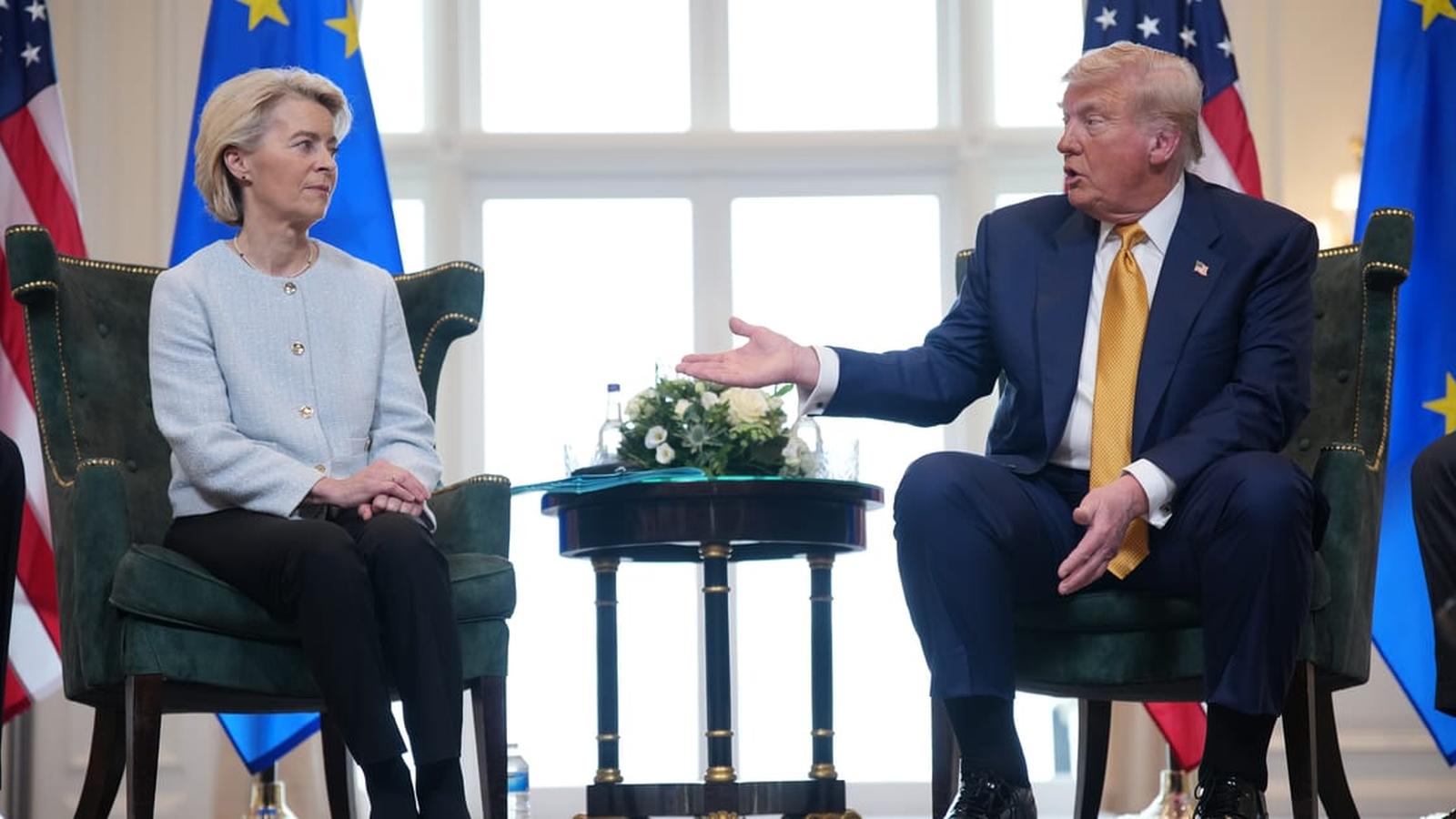
The European Union and the United States have reached a critical trade agreement following weeks of tense negotiations, avoiding what could have been a damaging tariff war between the two economic giants. The deal, finalized on July 27, 2025, during a meeting in Turnberry, Scotland, was spearheaded by European Commission President Ursula von der Leyen and US President Donald Trump. Under the terms of the agreement, a 15% tariff will be imposed on most EU exports to the United States, a significant increase from the previous average tariff of 4.8%.
Critical Context: Tensions Leading to the Deal
The negotiations were marked by mounting pressure as Trump had set a self-imposed deadline of August 1, threatening to implement a 30% tariff on EU exports if a deal was not reached. According to Politico, this ultimatum led to a polarized response among EU member states, with some advocating for retaliation and others pushing for a quick resolution. Germany and Italy, two of the bloc’s largest economies, were particularly keen on avoiding a full-scale trade conflict.
Von der Leyen described the negotiations as “tough but fruitful,” emphasizing the importance of stability and predictability for transatlantic businesses. “We have a trade deal between the two largest economies in the world,” she stated, adding that the agreement would help rebalance the trade relationship, which has been skewed in the EU’s favor for years.
Key Terms of the Agreement
Under the new terms, the majority of EU exports to the US will face a 15% tariff, a rate lower than the 20% imposed earlier this year but significantly higher than the pre-Trump era. The deal excludes pharmaceuticals, a sector heavily reliant on the American market, raising concerns about potential future clashes. Trump justified the exclusion by stating, “Pharmaceuticals are very special. We can’t be in a position where we’re relying on other countries.”
The agreement also aligns the EU’s tariff rate with that of other nations like Japan, which has similarly negotiated a 15% tariff with the US. However, the deal does not address the 50% tariffs already imposed on EU steel and aluminum exports, nor the 25% tariff on cars, leaving some industries vulnerable.
Mixed Reactions Across the Atlantic
Reactions to the deal have been mixed. While Trump hailed it as “the biggest deal ever made,” European leaders offered more measured responses. France and Spain had initially called for a stronger stance against US threats but ultimately endorsed the agreement to prevent economic fallout. Von der Leyen acknowledged that the 15% tariff was a concession but argued that it was necessary to maintain trade flows and avoid retaliatory measures.
Businesses on both sides of the Atlantic expressed concerns about the long-term implications of the agreement. Export-oriented companies, particularly in sectors like automotive and agriculture, warned that higher tariffs could erode their competitiveness in the American market. Meanwhile, US manufacturers welcomed the move as a step toward reducing the trade deficit with the EU.
Future Challenges and Unresolved Issues
Despite the agreement, several challenges remain. The exclusion of pharmaceuticals from the deal is seen as a missed opportunity for the EU, which exports significant volumes of medical products to the US. According to Euronews, the Trump administration has already initiated investigations into EU pharmaceutical imports, signaling potential future tariffs.
Additionally, the deal has not resolved the broader tensions in transatlantic trade relations. The EU had prepared a list of retaliatory measures worth €93 billion but refrained from implementing them. Analysts believe that the agreement has merely postponed a deeper conflict rather than resolving it.
Another looming issue is the legal challenge to Trump’s authority to impose tariffs under the pretext of a national emergency. A federal appeals court is set to hear arguments on the matter next week, which could further complicate the trade landscape.
*In the end, while the EU-US trade agreement represents a significant step toward stability, it also underscores the complexities and compromises inherent in global trade negotiations. As both sides navigate the fallout, the agreement serves as a reminder of the delicate balance required to maintain economic partnerships in an increasingly protectionist world.*