
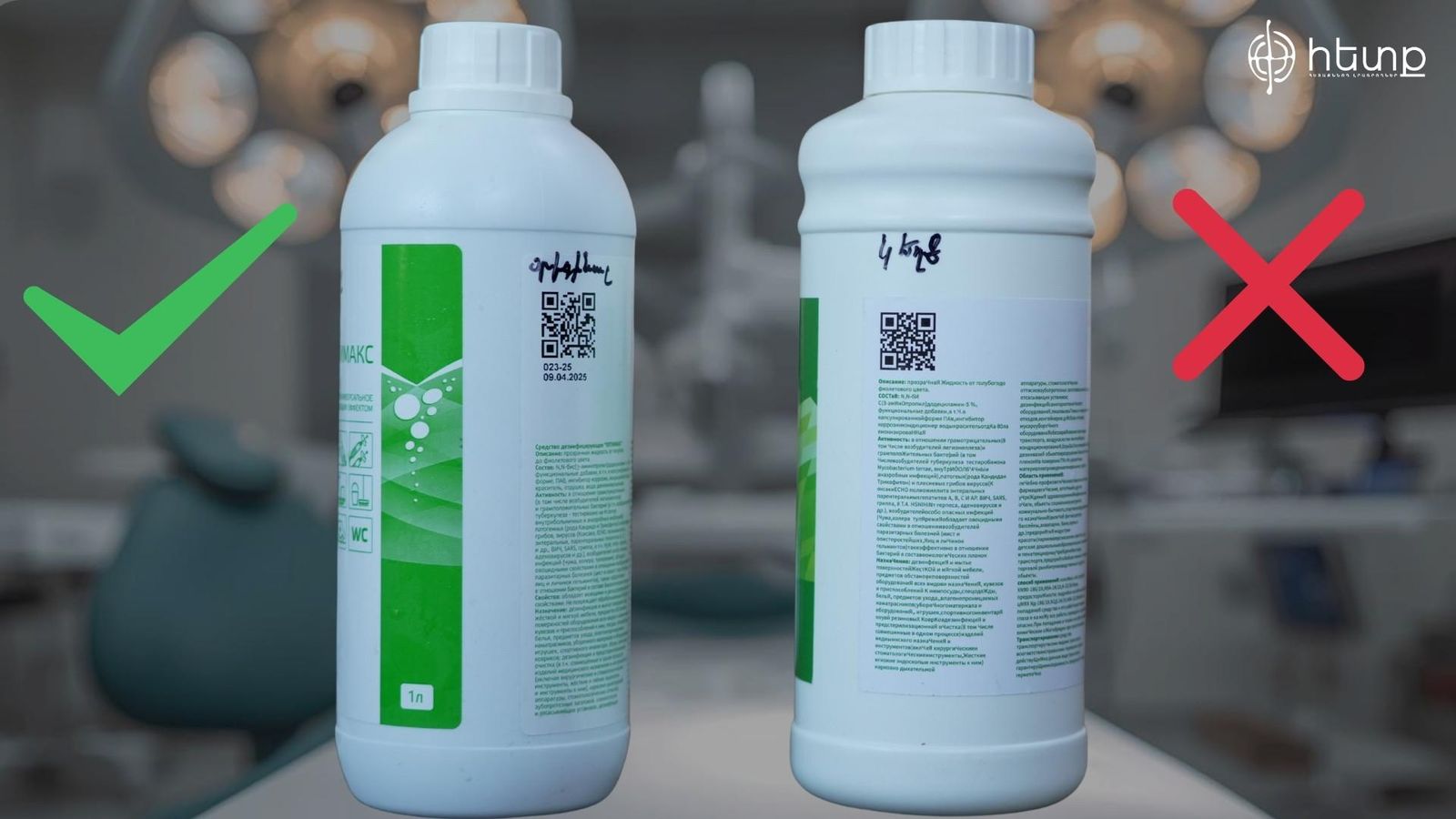
- Armenia’s authorities have not decided which government body should regulate the sale of counterfeit disinfectants.
- The absence of a clear supervisory authority creates enforcement ambiguities and gaps in consumer protection.
- Counterfeit disinfectants may be ineffective or hazardous, posing risks to public health and safety.
- The dispute highlights broader governance and regulatory challenges facing Armenia’s markets.
In Armenia, concerns are mounting that counterfeit disinfectants are circulating in markets and households, a problem now compounded by an unresolved question: which government body should regulate their sale? Officials say there is no formal, single mandate that covers the entire lifecycle of these products—from manufacture and import to distribution and retail. The lack of a designated lead agency has created a regulatory vacuum in which inspections can be sporadic, enforcement actions uneven, and recalls slow to mobilize. Businesses and consumers alike report uncertainty about which checks apply, leading to a gray market for disinfectants that may be unsafe, ineffective, or mislabeled.
Disinfectants are products whose safety and effectiveness depend on precise chemical formulations, clear labeling, and verified packaging. When counterfeit or substandard versions enter the supply chain, they can fail to kill germs, leave residues, or cause skin and eye irritation. In worst cases, undisclosed active ingredients or high concentrations of toxic chemicals pose direct health risks, particularly for households with children, the elderly, or people with chemical sensitivities. The absence of reliable oversight makes it harder to separate legitimate products from counterfeit ones in stores, online platforms, and informal networks, and it complicates consumer warnings when problems arise. The situation also complicates procurement for institutions such as clinics or schools, where the reliability of disinfectants is crucial for infection control and hygiene protocols.
The governance challenge in Armenia reflects the broader difficulty of coordinating regulation of chemical and consumer products across agencies. In many countries, separate bodies handle health protection, consumer rights, product safety testing, and border controls, but they operate under a clearly defined authority or a joint framework. In Armenia, as long as no single body is recognized as the lead regulator for disinfectants, mandates either overlap or fall into bureaucratic gaps. Such fragmentation hampers routine inspections, public-interest investigations, and the ability to impose meaningful penalties on counterfeiters, undermining efforts to protect public health during health crises or routine cleaning and sanitation campaigns. Without a clear point of accountability, regulators may struggle to coordinate risk assessments, lab testing, and recall operations, allowing problematic products to remain on shelves or in circulation longer than warranted.
The practical effects of this ambiguity are already visible in enforcement practice. Officials may struggle to initiate market investigations without a designated lead, and cross-agency coordination can be slow. Stores and distributors face uncertain compliance requirements, while illicit suppliers can exploit the confusion to avoid product registration or quality checks. Consumers, meanwhile, may encounter inconsistent labeling or be unable to verify safety information, eroding trust in legitimate brands and in government assurances about product safety. The absence of a unified framework also complicates data collection on the scale of the problem—how many counterfeit products are in circulation, which brands are affected, and where the hotspots are for sales or distribution. In such an environment, even routine enforcement actions become logistically challenging and time-consuming, reducing the efficacy of any response to counterfeit outbreaks.
International patterns offer a stark contrast. Jurisdictions that have established a clear regulatory owner for disinfectants—often paired with cross-agency task forces, mandatory product registration, and stringent penalties—tend to respond more quickly to counterfeit discoveries, issue recalls more effectively, and provide clearer information to the public. Experts also emphasize the importance of border screening for imported chemical products, standardized lab testing, and traceability measures that allow regulators to track a product from factory to shelf. While Armenia has not publicly announced a formal reform plan, observers say that adopting similar structural reforms would help address the current gaps. In addition, public-facing communication about how to identify legitimate products and how to report suspected fakes can help mitigate harm while long-term regulatory changes are pursued.
Any path forward would require concrete steps: ring-fencing disinfectant regulation under a lead agency or a formal interagency commission; codifying responsibilities in a dedicated statute or regulatory decree; establishing or expanding accredited laboratories for product testing; creating a centralized database of registered products and batch information; adopting import controls that require verification of safety data sheets; and implementing swift recall and penalty mechanisms to deter counterfeiters. Public awareness campaigns could educate consumers on how to identify legitimate products, how to check packaging for authenticity, and how to report suspected counterfeit goods. While these reforms can be technically straightforward, they demand political will, sustained funding, and effective coordination across ministries and agencies. The process will require careful drafting to avoid duplicative rules and to ensure that enforcement powers are clear, proportionate, and capable of rapid action when safety concerns arise.
In parallel, improvement of market surveillance infrastructure—such as better data-sharing between agencies, clearer inspection protocols, and trained personnel—will help regulators respond more swiftly to emerging threats. Strengthening collaboration with international partners and aligning with global standards for disinfectants can also bolster Armenia’s reputation for product safety and consumer protection. If implemented effectively, such reforms would not only curb counterfeit products but also restore confidence among consumers, retailers, and institutions that rely on disinfectants for everyday hygiene as well as critical public-health operations. The ultimate test, however, will be whether the political and administrative machinery can translate policy intentions into durable, enforceable reforms that reduce risks and protect the health of Armenian citizens in a fast-evolving marketplace.
FINAL ANALYSIS: Unclear regulatory ownership in Armenia over disinfectants highlights a critical governance gap that could undermine both consumer safety and public health if not addressed. A decisive move to designate a lead regulator and establish an interagency framework would not only curb counterfeit products but also signal to citizens and international partners that Armenia is serious about product safety, transparency, and accountability in its markets.