
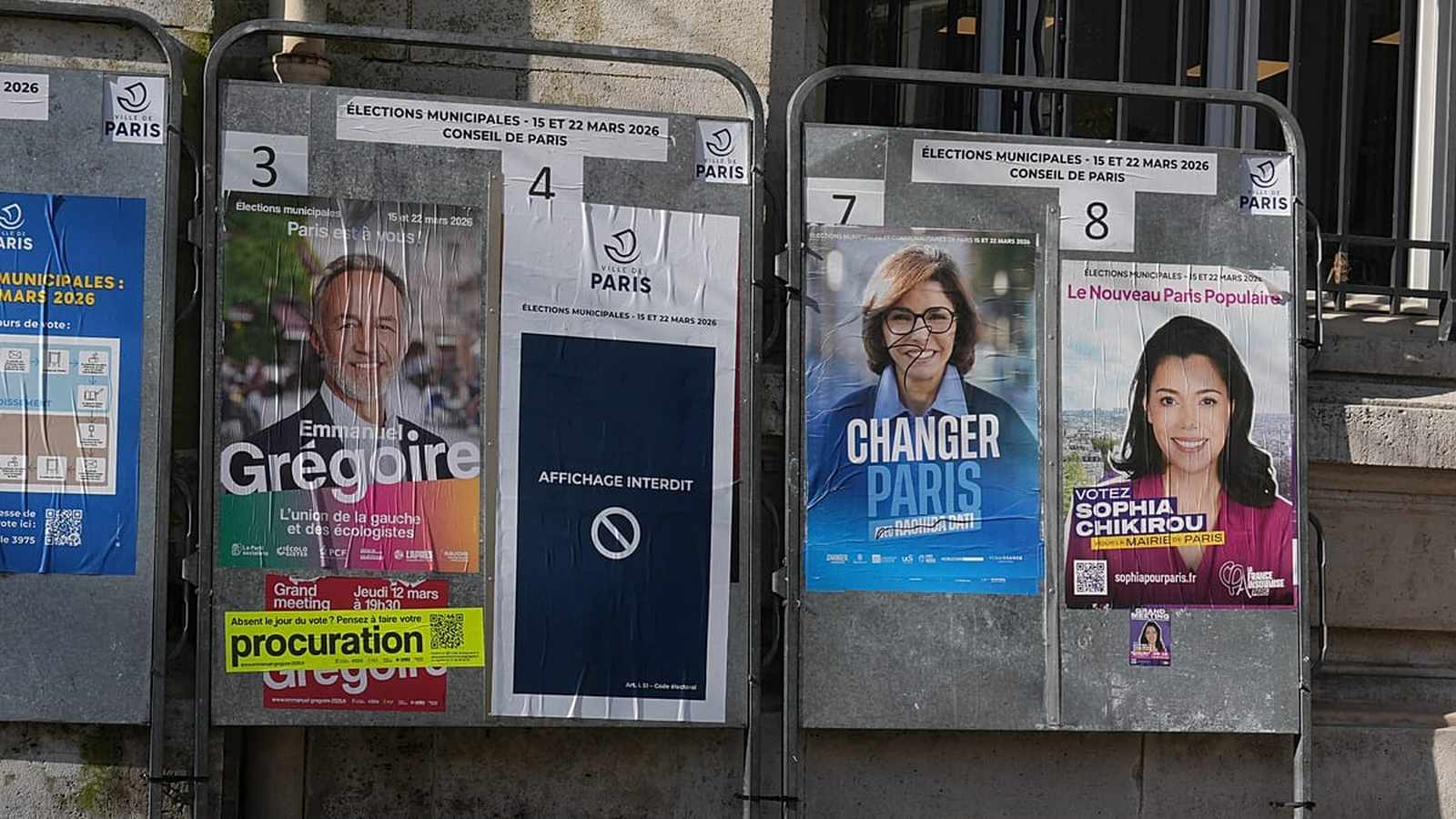
Quick Read
- France’s municipal elections are a key indicator of party strength ahead of next year’s presidential vote.
- The far-left ‘La France Insoumise’ and the far-right ‘National Rally’ have shown significant gains.
- Results will shape alliances and reveal shifts in voter sentiment across the nation.
PARIS (Azat TV) – France’s municipal elections, culminating in their second round of voting, are being closely watched as a crucial barometer of the nation’s political health, particularly with the presidential election just a year away. The results of this electoral exercise are shaping alliances and revealing shifts in voter sentiment across the country.
Key Parties Vie for Municipal Control
In the aftermath of the first round, a series of party negotiations, agreements, and withdrawals have set the stage for the decisive vote. Analysts are viewing Sunday’s ballot as a critical indicator for each party’s standing, especially given the proximity to the presidential contest. Preliminary results from the first round indicate that the Socialists (PS) and the center-right coalition including Les Républicains (LR), Horizon, MoDem, and Renaissance, have garnered a significant share of votes. However, political observers have also noted a surprising surge in support for the National Rally (RN) and Jean-Luc Mélenchon’s La France Insoumise (LFI).
Far-Left’s Growing Influence
La France Insoumise is experiencing an unprecedented level of representation in these municipal elections. The party, positioned on the left flank of the political spectrum, has already secured the mayoralty of Saint-Denis from the Socialists in the first round. LFI aims to win mayoral seats in approximately a dozen more communes. Despite past tensions and accusations of antisemitism leveled against its leader Jean-Luc Mélenchon, which led the Socialist Party’s leadership to distance themselves, the Socialists’ first secretary, Olivier Faure, acknowledged the necessity of forming agreements following the initial vote count.
National Rally’s Bid for Local Governance
On the far-right, the National Rally (RN) has already solidified its control in Perpignan, with Louis Aliot re-elected in the first round. The RN’s objective is to retain several towns won in 2020, demonstrating its capacity not merely as a protest movement but as a party capable of effective local administration. Marine Le Pen’s party is targeting several major cities, including Toulon and Marseille, France’s second-largest city. In Marseille, the RN’s candidate, Franck Allisio, is challenging the incumbent Socialist mayor, Benoît Payan.
Right-Wing Parties Consolidate Positions
The center-right camp, which currently holds sway in only a few cities with populations exceeding 100,000, is striving to prove its continued ability to counter the National Rally’s advance. Their performance in these elections will be crucial in maintaining their electoral relevance and demonstrating their capacity to hold positions against a resurgent far-right.
The municipal elections offer a vital snapshot of French political dynamics, revealing the evolving electoral landscape and the strategic maneuvering of major parties as they position themselves for the upcoming presidential race. The gains by the far-left and far-right signal a potentially more fragmented and polarized political future.
Source: Euronews