
Quick Read
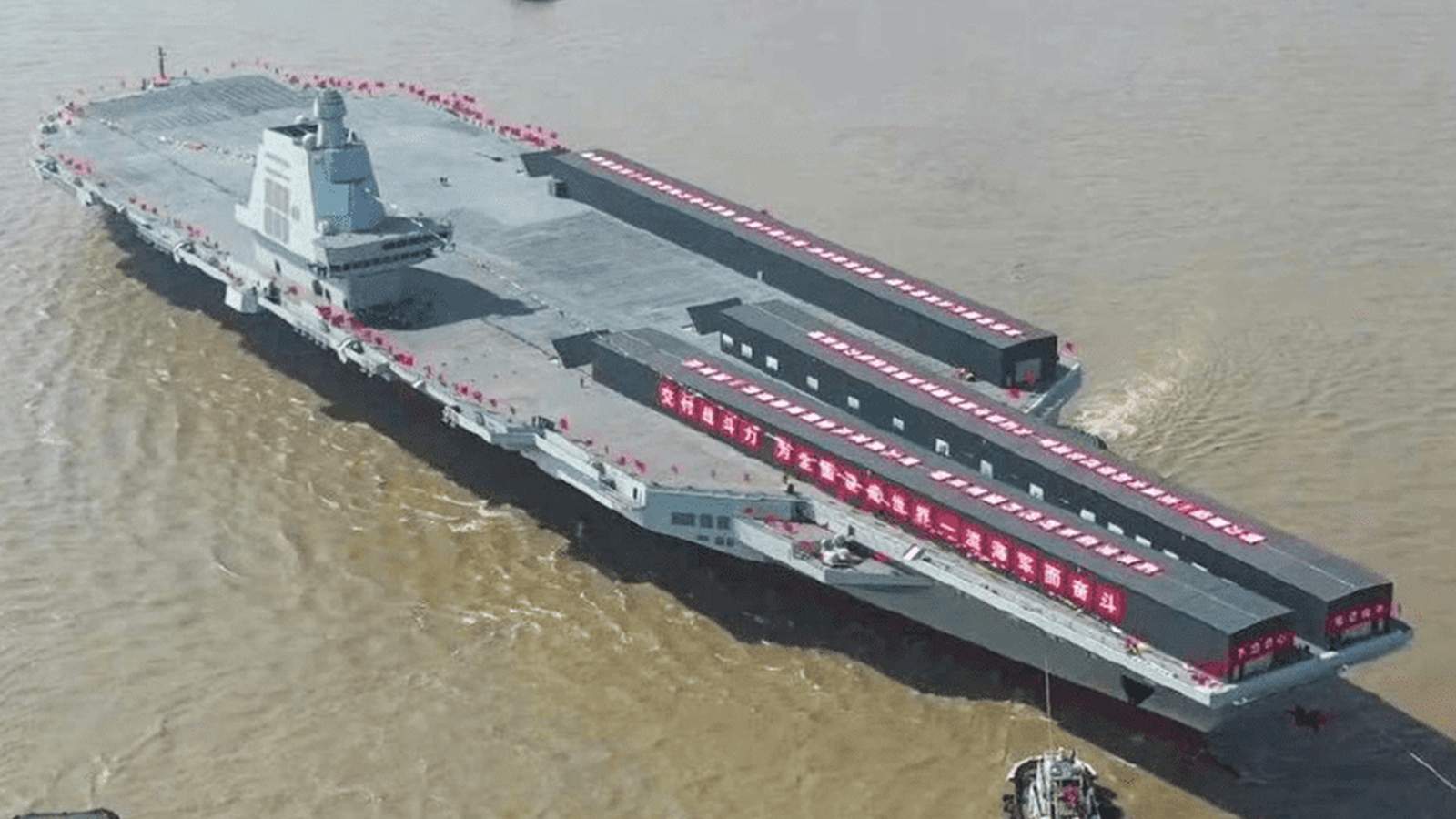
- China has officially commissioned its third aircraft carrier, Fujian, into active service.
- Fujian is the world’s second carrier to use electromagnetic catapult technology.
- The carrier’s name signals China’s strategic focus on Taiwan and the region.
- Fujian province is also deepening economic and cultural ties with Taiwan through rural development projects.
China Commissions Fujian: A New Chapter in Naval Power
On November 5, 2025, China officially commissioned its third aircraft carrier, the Fujian, into the People’s Liberation Army Navy (PLAN). This event, held in Sanya City, Hainan Province, was attended by President Xi Jinping, who personally inspected the vessel and reviewed its advanced combat systems. For the world’s largest navy by ship count, the launch of Fujian is much more than a symbolic milestone—it’s a technological leap and a strategic statement.
Electromagnetic Catapults: China’s Leap Forward
What sets Fujian apart from its predecessors—Liaoning and Shandong—is its adoption of electromagnetic catapult technology. Unlike the older ramp-based systems, which are limited in the types of aircraft they can launch, electromagnetic catapults (EMALS) provide a powerful push, enabling heavier and more advanced aircraft to take off from the carrier’s deck. This feature places Fujian in an elite club: it is only the second carrier worldwide, after the US Navy’s USS Gerald R Ford, to deploy EMALS, and the 13th carrier in active service globally.
The technology, personally endorsed by Xi Jinping, promises greater operational flexibility and efficiency. Fujian’s deck measures an impressive 316 meters and hosts three electromagnetic catapults and two aircraft lifts. The carrier is designed to accommodate between 70 and 100 aircraft, including the fifth-generation J-35A stealth fighters, KongJing-600 early warning planes, and Z-20 helicopters. While the ship was under construction, parallel efforts ensured the development of these carrier-based aircraft and supporting equipment, according to Senior Captain Leng Guowei of the Chinese Navy (Xinhua).
Comparisons: Fujian vs. the American Carrier Fleet
Despite its technological advancements, Fujian still trails American aircraft carriers in several critical aspects. The United States operates 11 nuclear-powered carriers, each larger and more capable than Fujian. While Fujian’s 80,000-ton displacement makes it one of the largest carriers afloat, it lacks nuclear propulsion, limiting its operational range. Its flight deck, though substantial, is not as large or as optimized as the American Nimitz or Ford-class carriers.
Carl Schuster, a former US Navy captain, estimates Fujian’s operational capability at about 60% of a Nimitz-class vessel. In practical terms, for every ten aircraft an American carrier can launch, Fujian can manage six. This gap illustrates not only the technological lead held by the US but also the rapid progress China is making in narrowing it (CNN).
Nonetheless, Fujian’s induction is a major boost for China’s military modernization. It will enhance the PLAN’s ability to project power far from home waters, a capability increasingly relevant amid rising regional tensions.
Symbolism and Strategy: The Name Fujian and Taiwan
The choice of the name Fujian is highly symbolic. The province faces the Taiwan Strait, and experts widely expect the carrier to be deployed in operations near Taiwan. The naming underscores Beijing’s commitment to reunification rhetoric, as President Xi has repeatedly emphasized the goal of bringing Taiwan under mainland control, by force if necessary.
Since 1949, the PRC and Taiwan (Republic of China) have existed as separate entities, each claiming to represent China. Recent years have seen Beijing ramp up military activities and pressure on Taipei. The launch of Fujian sends a clear signal—not only to Taiwan but also to the region and the world—of China’s intent to modernize and strengthen its maritime capabilities. However, as Collin Koh of Singapore’s S Rajaratnam School of International Studies notes, China still needs to refine and test many of Fujian’s new systems before it can be fully integrated into potential conflict scenarios (Reuters).
Regional Implications: India, South China Sea, and Beyond
Fujian’s commissioning coincided with the US Air Force’s successful test launch of a Minuteman-II intercontinental ballistic missile, highlighting the ongoing global military competition. As China builds toward its goal of a 460-ship navy by 2030, neighboring countries are watching closely. India, for example, currently operates two carriers—INS Vikramaditya and INS Vikrant—and faces the prospect of a widening capability gap as Chinese naval power grows (Indian Masterminds).
Security analysts warn that Fujian’s advanced technologies could alter the balance of power in the Asia-Pacific, affecting not just military calculations but also trade routes and regional stability. The South China Sea and Indian Ocean, critical to global commerce, may become arenas for increased strategic maneuvering as China’s navy becomes more capable and visible on the high seas.
Fujian Province: Bridging Economic and Cultural Divides
While the aircraft carrier grabs headlines, Fujian province itself is quietly building bridges across the Taiwan Strait. In Sanming, a city in Fujian, rural development initiatives are attracting Taiwanese investment and expertise. A recent cross-Strait rural development forum drew over 400 Taiwanese participants, highlighting growing economic integration.
Sanming boasts a forest coverage rate of 78%, making it an attractive destination for agricultural and environmental projects. In Jianning county, Taiwanese entrepreneur Lin Hsiu-ying founded an oil tea camellia cooperative, employing local workers and boosting household incomes. The cooperative has increased the earnings of 112 local families by more than 4,000 yuan per person, thanks to new varieties, equipment, and talent brought from Taiwan (China Daily).
These efforts reflect a parallel track of engagement—one that seeks to foster economic ties and cultural understanding, even as political tensions persist. The integration of Taiwan’s skills and investments into Fujian’s rural economy may not make headlines, but it holds significance for cross-Strait relations.
The Road Ahead: Testing, Integration, and Diplomacy
Fujian, bearing hull number 18, is now active but will continue undergoing in-depth testing and verification as its systems and carrier-based aircraft are integrated. Senior Captain Leng Guowei stresses that China’s naval modernization is not aimed at any specific country, but at safeguarding national sovereignty and development interests. He emphasizes that these efforts do not pose threats to other nations or regions.
In the coming years, China’s continued investment in naval technology and infrastructure is likely to keep the region—and the world—on alert. Whether Fujian becomes a true “game changer” will depend on how effectively its capabilities are tested, refined, and deployed in real-world scenarios. Meanwhile, the province of Fujian itself offers an example of pragmatic engagement and cooperation, even amid geopolitical rivalry.
China’s Fujian aircraft carrier embodies both technological ambition and strategic intent. While it does not yet match US capabilities, its rapid development signals a shifting balance in naval power and underscores the importance of ongoing dialogue and diplomacy in the Asia-Pacific.