
Quick Read
- Mass protests erupted in Georgia during municipal elections, with opposition groups calling for a peaceful revolution.
- The ruling Georgian Dream party faces accusations of authoritarianism and pro-Russian policies.
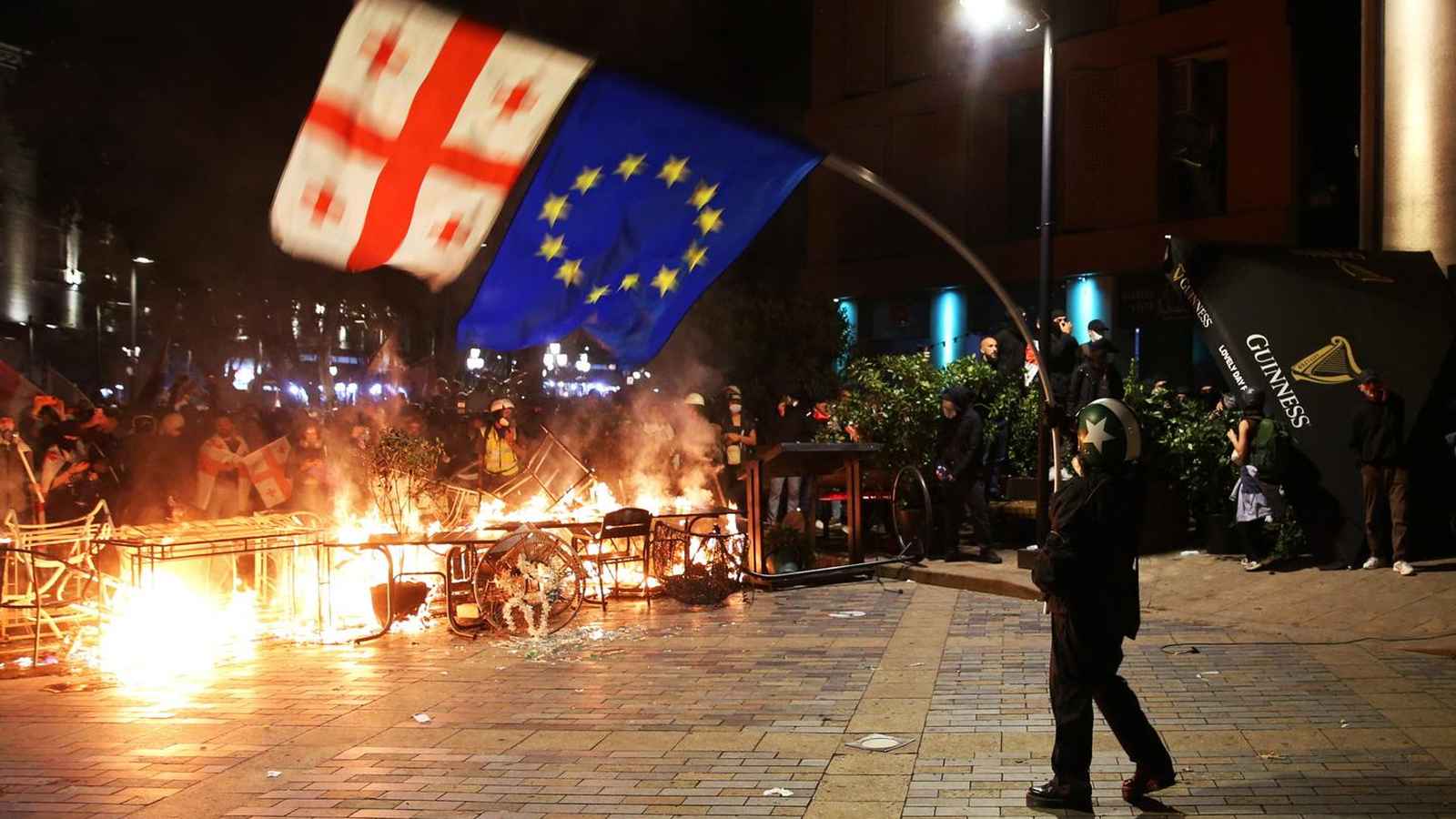
- Protesters demand closer ties with the EU and democratic reforms, symbolizing frustration with the government.
- Authorities responded with force, using tear gas and water cannons to disperse demonstrators.
- The unrest highlights Georgia’s critical crossroads between democratic aspirations and geopolitical challenges.
Georgia, a nation nestled in the South Caucasus, has long been a symbol of resilience and transition. Once celebrated as one of the most pro-Western states to emerge after the Soviet Union’s collapse, Georgia has faced mounting challenges in recent years. The latest wave of protests, ignited during municipal elections, underscores the simmering tensions between the ruling party, Georgian Dream (GD), and opposition groups. As thousands gathered in Tbilisi, the capital, the events unfolded as a dramatic testament to the nation’s political and societal crossroads.
The Municipal Elections: A Catalyst for Unrest
Municipal elections in Georgia, typically a routine political event, became a flashpoint for massive demonstrations. Opposition parties boycotted the elections, accusing the ruling Georgian Dream party of authoritarianism and vote-rigging. GD announced it had won control across all municipalities, a claim rejected by opposition leaders and protesters who saw the results as emblematic of deeper systemic issues.
Demonstrations erupted in the heart of Tbilisi, with Freedom Square and Rustaveli Avenue becoming symbolic grounds for dissent. Protesters carried Georgian and EU flags, highlighting their demand for democratic values and closer ties with Europe. However, the protests took a violent turn as some participants attempted to breach the presidential palace’s gates. Riot police responded with tear gas, water cannons, and pepper spray, leaving multiple injuries on both sides.
Opposition’s Perspective: Fighting Authoritarianism
For many Georgians, the protests represent more than opposition to election results. They symbolize a broader struggle against perceived authoritarianism and pro-Russian inclinations within the government. Georgian Dream, founded by billionaire Bidzina Ivanishvili, has faced criticism for policies that many believe pull Georgia away from its democratic aspirations and into Russia’s orbit.
The government’s decision to freeze talks on EU accession last year further fueled dissatisfaction. Protesters, including prominent figures like opera singer Paata Burchuladze, have called for a peaceful revolution to reclaim democratic principles. The demonstrations reflect widespread frustration with GD’s governance, which has included mass arrests, crackdowns on media, and laws targeting dissent.
Historical Context: Georgia’s Path to Democracy
Georgia’s history is marked by its pursuit of independence and democracy. Following its independence from the Soviet Union in 1991, the country positioned itself as a beacon of pro-Western ideals in the region. However, challenges such as Russia’s invasion of Ukraine and internal political disputes have strained its progress.
The ruling party’s alleged pro-Russian policies have amplified concerns among citizens who remember the Soviet era’s hardships. Protesters like Sophio Asatiani voiced fears of a return to Moscow’s influence, emphasizing the importance of safeguarding Georgia’s independence and democratic trajectory.
The Government’s Response and International Implications
The Georgian government has maintained a firm stance against the protests, declaring them unlawful and exceeding legal norms. While GD denies allegations of authoritarianism and pro-Moscow tendencies, its actions—such as halting EU accession talks—have drawn criticism both domestically and internationally.
Georgia’s political unrest has implications beyond its borders. As a pivotal player in the South Caucasus, the nation’s stability is crucial for regional security. The protests have highlighted the growing divide between Georgia’s aspirations for European integration and the government’s policies, raising questions about its future direction.
Georgia stands at a critical juncture, where the outcome of these protests could shape its democratic identity and geopolitical alignment. The nation’s citizens continue to voice their demand for a transparent and accountable government, symbolizing a deep-rooted desire for progress and independence.