
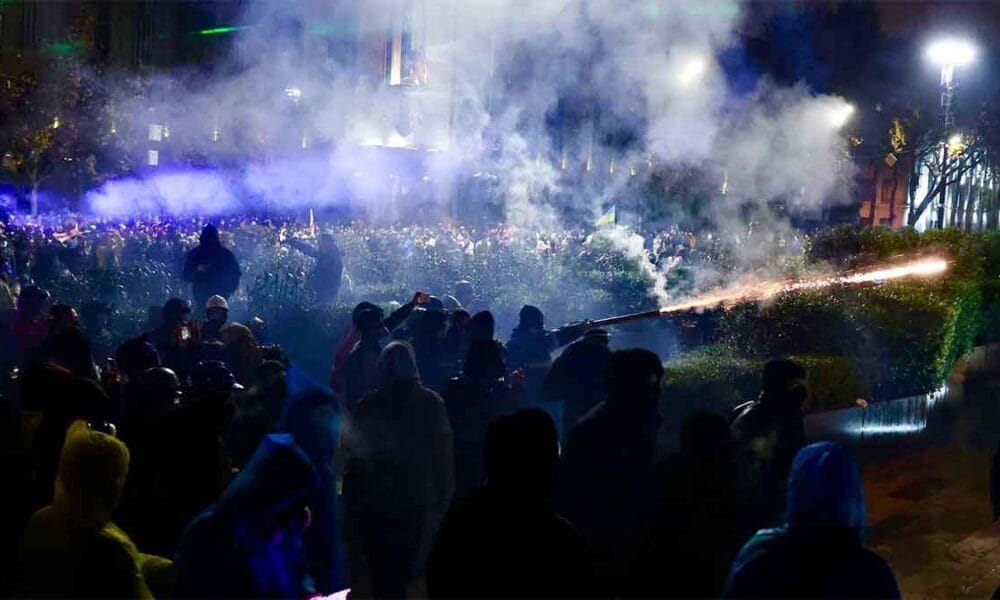
Tensions in Georgia have reached new heights as protests across Tbilisi and other cities intensify following the government’s decision to halt the EU accession process. Demonstrators have taken to the streets, demanding accountability and reaffirmation of Georgia’s European trajectory.
The protests began on November 28 after Georgian Dream (GD) party leader Irakli Kobakhidze announced the suspension of EU integration efforts. Over the following days, peaceful demonstrations transformed into a nationwide movement, with students, teachers, parents, and professionals joining in solidarity. Protesters are calling for an end to government repression, the release of detained activists, and a clear commitment to Georgia’s European future.
The Ministry of Internal Affairs (MIA) has reported 224 arrests, citing charges of petty hooliganism and disobedience of police orders. However, rights groups, including the Georgian Young Lawyers’ Association (GYLA), have condemned the use of tear gas, water cannons, and excessive force against peaceful demonstrators. Watchdogs have documented cases of violence, mistreatment, and the obstruction of journalistic work, with many detainees reporting injuries sustained during their arrests.
On December 2, Canadian Foreign Minister Mélanie Joly and the Baltic states of Lithuania, Latvia, and Estonia announced sanctions against key Georgian officials, including GD patron Bidzina Ivanishvili, over allegations of corruption and human rights violations. These international responses underscore growing concern over Georgia’s democratic backsliding.
The protests have expanded beyond Tbilisi, with rallies in Kutaisi, Batumi, and other cities. Students have gone on strike, demanding the halting of academic processes to allow full participation in demonstrations. Public figures, including teachers and parents, have also joined the movement, underscoring the widespread discontent.
Georgian President Salome Zurabishvili has openly criticized the government’s handling of the protests, denouncing the use of violence against demonstrators and calling for an immediate investigation into police misconduct. She highlighted alarming reports of injuries and systematic abuse among detained protesters.
The protests are a stark reminder of the divide between the Georgian people’s aspirations for European integration and the government’s recent decisions. As the situation escalates, all eyes are on Georgia, with international and domestic voices urging dialogue and accountability. Whether the government will address the demands of its people or continue on its current path remains an open question.