
Quick Read
- The U.S. Justice Department recently released over 3 million pages of documents related to the Jeffrey Epstein case.
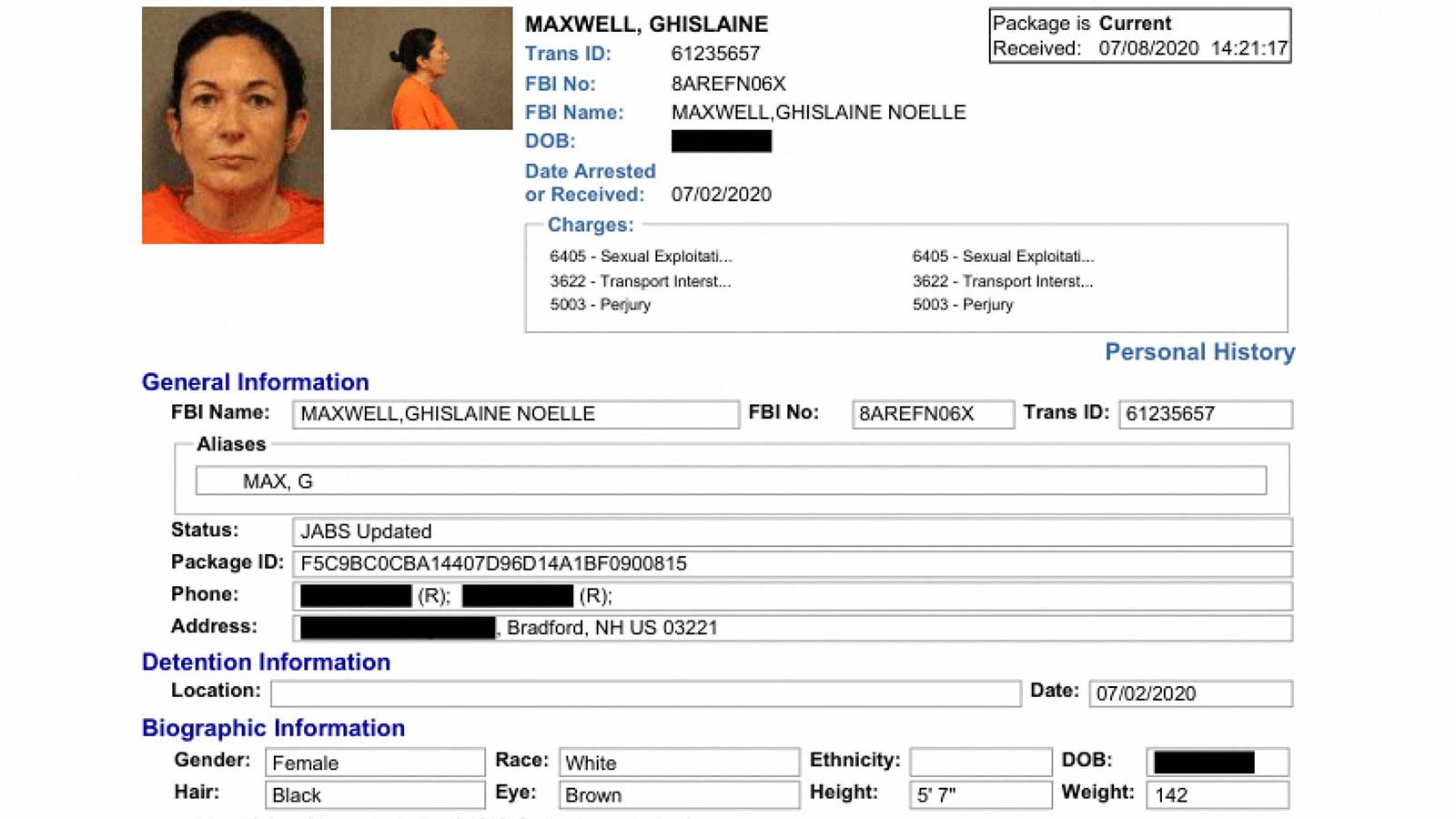
- A 2020 mugshot of Ghislaine Maxwell, Epstein’s former associate, was included in the newly disclosed files.
- Maxwell is currently serving a 20-year prison sentence for sex trafficking a minor to Epstein.
- Lawmakers and victims’ advocates have criticized the DOJ for extensive redactions, withholding 2.5 million pages, and alleged failures to protect victims’ privacy.
- Reps. Ro Khanna and Thomas Massie are set to review unredacted files, questioning the DOJ’s compliance with transparency laws.
WASHINGTON (Azat TV) – The U.S. Justice Department has released a 2020 mugshot of Ghislaine Maxwell, the former associate of convicted sex offender Jeffrey Epstein, as part of its latest disclosure of millions of documents related to the Epstein case. This release has reignited public and congressional debate over the extent of transparency and accountability achieved in the long-running saga.
Deputy Attorney General Todd Blanche announced the department had released more than 3 million pages of documents, including a 2020 police booking photo of Maxwell. The mugshot was taken following her July 2020 arrest on multiple charges, including sexual exploitation of a minor, interstate transport for sexual activity, and perjury. Maxwell is currently serving a 20-year prison sentence after her 2021 conviction for sex trafficking a minor to Epstein.
DOJ’s Latest Disclosure and Ghislaine Maxwell’s Image
The recent document release, which also included over 2,000 videos and 180,000 images, marks what the Justice Department states is the completion of its obligations under the Epstein Files Transparency Act. Deputy Attorney General Blanche emphasized the department’s ‘unprecedented and extensive effort’ to ensure transparency while complying with provisions to protect victims’ privacy.
However, the disclosure has been met with significant criticism from victims’ advocates and members of Congress. Spencer Kuvin, who has represented nine Epstein accusers, told USA TODAY that victims feel ‘failed so many times by this government.’ Critics point to the fact that the department withheld another 2.5 million pages of potentially responsive material and heavily redacted much of what was released. Blanche clarified that redactions were made to protect victims’ personally identifiable information, active federal investigations, and anything depicting child sexual abuse material (CSAM) or images of death, physical abuse, or injury. He also noted that images of women were redacted, with the exception of Maxwell.
Congressional Push for Epstein Files Transparency
Lawmakers, including Representatives Ro Khanna (D-California) and Thomas Massie (R-Kentucky), lead sponsors of the transparency law, have voiced strong concerns about the Justice Department’s compliance. They argue that the DOJ failed to properly redact victims’ information in some instances while simultaneously concealing the identities of potentially incriminated individuals. A CNN review of the documents identified examples of redacted individuals who may have helped connect Epstein with women, including co-conspirators in a draft indictment from the 2000s.
“The DOJ has protected the Epstein class with blanket redactions in some areas while failing to protect the identities of survivors in other areas,” Khanna stated. He and Massie have requested to review unredacted versions of the files, including hundreds of thousands of pages from Epstein’s email accounts and FBI reports, starting Monday at the Justice Department’s reading room. Rep. Jamie Raskin (D-Maryland) also questioned why the DOJ claimed full compliance after releasing only about half of the potentially responsive pages, with significant redactions.
Lingering Questions on Co-conspirator Prosecutions
Despite the extensive document release, questions persist regarding the possibility of further criminal prosecutions for any of Epstein’s co-conspirators. While federal law allows child sexual abuse crimes to be prosecuted without a time limit, former prosecutors express skepticism.
Deputy Attorney General Blanche affirmed that the Justice Department would prosecute men if it had information about them abusing women. However, former federal prosecutor Neama Rahmani told USA TODAY that he doesn’t see ‘a whole lot of smoke’ to suggest future prosecutions, citing the challenges of ‘he said, she said’ testimony and the passage of time. Dave Aronberg, former top prosecutor for Palm Beach County, suggested that the public release of a transcript from the Justice Department’s interviews with Maxwell might indicate a lack of anticipation for further indictments, as it could alert potential targets.
Spencer Kuvin, however, believes prosecutors have enough evidence to pursue others, pointing out that Epstein’s 2007-2008 plea agreement named four women as possible co-conspirators, none of whom were Maxwell. He emphasized that the evidence exists for prosecuting those directly named and others not explicitly mentioned in that agreement.
The ongoing scrutiny of the Justice Department’s handling of the Epstein files underscores a persistent tension between legal obligations for transparency and the practical challenges of protecting privacy and maintaining prosecutorial discretion in a case of immense public interest. The debate highlights the difficulty in satisfying the demands for full accountability while navigating complex legal frameworks and victim protection protocols.