
Quick Read
- Google Maps is rolling out Gemini AI for smarter, conversational voice interaction.
- Users can now ask follow-up questions and receive context-aware navigation.
- Landmark-based navigation replaces distance-only instructions for greater clarity.
- Gemini enables real-time traffic alerts and user incident reporting.
- Update is available on Android and iOS, starting in the US with global expansion planned.
Gemini AI Arrives on Google Maps: A New Era of Conversational Navigation
After years of incremental improvements, Google Maps is now experiencing its most significant update in recent memory. The secret? Gemini AI. This new artificial intelligence assistant is rolling out across Android and iOS, transforming how millions interact with Maps every day. T3 and Hindustan Times report that the Gemini-powered update marks a major shift from formulaic voice commands to natural, conversational exchanges.
What Does Gemini Actually Change?
For years, voice interaction with Google Maps was limited to basic queries—”Take me home,” “Find coffee nearby,” or “Show traffic.” These requests followed a predictable pattern, with little room for nuance. Gemini changes that. It’s designed to understand more complex, multi-layered questions and follow up with context-aware suggestions.
For instance, imagine you’re driving and ask, “Are there any EV charging stations on my route?” With Gemini, you can simply say, “Take me there,” and it will understand the context, guiding you without making you repeat yourself. The assistant can also answer deeper questions about your destination—like finding restaurants based on your food preferences, adding parking spots to your route, or sharing your ETA with friends. This is a leap forward, moving Maps beyond just direct control or static listings and into a space where users can have genuine, useful conversations with their navigation system.
Unified Voice Settings and Seamless Integration
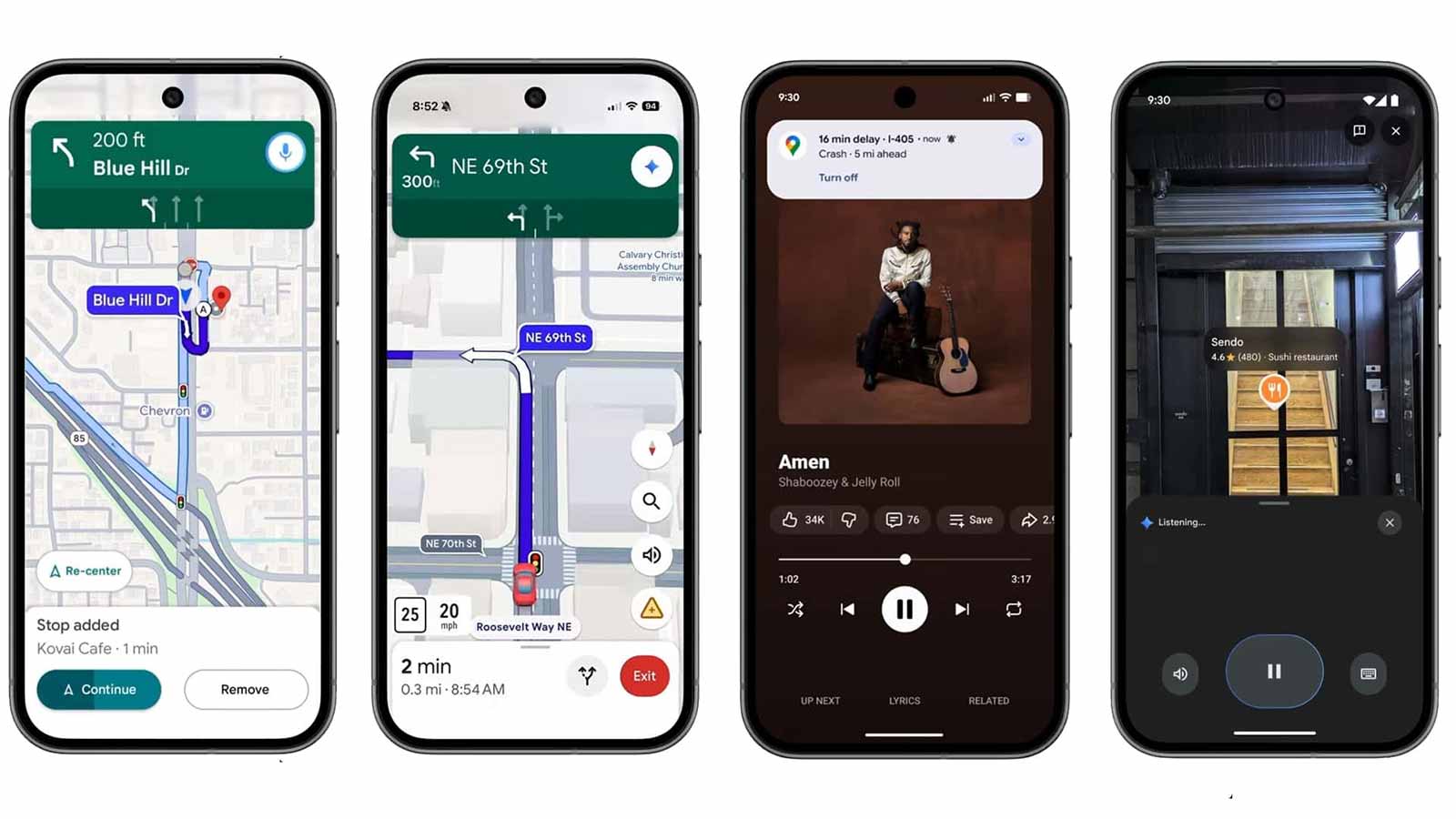
One of the subtler improvements is how Gemini adapts to your personal settings. According to Hindustan Times, Google Maps now uses the language and voice preferences already selected for your Google account, making the transition between devices and services seamless. The familiar microphone icon has been replaced with the Gemini symbol, signaling the shift to the new AI assistant. The “Hey Google” activation phrase remains, but what happens after you invoke it is far more dynamic.
This isn’t just about driving. The Gemini update covers walking, cycling, public transport, and even two-wheelers. Whether you’re planning a multi-modal journey across a city or simply seeking the fastest bus route, Gemini aims to make in-route decision-making smoother and more intuitive.
Smarter Trip Assistance and Real-Time Reporting
Gemini doesn’t just answer questions—it listens. Users can report incidents, road blockages, or hazards directly through Maps, with Gemini responding in kind by providing advance traffic alerts and alternative routes. This two-way communication is designed to help travelers stay ahead of delays and plan their journeys with greater confidence.
For drivers, the benefit is immediate: faster updates on traffic jams, construction, or accidents, and the ability to reroute on the fly. These features, currently rolling out in phases—starting in the US—are expected to reach a broader audience over the coming months.
Landmark-Based Navigation: A More Human Approach
Perhaps the most noticeable change for users is the introduction of landmark-based navigation. Instead of giving instructions based solely on distances—”Turn right in 300 meters”—Maps can now guide you using nearby landmarks: “Turn right after the bakery.” This approach feels less robotic and more like getting directions from a local, reducing confusion and making the journey more relatable, especially in dense urban environments.
Currently, this feature is available to select users in the United States, but Google has signaled a wider rollout is imminent. Early feedback suggests that landmark-based directions help reduce missed turns and make navigation more intuitive, especially for those unfamiliar with the area.
Lens Integration: See and Ask, Instantly
Gemini’s capabilities aren’t limited to voice. The AI now powers Google Lens in Maps, allowing users to point their phone’s camera at a location and instantly start a query. Want to know more about a building, a restaurant, or even public art? Just tap the search bar and activate Lens, and Gemini will deliver context-rich answers drawn from Google’s vast database.
This interactive feature is rolling out on Android and iOS in the US, with global expansion expected. It’s a small but meaningful step towards making Maps not just a navigation tool, but a gateway to discovering your surroundings in real time.
How Will Gemini Shape the Future of Google Maps?
The integration of Gemini into Maps represents more than just a technological upgrade. It’s a shift in philosophy—from passive tool to active companion. Users can now engage in ongoing, context-rich conversations with their navigation, making travel less about following instructions and more about making informed choices. The phased rollout means that not everyone will see these features immediately, but the promise is clear: smarter, more personalized navigation is coming to all.
Gemini is also creeping into other Google services, from TV to smart home devices, hinting at a future where AI-powered assistance is always just a voice command away. As with any new technology, there will be learning curves and unexpected quirks. But Google’s bet is that Gemini will make Maps indispensable not just for getting from A to B, but for understanding and interacting with the world along the way.
For now, users in the US are the first to experience this transformation, with international rollouts planned. The update is available on both Android and iOS, reflecting Google’s commitment to cross-platform integration and accessibility.
By fundamentally rethinking voice and context in navigation, Google Maps with Gemini is set to redefine what it means to plan, travel, and explore. The real test will be how well these conversational features adapt to the complex, real-world needs of users everywhere.