
Quick Read
- The U.S. government faces a potential shutdown if Congress fails to pass a funding bill by Wednesday.
- Wall Street ended last week with losses, breaking multi-week winning streaks for major indexes.
- Investors are bracing for increased market volatility amid political uncertainty.
- The total value of public U.S. companies relative to GDP has reached an all-time high of 217%.
- Key economic data, including employment reports, will shape market sentiment this week.
Government Shutdown Looms Over Wall Street
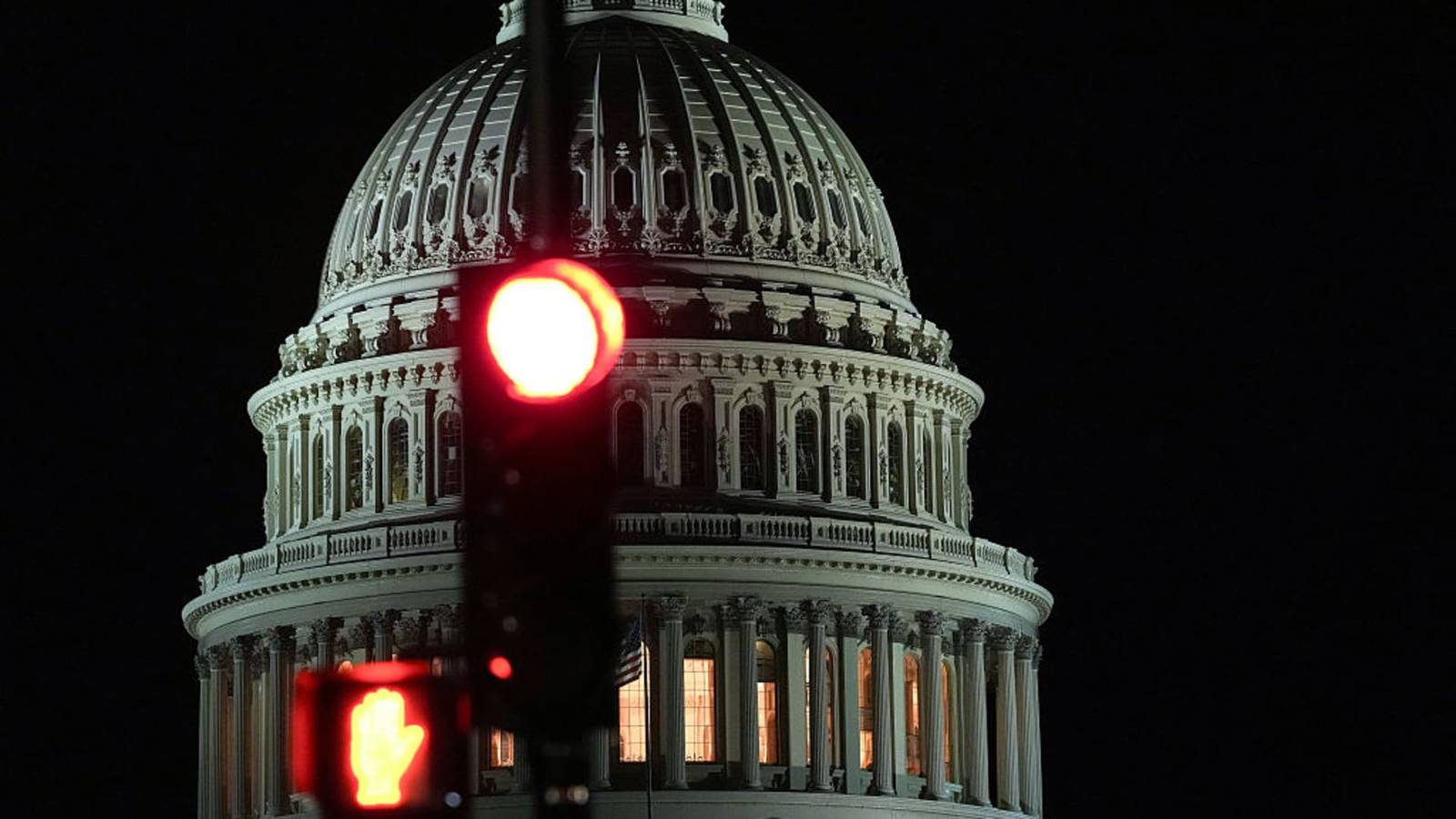
On the cusp of a new trading week, the specter of a federal government shutdown casts a long shadow over Wall Street. As Congress teeters on the brink of a funding impasse, investors are left to weigh the fallout. The clock is ticking: unless lawmakers can push through a stopgap funding bill by Wednesday, the U.S. government will grind to a halt. For markets, the stakes are high—and the atmosphere is electric with uncertainty.
The drama unfolds against a backdrop of political brinkmanship. President Donald Trump is scheduled to meet with congressional leaders today, hoping to broker a last-minute deal. But negotiations have been fraught. The president’s warning of mass federal worker layoffs if a shutdown occurs underscores the gravity of the moment. Democrats are pushing for continued support of Affordable Care Act subsidies, while Republicans argue such debates should wait until after the immediate crisis is averted.
Historically, markets have weathered shutdowns with remarkable resilience. Yet, this time, there’s a sense that the rules could be different. The economic landscape is shifting: from persistent inflationary pressures to a labor market that seems to be cooling, the foundation beneath Wall Street is less certain than it was during previous standoffs. As CNBC notes, some investors are bracing for sharper volatility than usual.
Stocks Endure a Losing Streak Amid Political Jitters
The uncertainty in Washington comes on the heels of a tough week for stocks. The S&P 500, a broad gauge of the U.S. equity market, snapped its winning streak and ended in the red for the first time in a month. Meanwhile, small-cap stocks, represented by the Russell 2000, saw their own seven-week run come to an abrupt halt. The mood on the trading floor has shifted—optimism is tempered by the possibility of fresh disruption.
This pullback is significant for another reason: the total value of publicly traded U.S. companies relative to GDP has soared to a record 217%. For context, Warren Buffett famously described such lofty valuations as “playing with fire” back in 2001. With the market perched at these heights, any tremor—political or economic—can send ripples across portfolios big and small.
Investors are keeping a close eye on the week’s economic calendar. Key employment data are set for release, including the ADP Employment Survey and the all-important monthly jobs report. Each data point is a piece of the puzzle, helping traders gauge whether the economy is robust enough to weather the political storms swirling in Washington.
Leadership in Focus: Central Bank and Policy Uncertainty
Political uncertainty isn’t the only force shaking investor confidence. The Federal Reserve, the nation’s central bank, has found itself thrust into the spotlight—sometimes in unexpected ways. President Trump, never one to shy away from controversy, recently shared a cartoon image on social media depicting himself firing Federal Reserve Chair Jerome Powell. While the post may have been tongue-in-cheek, it highlights the persistent tension between the White House and the Fed.
For policymakers, the current climate is anything but straightforward. Cleveland Fed President Beth Hammack described it as “a challenging time for monetary policy” in an interview with CNBC. With inflation concerns lingering and the labor market evolving, the Fed’s next moves are the subject of intense speculation. Any hint of discord between fiscal and monetary authorities only adds another layer of complexity to the market’s outlook.
Wall Street Weighs Resilience Against Uncertainty
Despite the mounting challenges, it would be premature to sound the alarm bells. The U.S. stock market has a track record of bouncing back from shutdown-induced dips. In most cases, the impact is short-lived; once a resolution is reached, markets tend to recover lost ground. But the environment in 2025 is unlike any in recent memory—marked by rapid technological change, shifting global dynamics, and political polarization at home.
Some analysts argue that the real test for Wall Street lies not in the shutdown itself, but in the market’s reaction to the unpredictable. How will investors respond if the impasse drags on for weeks, rather than days? What if the political standoff triggers a loss of confidence in the U.S. government’s ability to manage its finances? These are the questions swirling in the minds of traders and portfolio managers as the deadline approaches.
Adding to the uncertainty is a calendar packed with corporate earnings, economic reports, and policy updates. From Nike’s quarterly results to the release of consumer confidence and home price data, each headline has the potential to move markets. In this environment, information is both a lifeline and a source of anxiety.
Market Watch: What Investors Should Track This Week
- Monday: Carnival earnings (before the bell)
- Tuesday: Nike earnings (after the bell); S&P/Case-Shiller home price index; consumer confidence; JOLTS report
- Wednesday: ADP Employment Survey
- Thursday: Weekly jobless claims
- Friday: September jobs report
Each data release will offer clues about the underlying health of the U.S. economy—and, by extension, the stock market’s capacity to ride out the storm. For now, all eyes are on Capitol Hill, where the fate of both government operations and market momentum hangs in the balance.
In a moment defined by political brinkmanship and market uncertainty, the coming days will test both the resilience of American institutions and the nerve of investors. If history is any guide, markets may bend but not break. Yet, with valuations stretched and confidence fragile, even a temporary shutdown could trigger outsized reactions—reminding us that in finance, as in politics, the only certainty is uncertainty itself.