

Quick Read
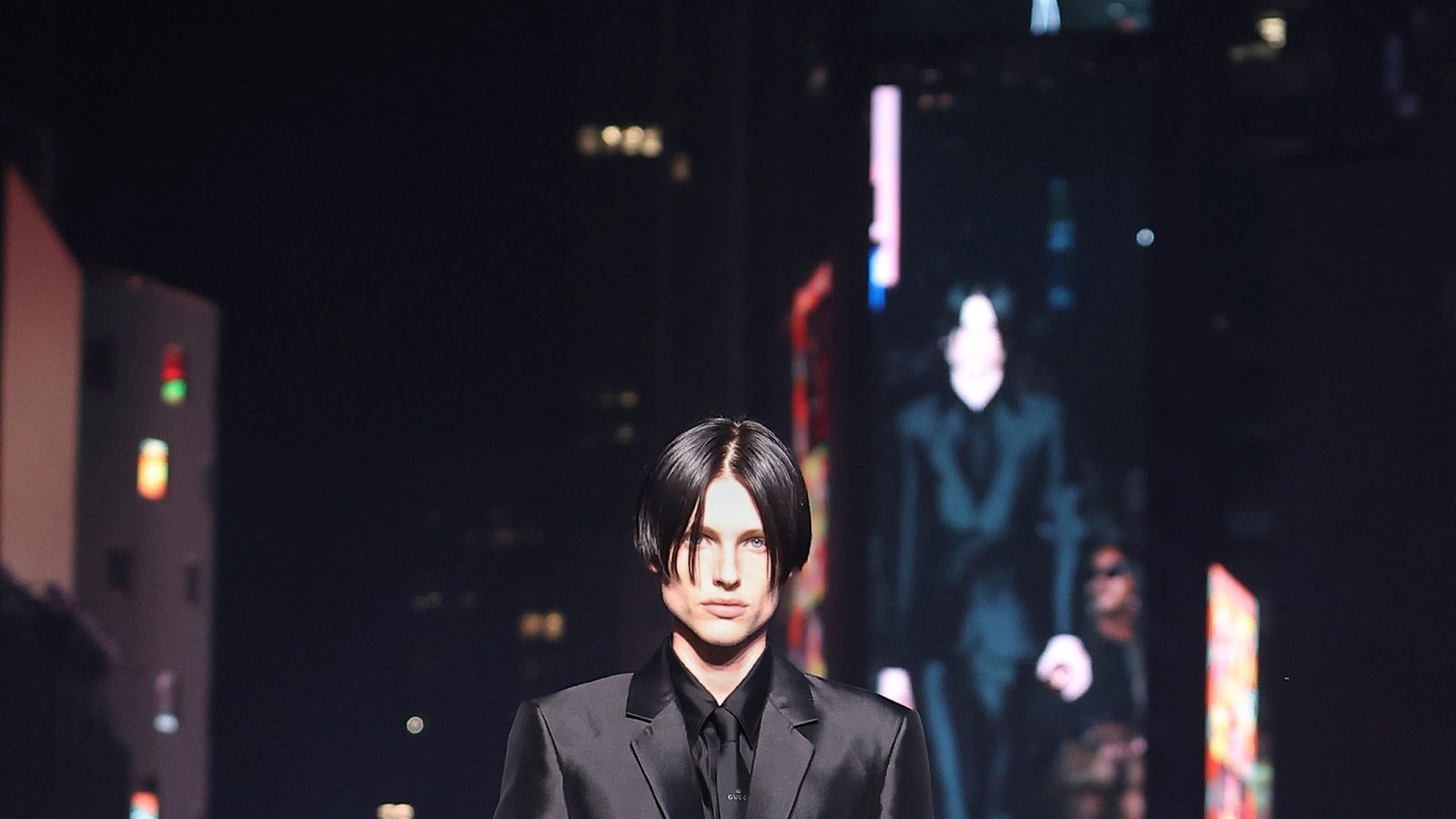
- Gucci staged its Cruise 2027 show in the middle of Times Square, New York.
- Creative Director Demna introduced ‘GucciCore,’ focusing on everyday wardrobe fundamentals.
- The show utilized satirical, AI-generated advertisements to critique consumerist culture.
- Celebrities like Tom Brady and Cindy Crawford headlined the star-studded front row.
The Intersection of High Fashion and Commercial Satire
On May 16, 2026, the heart of global commerce, Times Square, was transformed into an experimental runway for Gucci’s Cruise 2027 collection. The event, which saw the brand command the iconic intersection, serves as a definitive statement of the house’s new trajectory under Creative Director Demna. By staging the show in the crucible of American consumerism, Demna did not merely present clothes; he orchestrated a meta-commentary on the nature of branding itself.
The show’s visual landscape—featuring AI-generated garden scenes spliced with satirical, imaginary advertisements for products like ‘Gucci Acqua’ and ‘Gucci Viaggio’—highlighted Demna’s preoccupation with the ‘banal.’ As the designer noted, his intent was to interrupt the ‘beautiful vision of the world’ with the jarring, repetitive nature of advertising. This approach forces a critical question: can a luxury house thrive by leaning into the very commercial noise it traditionally sought to transcend?
Defining ‘GucciCore’
Central to this collection is the introduction of ‘GucciCore,’ a term coined by Demna to describe a return to everyday fundamentals. After years of maximalist, archival-heavy fashion, the brand is pivoting toward a wardrobe that prioritizes accessibility and versatility. This shift is a calculated move to capture a broader, pop-culture-fluent audience while maintaining the brand’s position as a status symbol.
The front row, populated by global icons ranging from sports legends like Tom Brady to supermodels like Cindy Crawford, underscored the brand’s intent to bridge the gap between high-fashion exclusivity and mass-market celebrity culture. By embedding the runway in a public, high-traffic environment, Gucci is actively dismantling the ‘ivory tower’ perception of luxury, replacing it with a more integrated, digital-first presence.
The Risks of the ‘Banal’ Aesthetic
While the audacious nature of the Times Square event generated significant media coverage, it also invites scrutiny regarding the brand’s long-term identity. The reliance on irony and self-aware advertising risks alienating traditionalists who associate Gucci with Italian craftsmanship and heritage. Furthermore, the saturation of social media with ‘GucciCore’ content—much of it generated by the brand’s own satirical marketing tactics—creates a feedback loop that may dilute the exclusivity essential to the luxury sector.
However, the commercial mandate remains clear. By focusing on wearable, identifiable ‘fundamentals,’ Demna is attempting to institutionalize a new, recognizable look that can be replicated and sold at scale. The pivot from the ethereal to the ‘banal’ is an admission that in the current economic landscape, fashion must compete directly with the rapid-fire content cycles of digital platforms.
Ultimately, Gucci’s Times Square takeover represents a significant gamble on the evolution of luxury. By embracing the aesthetics of the mundane and the mechanisms of modern advertising, Demna is attempting to redefine the brand not as an object of unattainable aspiration, but as an essential, omnipresent component of contemporary life. Whether this strategic pivot to ‘GucciCore’ will maintain the brand’s long-term prestige or merely render it another fixture of the commercial landscape remains the defining tension of this new era.