
Quick Read
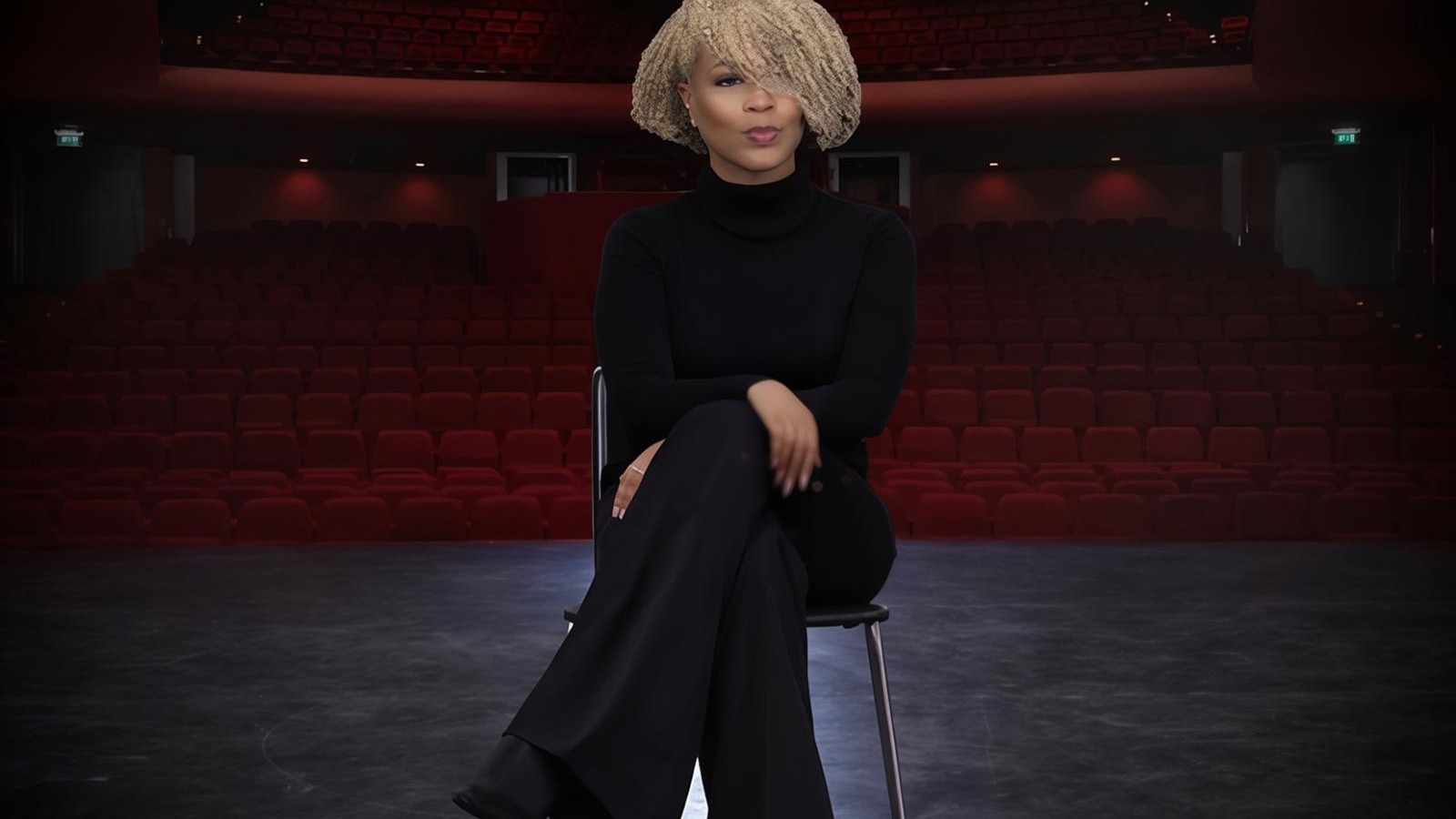
- Pat Parks, a professor at Howard University’s Chadwick A. Boseman College of Fine Arts, is co-producing August Wilson’s ‘Joe Turner’s Come and Gone’ on Broadway.
- The revival is directed by Howard alum Debbie Allen and stars Taraji P. Henson and Cedric the Entertainer.
- Parks’ journey to Broadway began in music and TV production, applying her ‘Entertainer Intelligence’ framework.
- The play resonates deeply with Parks’ personal history, including her Memphis roots and family ancestry linked to the play’s setting.
- Chadwick Boseman, a Howard alum, starred in the film adaptation of another August Wilson play, ‘Ma Rainey’s Black Bottom,’ highlighting the enduring legacy of Wilson’s work.
In a powerful convergence of academia, artistry, and cultural stewardship, Pat Parks, a distinguished professor at Howard University’s Chadwick A. Boseman College of Fine Arts, is making a significant debut on Broadway. Parks has been named co-producer for the highly anticipated revival of August Wilson’s seminal play, “Joe Turner’s Come and Gone.” This production, slated to begin previews on March 30, 2026, with its official opening night on April 25, is more than just a theatrical event; it is a deeply resonant endeavor that weaves together the threads of historical narrative, personal legacy, and the enduring influence of Black artistic excellence, echoing the very spirit embodied by the college’s namesake, Chadwick Boseman.
The revival brings together an extraordinary team, helmed by lead producer Brian Anthony Moreland, a visionary force in contemporary Broadway. Directing this ambitious production is Academy Award winner and Howard alum Debbie Allen, whose artistic leadership promises to infuse new dimensions into Wilson’s profound work. The cast features fellow Howard alum Taraji P. Henson, making her Broadway debut, alongside the formidable Cedric “The Entertainer,” who returns to the stage in a powerful dramatic role. Their combined talent is set to anchor Wilson’s exploration of identity and belonging, promising a culturally, historically, and personally significant Broadway experience for its 15-week limited engagement.
From Music Studios to Broadway Stages: A Multihyphenate’s Journey
For Pat Parks, the journey to Broadway has been a testament to a lifelong passion for producing, one that began far from the theatrical lights of New York. “I had always been a lover of producing, but I had only done so initially on music projects,” Parks shared in an interview with The Dig. This trajectory shifted dramatically when a connection from the University of Notre Dame introduced Parks to the world of television production, specifically a reality competition series called “The Battle” on ESPN-U, which celebrated HBCU marching band rivalries.
This early foray into television production proved invaluable. Parks collaborated on developing new show concepts, pitching them to networks, and mastering the intricate dance of production strategy, talent coordination, and securing sponsorships. As Parks explains, “As a producer for television productions, I gathered capital, secured the talent, and — most importantly — lined up sponsorships, so we could come to the networks with everything already in place.” This experience honed a crucial skillset: the ability to seamlessly combine artistic vision with astute business strategy, a foundation Parks now brings to the demanding world of Broadway.
Parks credits the robust environment at Howard University with providing the essential grounding in artistry, leadership, and cultural responsibility required for this significant role. “At Howard, I teach students how to merge artistry with leadership and business acumen. Those lessons resonate in every decision I make as a co-producer,” Parks emphasizes. This holistic approach to creative enterprise is central to Parks’s philosophy, particularly their groundbreaking work on “Entertainer Intelligence (EntQ),” a framework developed as a Mellon Grant recipient in 2023. EntQ proposes eight interrelated dimensions, from domain intelligence to spiritual and commercial intelligence, arguing that today’s artists must be ’rounded, grounded, and diversified’ to truly flourish in the modern creative economy.
The Enduring Legacy of August Wilson and Chadwick Boseman
The selection of “Joe Turner’s Come and Gone” for revival underscores the timeless resonance of August Wilson’s work. Wilson’s plays are not merely narratives; they are profound explorations of the Black experience in America across the 20th century, delving into themes of migration, identity, spiritual resilience, and the relentless search for belonging. His American Century Cycle, a series of ten plays, each set in a different decade, stands as a monumental achievement in American theater.
The cultural and cinematic significance of Wilson’s oeuvre is further amplified by its successful adaptations to film. Iconic works such as “The Piano Lesson,” “Fences,” and particularly “Ma Rainey’s Black Bottom” have captivated wider audiences. It is in the adaptation of “Ma Rainey’s Black Bottom” that the powerful legacy of Howard alum Chadwick A. Boseman (B.A. ’00) shines brightly. Boseman’s compelling portrayal of Levee Green in the film earned him widespread critical acclaim and demonstrated his profound ability to inhabit complex characters, bringing Wilson’s rich narratives to life with unparalleled depth and nuance. His performance, tragically one of his last, remains a poignant testament to his dedication to authentic storytelling and his commitment to honoring Black voices.
Denzel Washington’s ongoing commitment to producing the entire August Wilson American Century Cycle for film further solidifies the indelible mark Wilson’s work continues to make on both stage and screen. This dedication ensures that future generations will continue to engage with these vital stories, a mission that resonates deeply with the educational and artistic goals of Howard University’s Chadwick A. Boseman College of Fine Arts, which stands as a living tribute to an artist who exemplified excellence and purpose.
A Deeply Personal Connection to the Story
For Pat Parks, co-producing “Joe Turner’s Come and Gone” is not merely a professional undertaking; it is a deeply personal journey, echoing the very core of the play’s narrative. Wilson’s play famously asks how individuals displaced from their origins can find their unique “song” and the courage to sing it. This question mirrors Parks’s own creative and professional path as a “multihyphenate” – a producer, educator, coach, and artist who navigates worlds often kept separate: artistry and business, creative expression and strategy, academia and industry.
“I have spent my life moving between worlds often kept separate: artistry and business, creative expression and strategy, academia and industry,” Parks reflected. “Being a multihyphenate doesn’t always fit neatly into conventional boxes, but it is precisely my song. I do my best work when I honor all of these elements rather than fragment them.” This philosophy aligns seamlessly with the themes of the play, which centers spiritual traditions within Black communities as sources of guidance, resilience, and renewal – a message Parks believes is “needed now more than ever.”
The connection to the play deepens through ancestry and place. Parks’s hometown, Memphis, Tennessee, is intrinsically woven into the play’s lineage. The title itself derives from “Joe Turner Blues,” a composition by the legendary Memphis-based W.C. Handy, known as the Father of the Blues. Handy’s music chronicled the lived experiences of Black Southerners during and after Reconstruction, the very conditions that shaped the world Wilson explores in his play. Furthermore, a striking familial parallel exists: Parks’s great-grandmother was born in 1900, making her 11 years old in 1911, the precise year the play begins – the same age as Zonia, the daughter of the play’s protagonist. This alignment transforms the production into a profound act of honoring family history, Memphis heritage, and the rich cultural legacies that informed Wilson’s artistry.
Educating the Next Generation of Arts Leaders
Beyond the stage, Parks is deeply committed to “giving back and paying it forward,” particularly through her role as coordinator of the Theatre Arts Administration program in Howard’s Department of Theatre Arts. This commitment extends from classroom instruction to mentorship and providing hands-on production experience. “I came to Howard to educate the next generation of arts leaders and to build that talent pipeline — first to equip them with the proper knowledge in the classroom, and to help them get the right internships, fellowships, apprenticeships, and lived experiences,” Parks states, underscoring a profound dedication to nurturing emerging talent.
Parks sees her work at Howard as integral to shaping the future of the arts. “So when people ask me what I do at Howard, I tell them I am a professor in the business of show — better known as show business — and now I can also say this process has inspired me to start my own production company so that I can not only educate but even employ some of our students on and off stage, while creating culturally resonant, inclusive stories that honor ancestry and amplify diverse voices,” Parks proudly shares. Through this expansive vision, Parks exemplifies how creativity, strategic acumen, and cultural stewardship can collectively enrich the art form, cultivate new talent, and elevate voices that might otherwise remain unheard, carrying forward the mission of institutions like the Chadwick A. Boseman College of Fine Arts.
The involvement of Pat Parks, a professor at the Chadwick A. Boseman College of Fine Arts, in a significant Broadway revival of August Wilson’s work underscores a vital continuum of Black artistic and academic excellence. This production not only celebrates a pivotal American playwright but also highlights the critical role of institutions like Howard University in nurturing talent, bridging historical narratives with contemporary relevance, and ensuring that the legacies of figures like Chadwick Boseman continue to inspire future generations to engage with impactful storytelling.