
India-Pakistan Aerial Clash Captures Global Attention
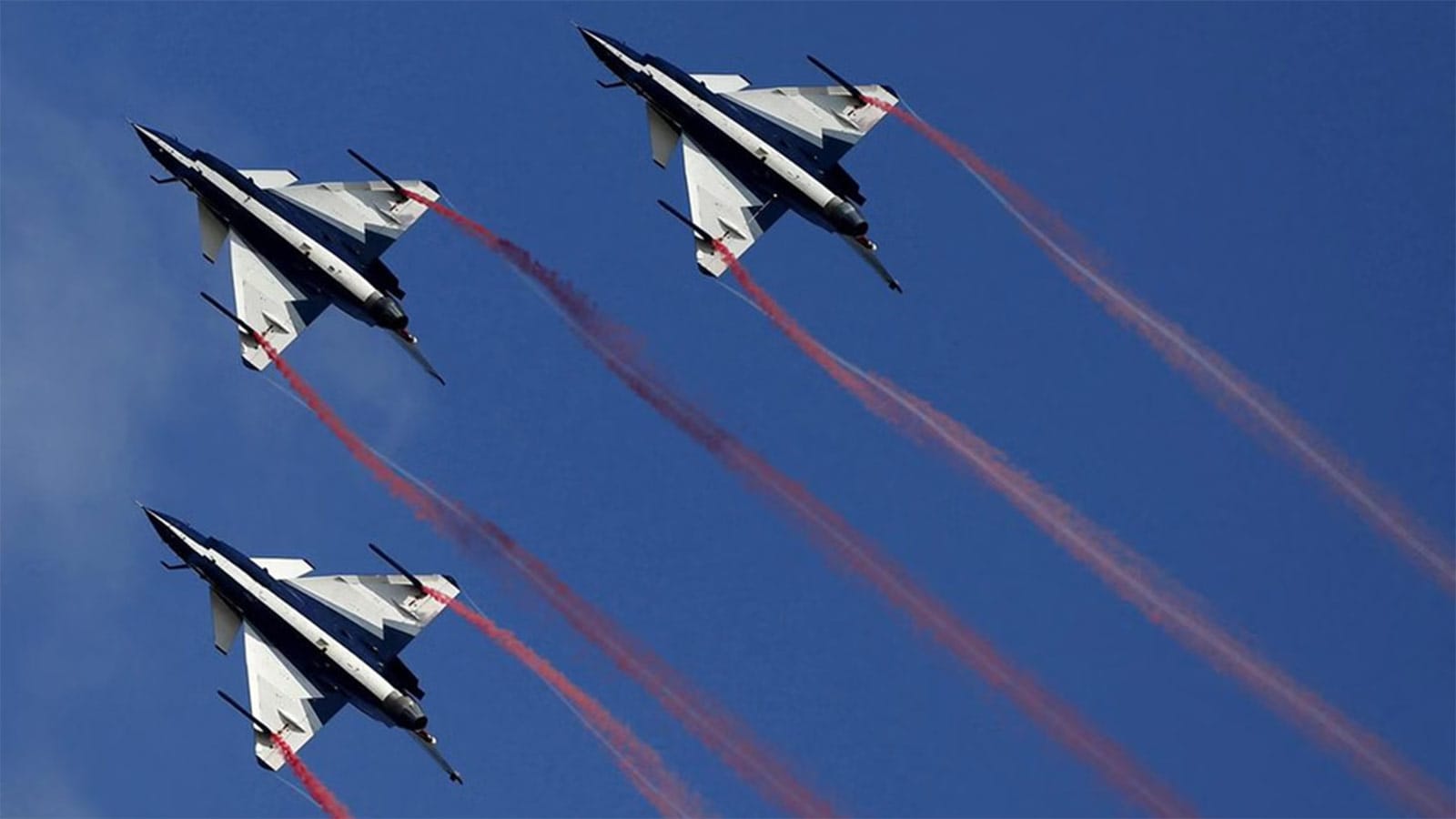
The recent aerial skirmish between Indian and Pakistani fighter jets has drawn significant attention from global military experts. The encounter, involving Indian Rafale jets and Pakistani J-10C aircraft equipped with Chinese-made PL-15 missiles, is being closely analyzed for its tactical and technological implications in modern air combat.
Details of the Skirmish
According to reports, Pakistani J-10C jets successfully downed at least two Indian military aircraft, including the advanced Rafale fighter. This marks a significant milestone for the Chinese-made J-10C and its PL-15 missile system, which has not been previously tested in active combat against Western-made systems like the Rafale.
The clash reportedly occurred in a “stand-off” engagement, with neither side crossing the border. The wreckage of a Rafale was found near Bathinda, India, while Pakistan showcased images of downed Indian drones and aircraft debris.
Global Military Interest
Militaries worldwide, including those in the United States, China, and Europe, are studying the encounter to extract lessons that could shape future air combat strategies. Douglas Barrie, a senior fellow for military aerospace at the International Institute for Strategic Studies, emphasized the importance of analyzing tactics, techniques, and the performance of advanced weaponry used in the skirmish.
“This is arguably China’s most capable weapon against the West’s most capable weapon,” Barrie noted, referring to the PL-15 missile and the Rafale. The live use of these systems provides a rare opportunity to evaluate their effectiveness in real-world conditions.
Significance of the PL-15 Missile
The PL-15 missile, carried by the J-10C, has been a focus of Western interest for years. Known for its beyond-visual-range capabilities, the missile is seen as a game-changer in aerial combat. Analysts believe Pakistan likely used the export version of the PL-15, which has a range of up to 145 kilometers.
Fabian Hoffmann, a missile technology researcher, described the PL-15 as a “very capable missile” with features like a dual-pulse motor and hypersonic speeds. These attributes create a “no-escape zone” for targets, making it a formidable weapon in air-to-air engagements.
Rafale’s Performance Under Scrutiny
The Indian Rafale, a twin-engine multi-role fighter jet manufactured by Dassault Aviation, is among the most advanced aircraft in India’s fleet. However, its reported loss in the skirmish has raised questions about its performance and the training of Indian pilots.
Experts caution against drawing definitive conclusions, citing factors like pilot error, rules of engagement, and the “fog of war.” Byron Callan, a defense expert, highlighted the need for comprehensive audits to separate technical performance from operational factors.
Implications for Future Conflicts
The encounter has broader implications for global military strategies, particularly in regions like the Indo-Pacific. The United States and China, both preparing for potential conflicts over Taiwan, are likely to incorporate lessons from this skirmish into their air warfare doctrines.
European nations are also closely monitoring the situation, with some considering upgrades to their own missile systems, such as the Meteor. The U.S. is developing the AIM-260 Joint Advanced Tactical Missile to counter the PL-15, reflecting a shift in priorities toward addressing Chinese advancements.
Unanswered Questions
Despite the wealth of information available, key details about the skirmish remain unclear. Analysts are uncertain about the type of training received by the pilots, the specific versions of the missiles used, and the operational conditions during the engagement.
Open-source intelligence analysts are examining images of missile wreckage and other evidence to piece together a clearer picture. However, conflicting reports and limited access to reliable data make it challenging to draw definitive conclusions.
Source: Reuters, Indian Air Force, International Institute for Strategic Studies, Center for European Policy Analysis.