
Quick Read
- The White House East Wing was constructed in 1942 and primarily serves the First Lady and her staff.
- The Trump administration plans to demolish the entire East Wing for a new privately funded ballroom.
- The project has sparked controversy among historians, preservationists, and politicians due to lack of public review.
- Regulatory bodies are typically involved in such renovations, but the White House is exempt from mandatory approval.
- Major corporate donors, including Comcast and Alphabet, are funding the new ballroom.
What Is the East Wing of the White House?
The East Wing of the White House has always carried a certain mystique. Built in 1942 during Franklin D. Roosevelt’s presidency, it wasn’t just an architectural addition—it was a response to the demands of wartime America, providing much-needed office space and shelter. Over decades, the East Wing’s role has evolved, but it remains the primary domain of the First Lady and her staff, a hub for social functions, press briefings, and daily operations that keep the executive mansion running smoothly.
Unlike the more iconic West Wing, which houses the Oval Office and the core of presidential decision-making, the East Wing is quieter, but no less essential. It’s where the First Lady’s initiatives come to life, where visitors are welcomed, and where the heartbeat of ceremonial White House life is felt most strongly.
Demolition for a New Era: Trump’s Ballroom Project
In October 2025, news broke that the entire East Wing would be demolished to make way for a new, privately funded grand ballroom. According to senior officials in the Trump administration, the demolition was set to begin “within days,” marking a dramatic expansion of a project that, at first, seemed far less ambitious. President Trump had assured the public earlier that summer: “It won’t interfere with the current building. It’ll be near it, but not touching it, and pays total respect to the existing building, which I’m the biggest fan of.”
Yet, as plans evolved, the scope grew. The White House acknowledged that the “entirety” of the East Wing would eventually be modernized and rebuilt—a fluid process, shaped by ongoing decisions and private funding. The ballroom project, led personally by the president alongside McCrery Architects, drew on substantial donations from private corporations, including Comcast and Alphabet (YouTube’s parent company), the latter contributing $22 million as part of a legal settlement.
The National Trust for Historic Preservation, a nonprofit tasked with protecting America’s historic buildings, quickly raised concerns. In a letter to administration officials, CEO Carol Quillen warned, “The planned ballroom will overwhelm the White House itself.” She urged a pause on demolition until the project could undergo the legally required public review processes.
Regulatory Battles and Public Backlash
Normally, any major renovation at the White House would involve several regulatory bodies: the Commission of Fine Arts, the National Capital Planning Commission, and the DC State Historic Preservation Office. These agencies ensure that changes to historic sites are thoughtful, transparent, and publicly vetted. But, as one insider noted, the White House is symbolically unique—1600 Pennsylvania Avenue is ultimately exempt from binding authority or approval processes. The administration argued that only demolition was underway, and that plans for construction would be submitted “soon when it is time.”
This approach drew sharp criticism. Bryan Clark Green, an architectural historian and former appointee to the National Capital Planning Commission, reflected, “Administrations have always gone through that [approval] process to get buy-in and to make sure the public sees the process and isn’t surprised by the design. The whole point of the review process is to improve the design.” He noted the disconnect between Trump’s public assurances and the reality of the demolition.
Priya Jain, a member of the Society of Architectural Historians, added, “In regular federal projects, deliberation happens before anything is demolished.” The lack of prior submission to the National Capital Planning Commission left many questioning the transparency and accountability of the process.
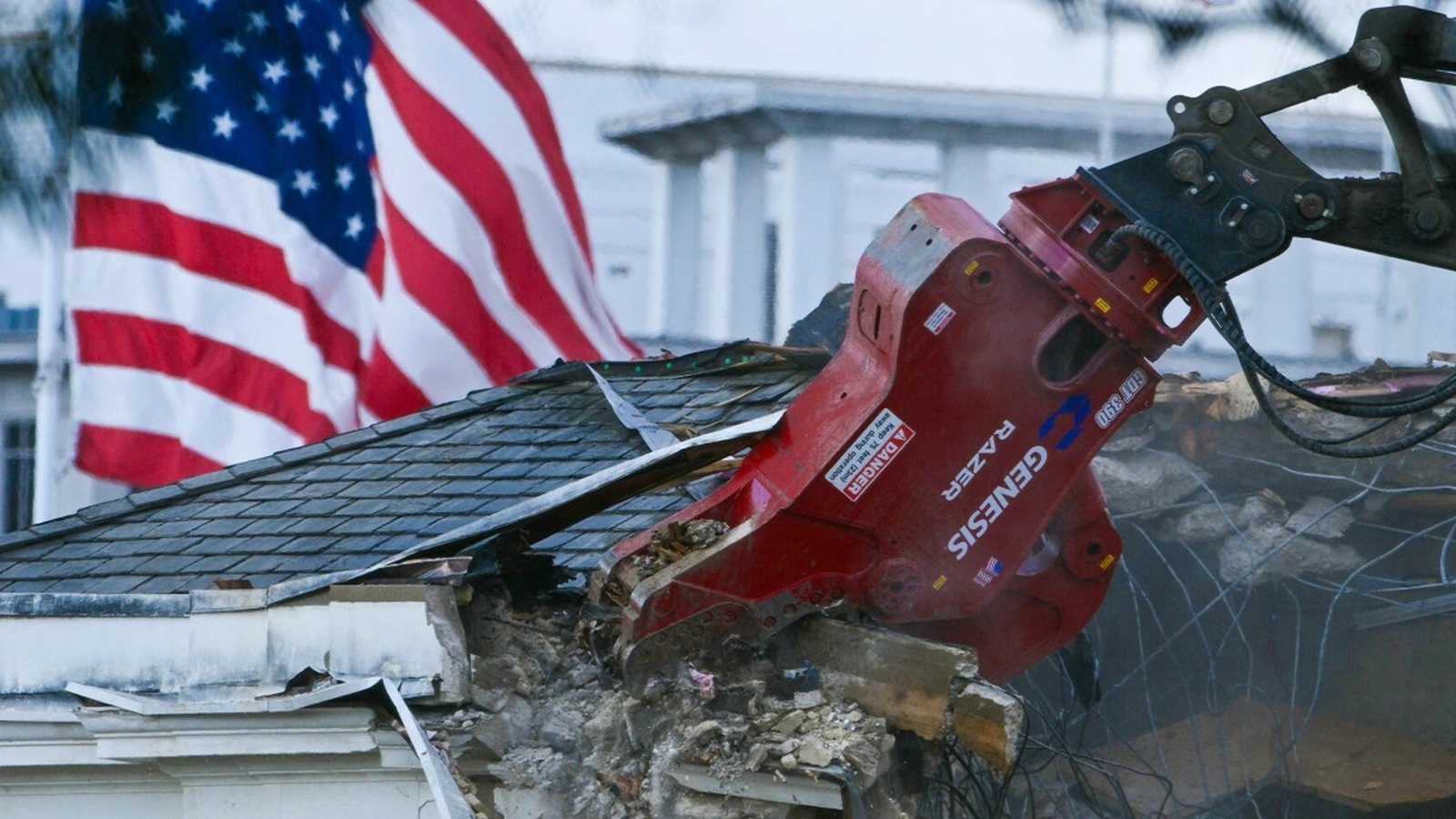
Earlier in the week, construction crews were seen tearing down the East Wing facade. The sight sparked criticism from Democrats, historians, and even some Republicans. The White House responded with a press release, calling the uproar “manufactured outrage” by “unhinged leftists and their Fake News allies.” They framed the ballroom as “a bold, necessary addition that echoes the storied history of improvements and renovations from commanders-in-chief.” The release pointed out that presidents have long renovated, expanded, and modernized the White House to meet changing needs.
Historical Significance and the Future of the East Wing
As controversy swirls, the East Wing’s historical significance remains at the forefront. Since its construction, it has been more than just a collection of rooms—it’s a living testament to the changing nature of the presidency, the evolving role of First Ladies, and the balancing act between tradition and progress. The National Trust for Historic Preservation’s warning is not just about architecture, but about the identity of the White House itself.
The Trust for the National Mall, the nonprofit partner of the National Park Service, oversees private donations supporting the ballroom project. While the administration touts the modernization as a continuation of presidential tradition, critics argue that the manner and speed of the changes risk erasing important chapters of American history.
Ultimately, the East Wing’s fate is a microcosm of the broader debate: how should America balance preservation with innovation? When does modernization enhance a legacy, and when does it threaten to overshadow the very history it seeks to honor?
Private Funding and the Politics of Renovation
One of the most striking aspects of the ballroom project is its reliance on private funding. Comcast and Alphabet’s contributions highlight the growing role of corporate donors in shaping national landmarks. The administration maintains that this approach keeps taxpayer dollars out of the equation, but it also raises questions about influence, priorities, and the future of public spaces in an era of privatization.
While the White House points to a long tradition of renovations, critics emphasize that process matters as much as outcome. The lack of public review, the speed of demolition, and the opacity around design plans fuel suspicion and concern.
As construction moves forward, the East Wing stands as both a symbol and a battleground—between the forces of tradition and change, transparency and expediency, public good and private interest.
The story of the East Wing’s demolition and the planned ballroom is not just about bricks and mortar. It’s a vivid reminder that the White House is more than a building: it’s a living symbol of American values, contested and redefined with each generation. The decisions made now will echo far beyond this administration, shaping how future Americans understand their history and their government.