
Quick Read
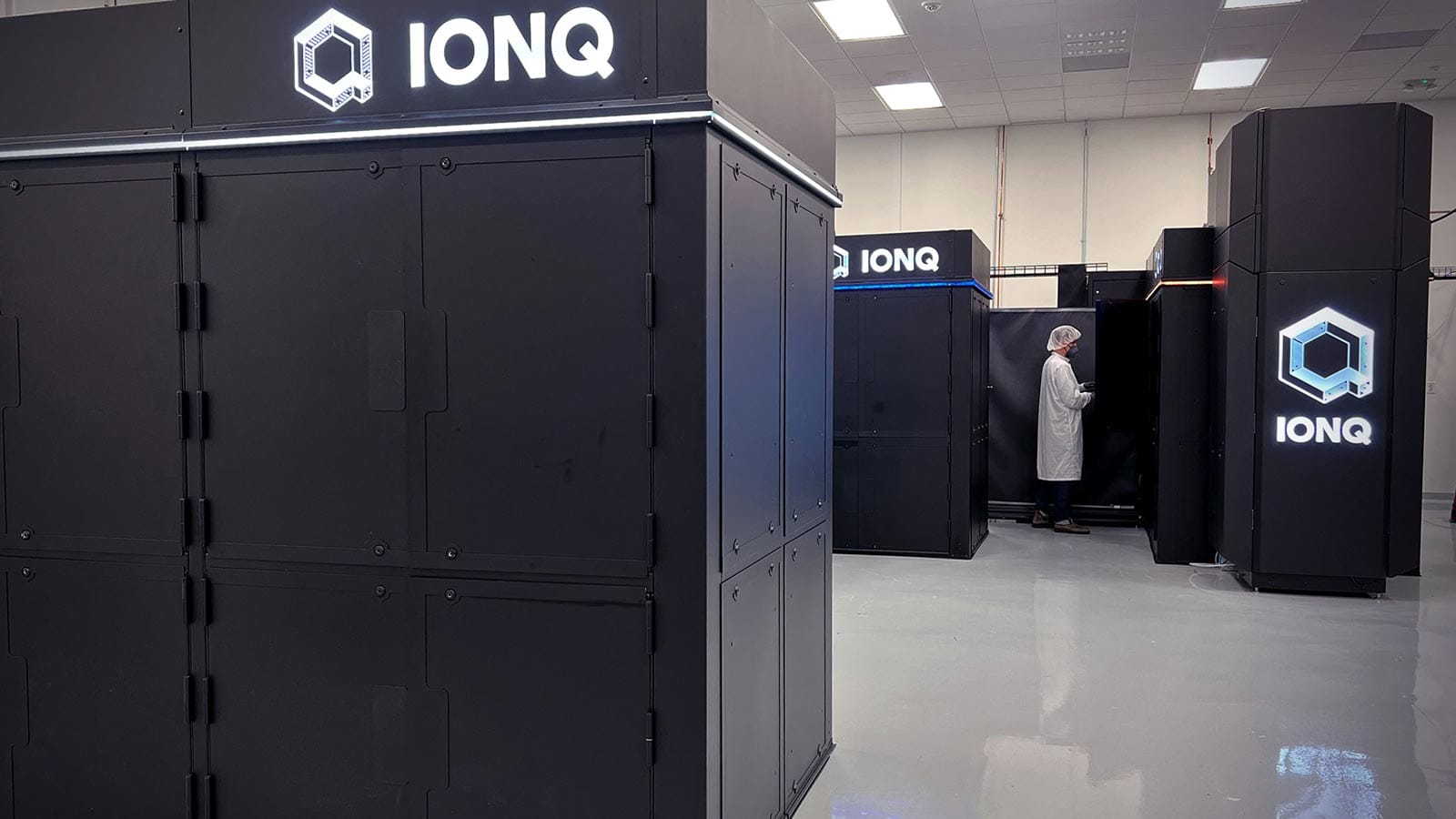
- IonQ aims to position itself as the ‘Nvidia of quantum computing.’
- The company is focusing on both quantum networking and computing.
- Recent acquisitions bolster IonQ’s market leadership in quantum technologies.
- IonQ’s strategy includes scaling through photonic interconnects and hybrid quantum models.
- CEO Niccolo de Masi emphasizes long-term goals and flexible funding.
IonQ’s Vision: Becoming the ‘Nvidia of Quantum Computing’
IonQ, a leading company in the quantum computing sector, is setting ambitious goals to establish itself as the ‘Nvidia of quantum computing.’ By leveraging its unique strengths in quantum networking and computing, the company aims to dominate the emerging quantum technology landscape.
In a recent interview, IonQ’s CEO, Niccolo de Masi, shed light on the company’s strategic vision and recent developments. The approach draws parallels to Nvidia’s success in the AI sector, where the tech giant built an ecosystem around its GPUs and software, rather than focusing solely on hardware innovation.
 Expanding Beyond Quantum Computing
While IonQ has been widely recognized for its advancements in quantum computing, the company is now aggressively expanding into quantum networking. This shift is evident from its recent acquisitions of key players in the field, such as Qubitekk, ID Quantique, Lightsynq, and Capella. According to de Masi, these moves are part of a long-term plan to establish IonQ as a leader not only in computing but also in the broader quantum ecosystem.
“From inception, IonQ’s architecture has been designed to scale via photonic interconnects, enabling distributed quantum computing across networked quantum processing units (QPUs),” de Masi explained. This approach positions IonQ to lead in developing the quantum internet, a vision that combines the power of quantum computing and networking to transform industries.
Strategic Acquisitions and Market Consolidation
The quantum computing market, though still in its nascent stages, is experiencing rapid growth and competition. With many companies vying for dominance, consolidation is inevitable. IonQ has already begun to capitalize on this trend by acquiring five companies that align with its roadmap.
“We believe we are best positioned as we have already successfully commercialized quantum computing and networking—delivering real systems to paying customers, including government agencies and enterprises,” de Masi stated. These acquisitions not only enhance IonQ’s technological capabilities but also strengthen its intellectual property portfolio, which now includes over 900 patents globally.
Innovative Business Models for Quantum Access
IonQ is also pioneering new business models to make quantum technology more accessible. One such model is the “dedicated-capacity” approach, which offers customers reserved access to quantum systems without requiring them to purchase the hardware outright. This model is particularly appealing to governments, research labs, and startups that require consistent, high-priority access to quantum resources.
In addition to on-premises and cloud-based solutions, this model represents a third avenue for monetizing quantum technology. By diversifying its offerings, IonQ is building deeper partnerships and ensuring a steady revenue stream as the market matures.
Funding and Long-Term Goals
IonQ’s recent fundraising efforts, including its At-the-Market (ATM) facility, have been instrumental in supporting its ambitious goals. Despite already having over $350 million in cash, the company sought additional funding to accelerate its expansion into quantum networking. This move demonstrates IonQ’s commitment to long-term growth and its ability to adapt to market demands.
“With almost $700 million on the balance sheet, it should be obvious that we’re operating from a position of strength and intend to keep it that way,” de Masi emphasized. This financial flexibility enables IonQ to scale manufacturing, advance its multi-year roadmap, and explore further acquisition opportunities.
Parallels with Nvidia’s Success
IonQ’s strategy draws significant inspiration from Nvidia’s playbook in the AI sector. Nvidia’s success stems from its ability to create an ecosystem around its GPUs, with software like CUDA becoming the industry standard for AI development. Similarly, IonQ aims to dominate the quantum landscape by focusing on scalable architectures, robust software integration, and strategic partnerships.
By positioning itself as a key enabler of quantum technologies, IonQ is not just competing to build the best quantum computer. Instead, it seeks to own the infrastructure and ecosystem that will power the quantum revolution. This approach minimizes risk while maximizing long-term opportunities.
As IonQ continues to execute its vision, it stands at the forefront of a technological shift that could redefine industries. With its innovative strategies and strong leadership, the company is well on its way to becoming the ‘Nvidia of quantum computing.’
Source: Theglobeandmail, Quantumcomputingreport