



Quick Read
- D-Wave Quantum’s stock surged over 1,200% in a year but saw recent volatility.
- The Advantage2 quantum system, featuring 4,400+ qubits, is now commercially available.
- Q1 revenue rose 509% year-over-year, but bookings dropped by over 50%.
- Analysts are optimistic but cautious about valuation and profitability challenges.
- D-Wave competes with players like IonQ and Rigetti in a rapidly evolving quantum sector.
D-Wave Quantum’s Breakthrough: Advantage2 System Launch
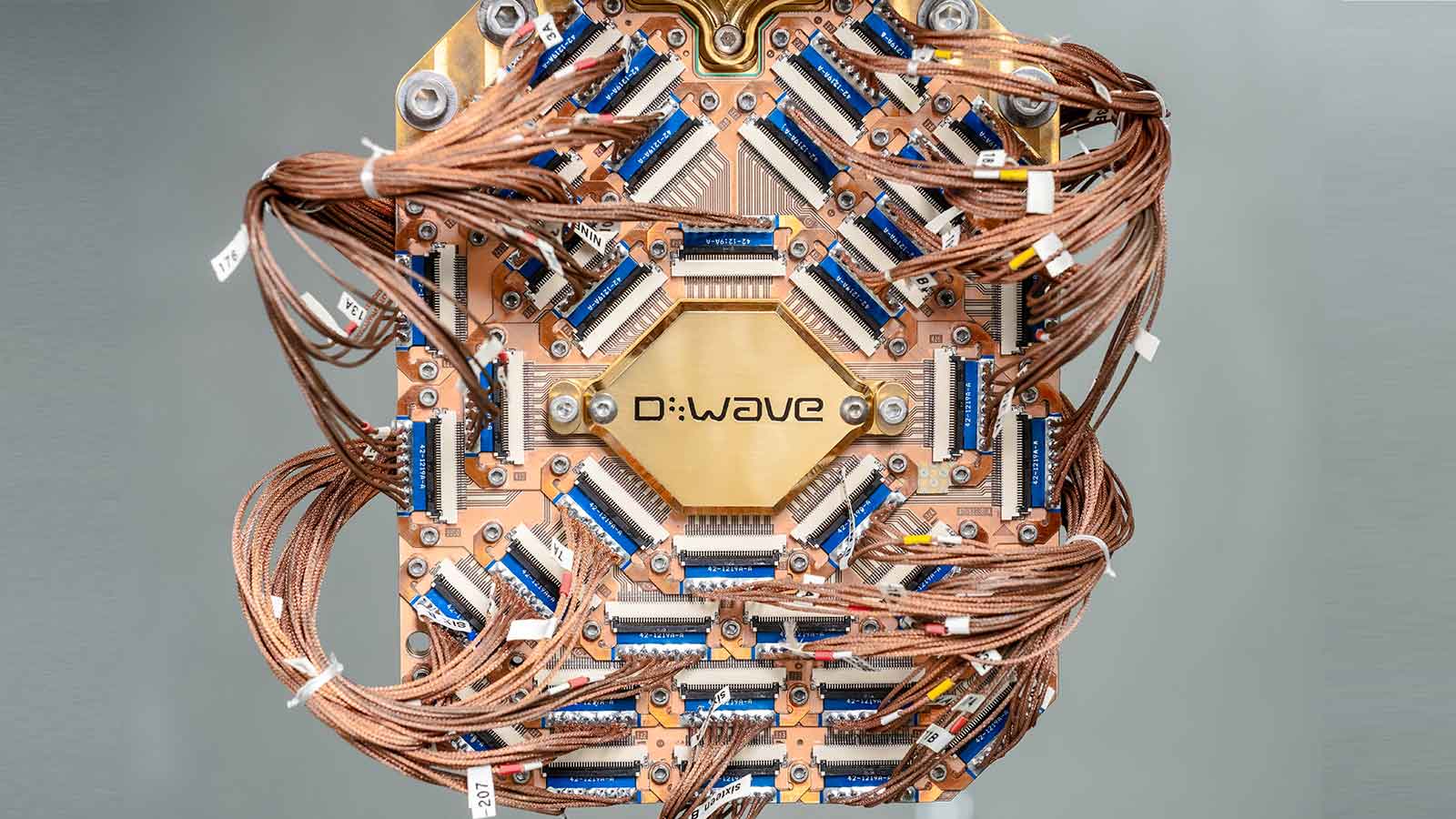
D-Wave Quantum Inc (NYSE: QBTS) has captured the spotlight with the launch of its sixth-generation quantum computing system, Advantage2. This state-of-the-art system boasts 4,400+ superconducting qubits and a new Zephyr topology, making it a game-changer in tackling optimization problems and computational challenges. Available via the Leap cloud platform, the Advantage2 aims to provide real-world solutions beyond the reach of classical supercomputers.
While the system’s launch marks a significant technological milestone, it has also fueled notable stock market activity. Over the past year, D-Wave’s stock surged by over 1,200%, drawing attention from investors eager to capitalize on quantum computing’s potential. However, the stock recently experienced sharp declines as market participants reassessed the company’s ability to sustain this momentum amid profitability and valuation concerns.
 Financial Performance: A Mixed Bag
D-Wave’s Q1 2025 financial results were a mixed story of impressive revenue growth and underlying challenges. Revenue surged 509% year-over-year to $15 million, driven primarily by a one-time quantum system sale. This growth underscores the increasing demand for quantum computing solutions. However, bookings—a critical indicator of future revenue—dropped by over 50%, raising red flags about the sustainability of such growth.
Despite narrowing its quarterly loss to $0.02 per share, compared to $0.09 a year ago, D-Wave remains unprofitable. The company ended the quarter with $304.3 million in cash, providing a financial cushion as it navigates a competitive landscape. CEO Dr. Alan Baratz hailed the quarter as one of the most significant in the company’s history, emphasizing strides in advancing quantum computing’s practical applications.
Commercialization and Strategic Partnerships
D-Wave has positioned itself as a leader in quantum annealing, a niche approach distinct from the gate-based quantum computing methods pursued by competitors like IonQ and Rigetti. The company’s focus on immediate, practical utility has led to partnerships with prominent institutions, including the Jülich Supercomputing Centre in Germany and Los Alamos National Laboratory in the U.S. These collaborations highlight D-Wave’s efforts to integrate quantum systems into real-world applications such as artificial intelligence, materials simulation, and national security.
Notably, the Jülich Supercomputing Centre is utilizing D-Wave’s Advantage system alongside its exascale supercomputer, creating a unique opportunity to tackle complex computational problems. These partnerships not only validate D-Wave’s technology but also enhance its visibility among enterprise buyers.
Risks and Challenges: Profitability and Competition
Despite its technological advancements, D-Wave faces significant hurdles. The company must demonstrate its ability to transition from one-time system sales to a recurring, service-based revenue model. This shift is critical for achieving long-term profitability and sustaining investor confidence. Additionally, competitive pressure from peers like IonQ and Rigetti remains intense, with each company vying for dominance in the burgeoning quantum computing sector.
Valuation concerns also loom large. While the stock’s meteoric rise reflects optimism about the company’s prospects, analysts have cautioned that such rapid gains could be fragile. The average price target for QBTS suggests a potential downside of over 30%, indicating that the current valuation may not fully account for the risks.
 The Road Ahead: Opportunities and Uncertainties
Looking forward, D-Wave’s success will hinge on its ability to scale its Advantage2 system and convert its technological lead into sustainable business growth. The company’s focus on developing quantum-as-a-service offerings via its Leap cloud platform represents a strategic move to diversify revenue streams and enhance customer retention. Additionally, ongoing research and development efforts aim to further improve system performance and expand applicability.
However, uncertainties persist. The quantum computing industry is still in its infancy, and widespread adoption remains years away. Investors must weigh the promise of groundbreaking technology against the realities of market volatility and execution risks.
D-Wave Quantum’s journey epitomizes the challenges and opportunities of pioneering a nascent industry. As the company navigates its commercial evolution, its ability to balance innovation with financial sustainability will be critical to its long-term success.
Source: Valuethemarkets, Theglobeandmail, Nasdaq