
Quick Read
- Iran’s nationwide protests entered their seventh day on January 3, 2026, intensifying across the country.
- A “bloodbath” occurred in Malekshahi, Ilam province, where security forces opened fire on protesters, causing multiple deaths and injuries.
- Supreme Leader Ali Khamenei broke his silence, labeling protesters as “rioters” and agents of foreign enemies.
- US President Donald Trump issued a “locked and loaded” warning, threatening intervention if Iran harmed protesters.
- Iran’s Foreign Minister condemned Trump’s warning as “reckless and dangerous,” while Iran also denounced a US military action in Venezuela.
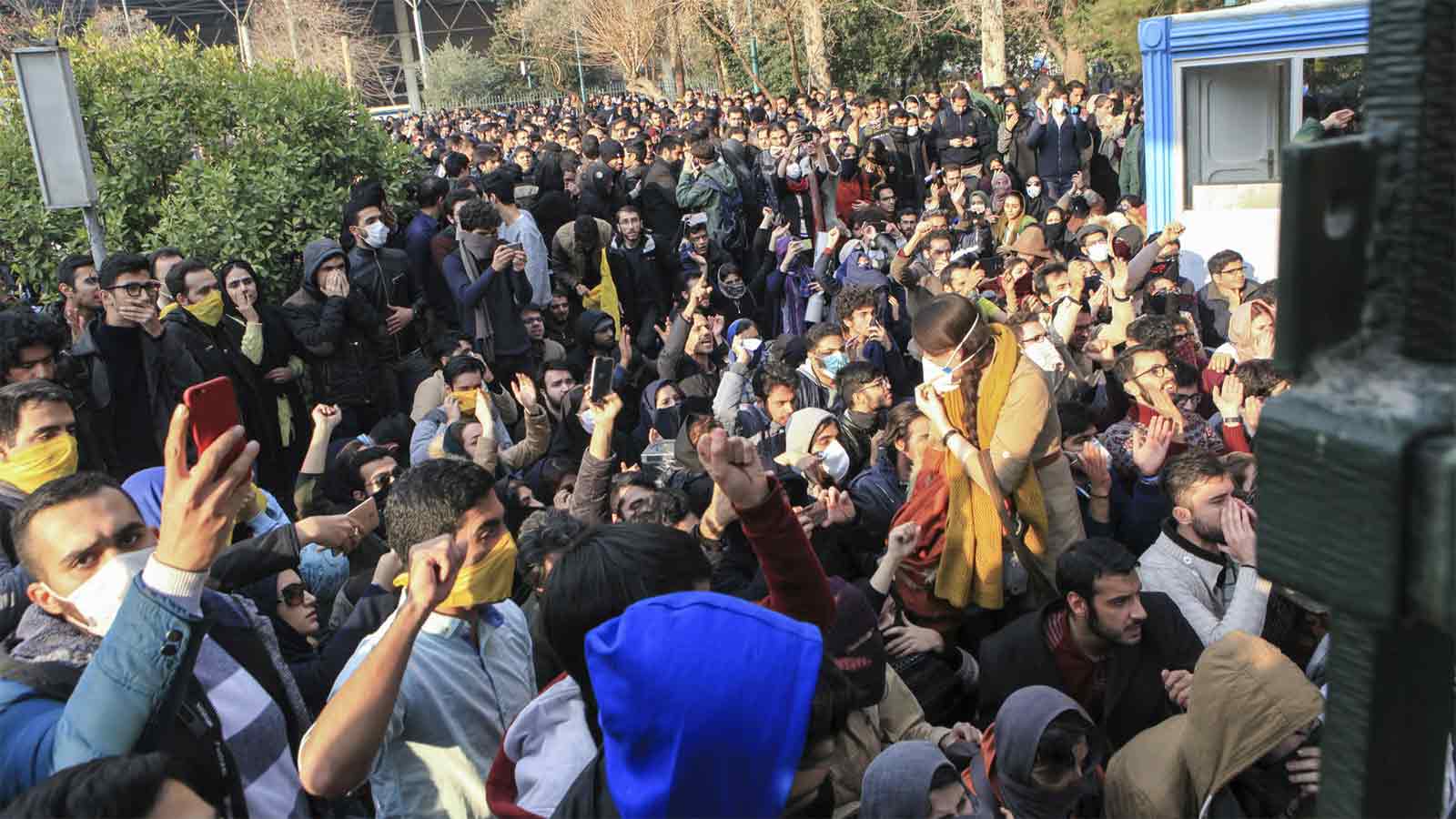
As January 3, 2026, dawned, Iran’s nationwide uprising entered its seventh consecutive day, transforming from localized grievances into a profound challenge against the religious dictatorship. What the regime had hoped would be a four-day holiday lull to dampen public momentum instead became a catalyst for intensified unrest. The protests, far from receding, expanded dramatically, stretching from the bustling capital to the most distant provinces, met with an undeniable escalation in state violence, yet paradoxically, a surging fearlessness among the populace.
The day’s events, particularly a brutal crackdown in the western Ilam province and Supreme Leader Ali Khamenei’s first public address on the escalating crisis, painted a stark picture: the long-standing barrier of fear had been irrevocably shattered. Despite the heavy deployment of the Islamic Revolutionary Guard Corps (IRGC) and plainclothes agents, the regime appeared to be losing its grip on the streets of several key cities, signaling an existential crisis.
The Unfolding Uprising: Defiance Amidst Crackdown
Saturday witnessed a tragic escalation in the city of Malekshahi, Ilam province, where security forces unleashed lethal force against a massive rally of youth. Chanting defiant anti-regime slogans such as “Down with Khamenei!” and “Down with the dictator!”, the demonstrators faced direct fire. Eyewitnesses described a harrowing scene, a “bloodbath,” as uniformed and plainclothes agents indiscriminately shot at unarmed civilians.
Local sources confirmed multiple fatalities and dozens critically wounded. The severity of the crackdown quickly overwhelmed Malekshahi’s medical infrastructure, with Khomeini Hospital reportedly overflowing. Urgent public appeals for blood donations, specifically O-negative, underscored the scale of the tragedy. In the immediate aftermath, the regime imposed a military siege on the city, deploying a massive contingent of anti-riot units, evidently to preempt any retaliatory response from a population now both grieving and enraged. However, instead of retreat, residents reportedly swore revenge, cementing Malekshahi’s status as a new flashpoint of resistance.
Khamenei Breaks Silence as Nationwide Protests Rage
For the first six days of the uprising, Supreme Leader Ali Khamenei maintained a conspicuous silence, a silence that many interpreted as a sign of his regime’s growing unease. That silence broke on Saturday. Speaking on the anniversary of the elimination of Qasem Soleimani, the former Quds Force commander, Khamenei addressed the nation. His tone, however, was not one of unwavering authority but rather betrayed a deep-seated anxiety regarding the stability of his rule.
In an attempt to drive a wedge between the broader public and the street protesters, Khamenei labeled the youth as mere “rioters” and agents of foreign enemies. “Protest is different from rioting,” he asserted. “We talk to the protester… but talking to the rioter is useless; the rioter must be put in their place.” He further added, with a palpable sense of apprehension, that the “enemy will not rest,” a tacit yet clear admission of the profound threat the current movement posed to the theocratic establishment. Maryam Rajavi, President-elect of the National Council of Resistance of Iran (NCRI), quickly countered, stating, “Khamenei is right; 80 million Iranians are his enemy,” emphasizing that the people’s mission was to “disrupt the velayat-e faqih regime” and that they would not stand down until democracy was achieved.
Even under a virtual lockdown with a pervasive security presence, the people of Tehran defied the regime on Saturday night. In Naziabad, a working-class stronghold, defiant youth seized control of the streets, with footage showing protesters burning motorcycles and vehicles belonging to suppressive forces while chanting, “Death to Khamenei.” In Haft Howz, large crowds gathered for the second consecutive night, chanting “Down with the dictator” in direct defiance of the armed forces surrounding them.
The uprising’s reach permeated every layer of Iranian society. In Mashhad, demonstrators on Rahnamayi Street chanted, “This nation will not be a nation until the mullahs are buried,” while in Shiraz, students and youth blocked roads in the Golshan district with burning tires, bravely facing down tear gas with chants of “Disgrace!” The scope of the unrest further expanded as Kazerun, Fars province, joined the uprising on Saturday, with a massive crowd flooding Shohada Square, compelling security forces to open fire in a desperate attempt to prevent the gathering from expanding.
Solidarity also poured in from the regime’s prisons, providing a vital moral boost to the movement. Asadollah Hadi, a political prisoner in Ghezel Hesar, penned a letter saluting the “bankrupt guilds” and students, declaring that the people were drawing a “new design for a democratic Iran.” Similarly, from Evin Prison, political prisoner Shahin Zoghi-Tabar urged the rebellious youth to disarm regime agents, writing, “Every weapon you take from the mercenaries is one weapon added to the people’s front.”
Global Fallout: Trump’s Warnings and Iran’s Retort
Amidst the escalating internal turmoil, international pressure mounted. On Friday, US President Donald Trump issued a stark warning to Iran, suggesting the US would forcibly intervene if Tehran continued to shoot and kill protesters. In an early morning Truth Social post, Trump declared, “We are locked and loaded and ready to go.” A White House official confirmed to CNN that this was intended as a “strong warning, no action has been taken that I’m aware of.”
Potential US actions, according to CNN, could include bolstering internet connectivity via satellites to counter regime blackouts, imposing new sanctions against regime figures or economic sectors, or even more secretive cyber operations to disrupt regime activities. Trump’s threat followed a meeting with Israeli Prime Minister Benjamin Netanyahu, where he had vowed to “knock the hell out of” Iran if it attempted to rebuild its nuclear program, stating, “If it’s confirmed, they know the consequences, and the consequences will be very powerful, maybe more powerful than the last time.”
Iran’s response was swift and sharp. Foreign Minister Abbas Araghchi condemned Donald Trump’s warning as “reckless and dangerous,” as reported by BBC News. Araghchi indicated that Iran’s armed forces were on standby and “know exactly where to aim” in the event of an attack. Iranian President Masoud Pezeshkian, while stating he would listen to the “legitimate demands” of protesters, also warned that “any cruel aggression” would be met with a “harsh and discouraging” response. Prosecutor General Mohammad Movahedi-Azad further cautioned that any attempt to create instability would be met with a “decisive response.” Iran’s UN Ambassador Amir-Saeid Iravani called on the UN Security Council to condemn Trump’s statement, with Reuters reporting his assertion that “Iran will exercise its rights decisively and proportionately.”
Adding another layer of complexity, Iran on Saturday also denounced a reported US military attack on Venezuela, accusing Washington of violating international law following reports that American forces had captured Venezuelan President Nicolas Maduro. Iran International noted that Maduro’s capture fueled widespread debate on social media about the possibility of a similar scenario in Iran, especially given Trump’s ongoing warnings to the Iranian leadership.
As the seventh day concluded, it became undeniably clear that the Iranian regime found itself grappling with an existential crisis. The authorities had deployed their standard playbook—internet restrictions, mass arrests, tear gas, and live ammunition—yet the protests had only grown in size and ferocity. The defiant slogans targeting the entirety of the establishment, specifically Ali Khamenei, coupled with the youth’s willingness to engage in direct confrontation with security forces, strongly suggest that the Iranian people have indeed passed the point of no return, charting a course towards an uncertain, yet potentially transformative, future.