


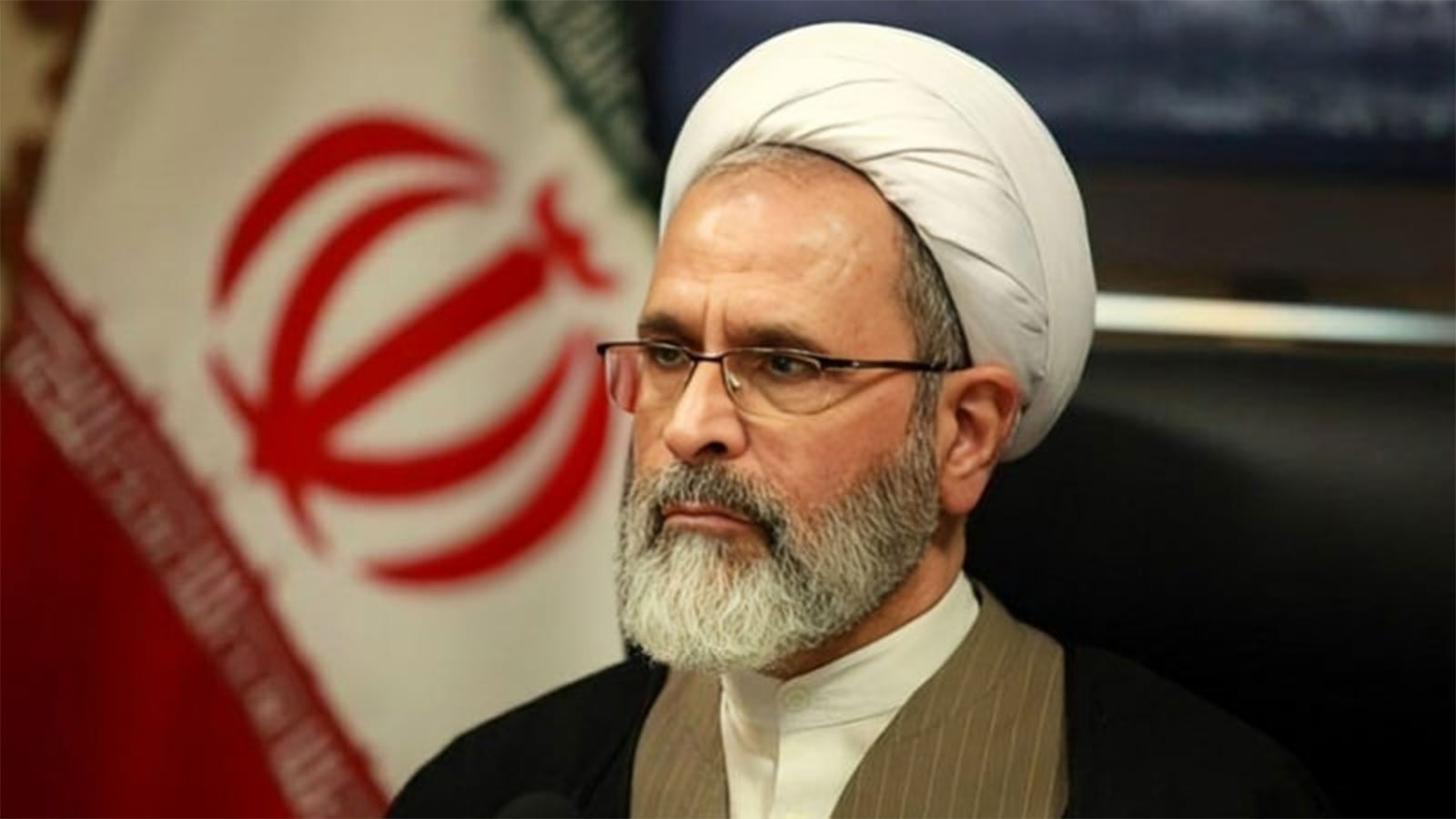
TEHRAN (Azat TV) – Ayatollah Alireza Arafi, a prominent Shia cleric, has been named as the religious jurist member of Iran’s interim Leadership Council, stepping into the role of temporary Supreme Leader following the confirmed death of Ayatollah Ali Khamenei. Khamenei, who led the Islamic Republic for 37 years, died on Saturday evening in what Iranian state media reported as US-Israeli strikes. Arafi’s appointment on Sunday, March 1, 2026, alongside President Masoud Pezeshkian and Chief Justice Gholamhossein Mohseni Ejei, signals an immediate effort to maintain continuity and direct Iran’s affairs during a critical transition and an acknowledged “ongoing war effort against the US and Israel,” as reported by WIONews.
The formation of this three-member council, which temporarily assumes the immense powers of the Supreme Leader, was mandated by Article 111 of the Iranian Constitution. Its primary immediate task is to manage the state and oversee the nation’s response to the heightened geopolitical tensions following Khamenei’s death. President Pezeshkian described Khamenei’s killing as a ‘declaration of war against Muslims’ by the US and Israel, with the Revolutionary Guard vowing retaliation, according to NDTV.
Ayatollah Arafi’s Role in Interim Leadership
Ayatollah Alireza Arafi, 67, is a seasoned cleric and a close associate of the late Ayatollah Ali Khamenei. His appointment as the jurist member of the temporary Leadership Council was confirmed by the Iranian Students’ News Agency (ISNA) and reiterated by state media. This council, comprising Arafi, President Masoud Pezeshkian, and Chief Justice Gholamhossein Mohseni Ejei, will collectively wield the ultimate authority previously held by Khamenei alone, overseeing the executive, legal, and security apparatuses of the Islamic Republic.
Arafi brings a robust background within Iran’s religious and political establishments. He currently serves as the deputy chairman of the Assembly of Experts, the clerical body responsible for electing the permanent Supreme Leader. His past experience includes a tenure as a member of the influential Guardian Council, which vets election candidates and reviews parliamentary legislation. Despite his significant religious standing and institutional roles, Arafi has not been widely regarded as a major political force, nor is he known for strong ties to Iran’s powerful security establishment, as noted by The Indian Express.
Arafi’s Background and Ideological Continuity
Born in 1959, Ayatollah Arafi is deeply embedded in the traditional clerical structure of Qom, Iran’s religious heartland. He is considered highly educated, fluent in both Arabic and English, and notably technologically adept. Arafi has frequently spoken on the necessity for the regime to adapt to advancements in artificial intelligence to effectively disseminate its ideological message globally, according to WIONews. His appointment during this chaotic transition period is seen by some observers as a signal of ideological continuity, ensuring the interim leadership remains aligned with the principles of the Islamic Republic.
The interim council’s mandate is strictly a stopgap measure, with its leaders tasked with managing state affairs and directing the ongoing war effort against external adversaries while the 88-member Assembly of Experts scrambles to secretly elect Khamenei’s permanent successor. The process for electing a new Supreme Leader is complex, and Iranian law directs the Assembly of Experts to pick a new leader ‘as soon as possible.’
The Supreme Leader’s Enduring Authority and Global Reactions
The post of Supreme Leader holds immense and far-reaching powers within Iran’s theocratic system, with the final say on all matters of the state. The Supreme Leader serves as the commander-in-chief of the country’s military and exerts significant influence over the powerful Revolutionary Guard, a paramilitary force that has grown substantially under Khamenei’s leadership and leads the ‘Axis of Resistance’ across West Asia. Iran has had only two Supreme Leaders since its revolution: Grand Ayatollah Ruhollah Khomeini and Ayatollah Ali Khamenei.
The death of Ayatollah Khamenei triggered mixed reactions both within Iran and internationally. In Tehran, some residents reportedly celebrated with cheers and fireworks, while others gathered in mourning, chanting ‘death to America’ and ‘death to Israel,’ according to videos verified by AFP and reported by NDTV. Internationally, US President Donald Trump announced Khamenei’s death on Truth Social, calling him ‘one of the most evil people in History’ and suggesting it offered Iranians a chance to reclaim their country. Israeli Prime Minister Benjamin Netanyahu urged Iranians to overthrow the regime, describing Khamenei as a ‘cruel tyrant.’
Ayatollah Arafi’s interim appointment and the immediate formation of the Leadership Council underscore the Iranian establishment’s commitment to maintaining stability and ideological consistency amidst a profound leadership vacuum and heightened external pressures. The council’s explicit mandate to direct an ‘ongoing war effort’ against the US and Israel suggests that the transition period will be characterized by continued assertiveness in foreign policy, even as the internal process for selecting a permanent Supreme Leader unfolds in secrecy.