
Quick Read
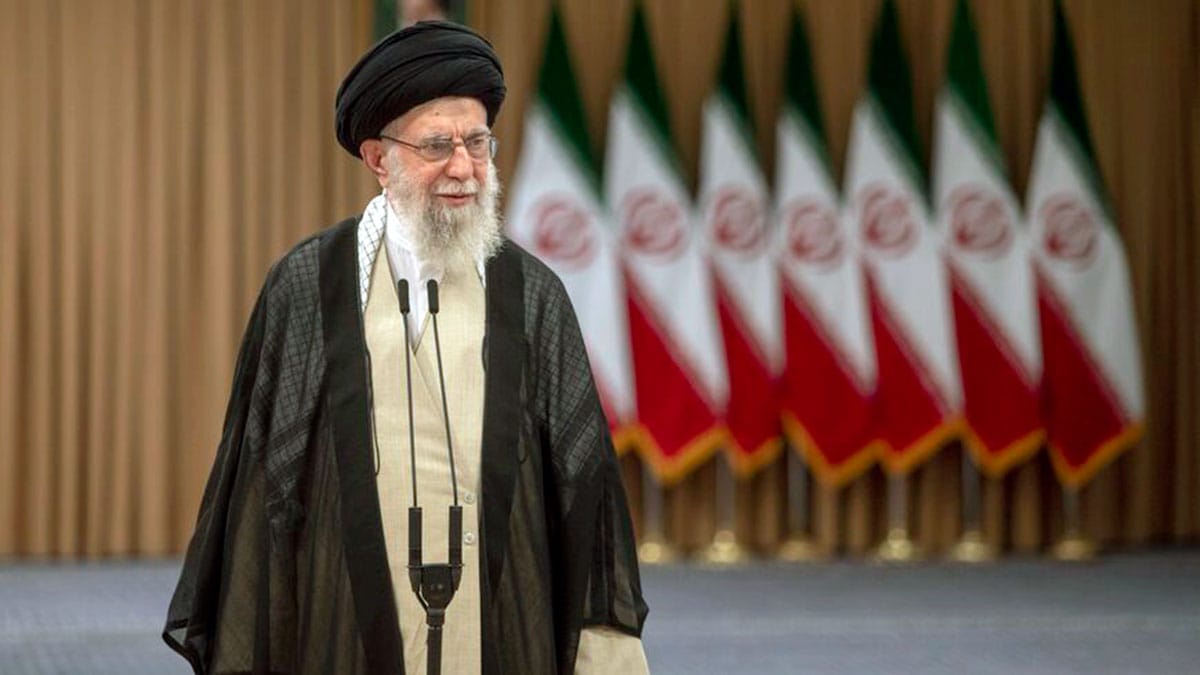
- Iran’s Supreme Leader Ayatollah Ali Khamenei dismissed damage from recent U.S. and Israeli airstrikes, calling them ‘exaggerated.’
- Iran has threatened to withdraw from the Nuclear Non-Proliferation Treaty and enrich uranium to weapons-grade levels.
- Tehran has significantly increased its defense budget and vowed readiness for prolonged conflict.
- Western intelligence estimates suggest Iran’s nuclear program has been set back by up to two years.
In the wake of recent military tensions and nuclear uncertainties, Iran’s Supreme Leader Ayatollah Ali Khamenei has amplified his rhetoric against the United States and Israel. His statements come in the aftermath of significant airstrikes that reportedly set back Iran’s nuclear program by up to two years, according to Western intelligence estimates. While Khamenei publicly downplayed the damage, his defiant tone underscores a broader strategy to bolster domestic support and project strength internationally.
Khamenei’s Defiant Posturing
On July 16, during a televised address, Ayatollah Ali Khamenei dismissed the impact of U.S. and Israeli airstrikes on Iran’s nuclear facilities. He claimed that the strikes had been “exaggerated” by Western leaders, particularly President $1 Trump, who he accused of inflating the narrative for political gain. Khamenei went on to describe Iran’s retaliatory attack on the Al Udeid Air Base in Qatar as a “slap to America’s face,” despite evidence suggesting the strikes inflicted no significant damage. He also warned of the possibility of “an even greater blow” to the U.S. and its allies in the near future.
According to National Security Journal, Khamenei’s rhetoric appears to be aimed at rallying domestic support and maintaining a narrative of resilience. However, other Iranian officials have admitted that the strikes caused “serious damage” to nuclear facilities, creating a potential rift in the regime’s public messaging. Western analysts have interpreted these mixed signals as evidence of Iran’s struggle to reconcile internal challenges with external pressures.
Escalating Nuclear Ambitions
The airstrikes on Iran’s nuclear sites have reignited debates over Tehran’s nuclear ambitions. In June, just days after the strikes, Iranian lawmakers introduced a bill proposing the country’s withdrawal from the Nuclear Non-Proliferation Treaty (NPT). This move, coupled with threats to enrich uranium to 90% weapons-grade purity, marks a significant escalation in Iran’s nuclear stance.
As reported by Chicago Star Media, these developments come as Western nations consider reimposing sanctions under the United Nations’ “snapback” mechanism if nuclear negotiations continue to stall. Iranian officials, including Mohammad Eslami, the head of the Atomic Energy Organization of Iran, have publicly stated their commitment to rebuilding and expanding the country’s nuclear program, signaling a long-term strategy to challenge international constraints.
Military Expansion and Rhetorical Threats
In addition to nuclear posturing, Iran has significantly increased its military budget and rhetoric against perceived adversaries. The Iranian parliament recently approved a 200% increase in defense spending, raising the military budget to $46 billion for the next fiscal year. Deputy Chief of Staff Mohammad Reza Ashtiani has claimed that Iran is prepared to sustain a conflict for up to a decade, emphasizing the importance of “fighting spirit” over advanced weaponry.
Meanwhile, Ayatollah Khamenei continues to target the United States and Israel in his speeches. He has referred to Israel as “America’s dog on a leash” and reiterated threats against President $1, whom he views as a symbol of American aggression. According to FDD, Khamenei’s statements reflect a long-standing ideological commitment to opposing U.S. influence in the region, dating back to the Islamic Revolution of 1979.
Global Implications
The escalating tensions between Iran and the West have significant implications for regional and global security. Western intelligence agencies have warned that Iran’s advancing missile capabilities, combined with its nuclear ambitions, could destabilize the Middle East. According to Newsweek, Iran still retains approximately 1,500 medium-range missiles and half of its launching capabilities despite recent strikes.
At the same time, the international community faces a delicate balancing act in responding to Iran’s provocations. Reimposing sanctions or taking military action risks further escalation, while continued negotiations may be perceived as a sign of weakness. As the summer deadline for nuclear talks approaches, the stakes for all parties involved are higher than ever.
As tensions continue to rise, the world watches closely to see how Iran’s defiance and the West’s response will shape the future of global security and diplomacy.