
Quick Read
- The Irish government faces a no-confidence vote today after a week of fuel protests caused widespread infrastructure blockades.
- Opposition party Sinn Féin triggered the vote, arguing the government failed to respond effectively to rising fuel costs.
- Prime Minister Micheál Martin has tabled a counter-motion of confidence while pushing a 505 million euro relief package to stabilize the economy.
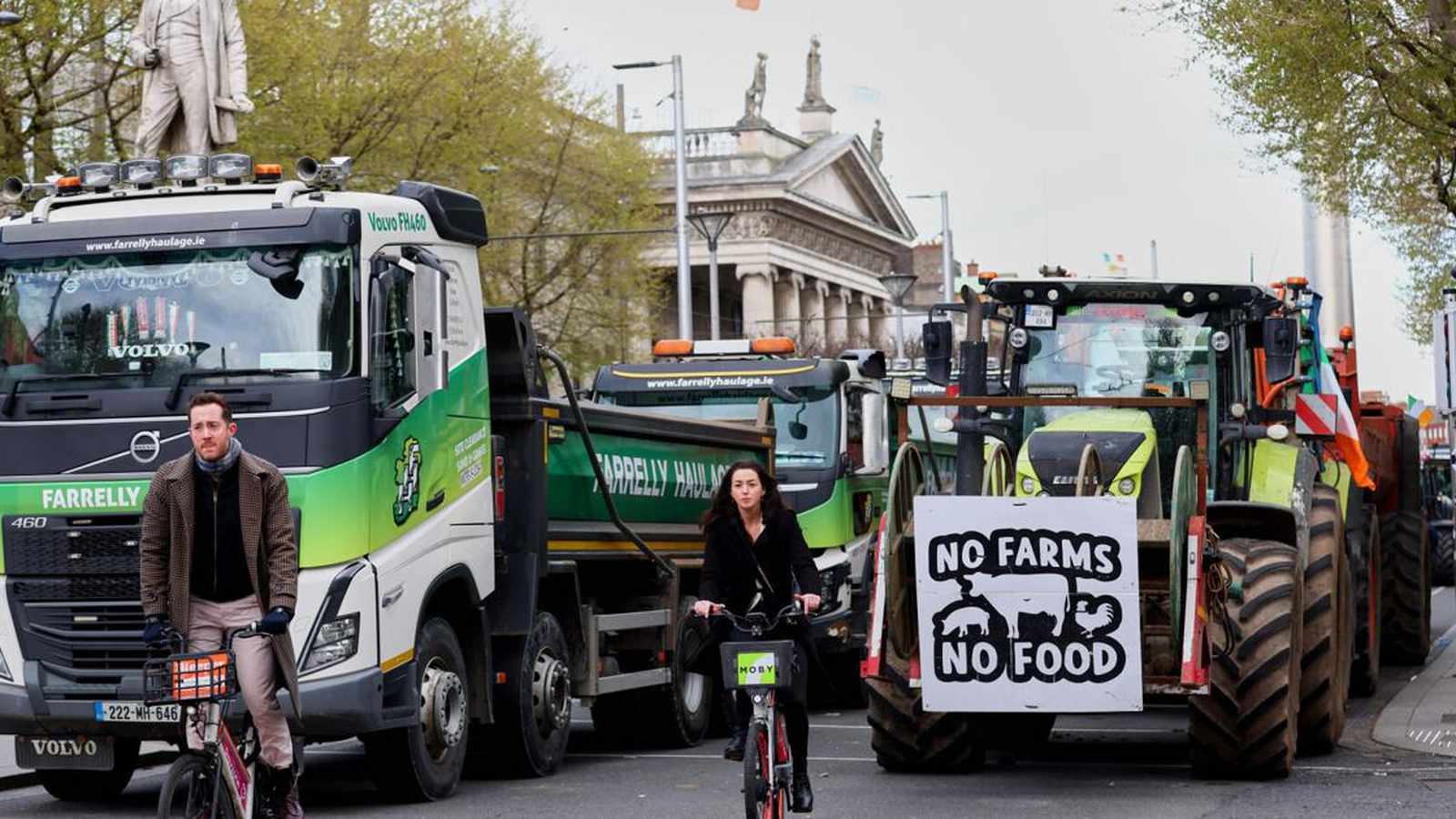
LONDON (Azat TV) – Ireland’s coalition government faces a pivotal parliamentary showdown today as it squares off against a motion of no confidence triggered by a week of intense, nationwide fuel protests. The motion, introduced by the largest opposition party, Sinn Féin, follows days of gridlock caused by convoys of trucks, tractors, and taxis that blockaded critical ports, oil refineries, and Dublin city center.
Parliamentary Showdown Over Government Response
The political crisis reached a boiling point after demonstrators, struggling with surging fuel prices, effectively halted fuel distribution across the country, leaving hundreds of forecourts dry. Prime Minister Micheál Martin’s administration has countered the Sinn Féin motion by tabling an earlier vote of support, a strategic move intended to neutralize the opposition’s attempt to force a government resignation or a general election. Sinn Féin leader Mary Lou McDonald has characterized the current administration as “utterly disconnected” and “incompetent,” arguing that the government’s refusal to engage directly with protesters exacerbated the unrest.
Economic Stakes of the Fuel Protests
The government recently unveiled a 505 million euro ($595 million) support package, including direct payments to haulage operators and fuel subsidies for the fishing and agricultural sectors, aiming to mitigate the impact of the global energy shock. This follows a 250 million euro tax break approved just three weeks prior. However, the opposition maintains that these measures are insufficient and arrived too late to prevent the widespread economic disruption that saw police and military forces deployed over the weekend to clear blockades at the Whitegate refinery and various depots.
Government Defense and Future Stability
Prime Minister Martin has defended the state’s intervention, citing the existential threat posed to the Irish economy by the port blockades. He noted that with 90% of Irish output exported, prolonged closures of these gateways would have resulted in immediate job losses and the cessation of critical production lines. While the government remains focused on its legislative agenda to address cost-of-living pressures, the outcome of today’s vote rests on the support of several independent lawmakers who have historically backed the Fianna Fáil-Fine Gael coalition. A failure to secure this support would force the government to resign, potentially plunging the country into an early general election.
The current stability of the Dublin government hinges less on the merits of the fuel relief package and more on the fragile alignment of independent parliamentarians, suggesting that the administration’s survival depends on political pragmatism rather than a consensus on the economic grievances that sparked the unrest.