
Quick Read
- Justice Minister Helen McEntee refused to confirm if she was consulted on the deployment of the military to clear fuel blockades.
- The decision to involve the Defence Forces has created political friction, with opposition parties questioning the necessity and timing of the move.
- Government stability is under pressure as the administration struggles to manage both public order and a broader cost-of-living crisis.
DUBLIN (Azat TV) – Justice Minister Helen McEntee has faced mounting pressure to clarify the internal decision-making process that led to the deployment of the Defence Forces during recent, widespread fuel blockades. The controversy centers on a surprise announcement by Justice Minister Jim O’Callaghan, who declared that the military had been tasked with assisting in the clearing of critical infrastructure sites, including ports and the nation’s sole oil refinery, as of April 13, 2026.
The Breakdown in Ministerial Coordination
The decision to involve the military has sparked a debate regarding the necessity of such a move and the lack of transparency surrounding the consultation process. When asked directly if she had been consulted by Minister O’Callaghan prior to the public announcement, McEntee declined to provide a clear answer, citing the sensitive nature of internal government procedures. This refusal to disclose the level of cabinet coordination has prompted criticism from opposition parties, who argue that the government’s handling of the crisis has been fragmented and reactive.
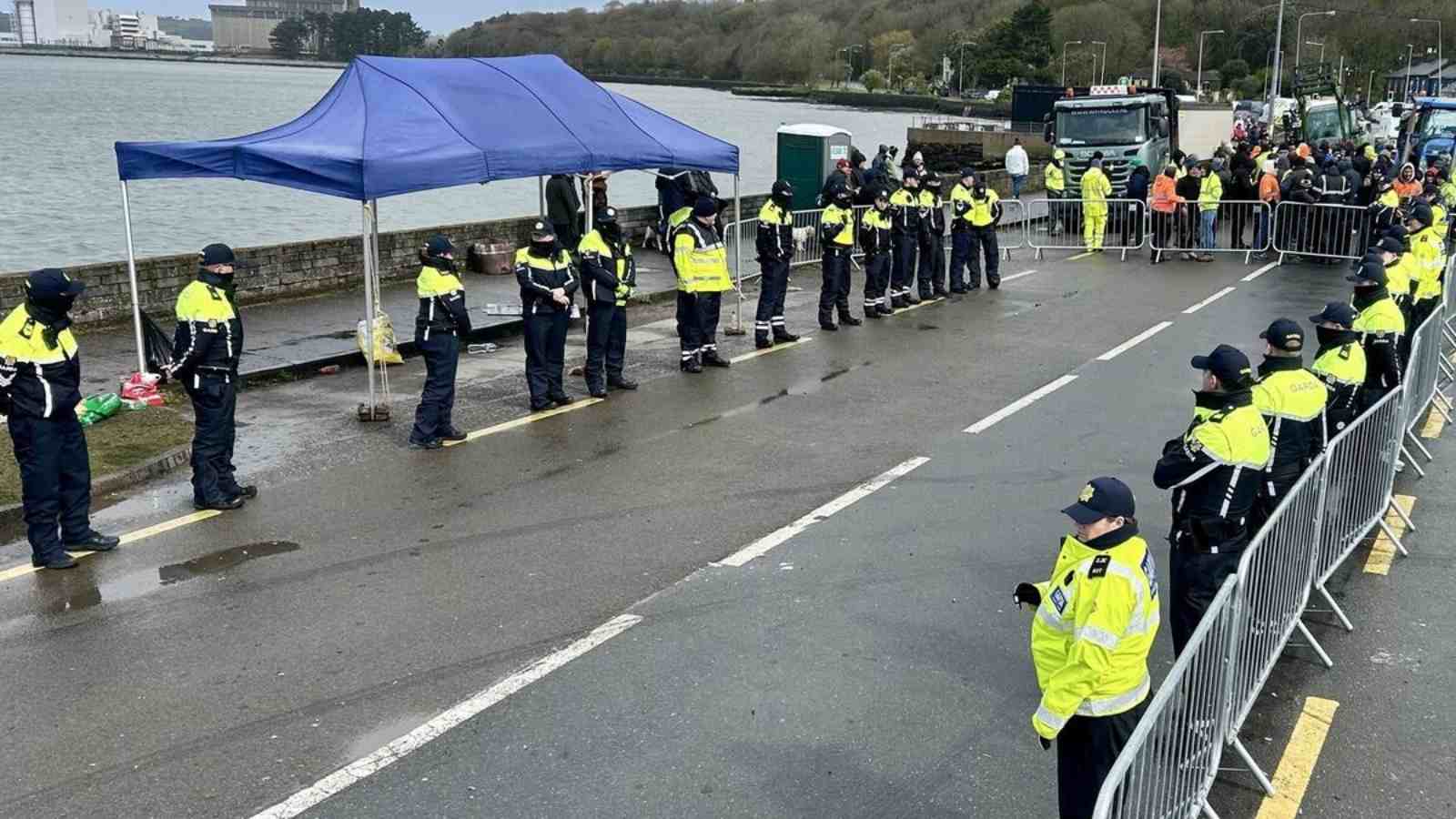
McEntee has since acknowledged that the state’s response mechanisms require review, suggesting that senior-level processes must be “improved” to ensure seamless engagement across all government departments during future security emergencies. Despite the official request for military assistance, the Defence Forces remained largely in a standby capacity, with the majority of the blockades eventually cleared by An Garda Síochána. This distinction has led analysts to question whether the military request was intended as a tactical necessity or a symbolic display of government force.
Public Order and Political Stability
The blockade crisis has arrived at a precarious moment for the coalition government, which is currently attempting to balance public order with a new half-a-billion-euro fuel support package. The measures, which include a deferral of planned carbon tax increases until October, have been criticized by trade unions and opposition figures as insufficient to address the deepening cost-of-living crisis. Political tensions have further escalated as opposition parties, including Sinn Féin and People Before Profit, have called on independent TDs to reconsider their support for the government.
The intersection of fiscal policy and public protest has created a significant stress test for the administration. While officials maintain that the current unrest is driven by global geopolitical instability, the visible disruption to energy supply chains has forced the government to defend its operational decisions. The pressure is twofold: external criticism regarding the effectiveness of the response, and internal frustration from ministers concerned by the slow pace of the resolution.
The ambiguity surrounding McEntee’s consultation process suggests that the government’s primary challenge is no longer just the protesters themselves, but the maintenance of institutional cohesion in the face of mounting public and political dissatisfaction.