
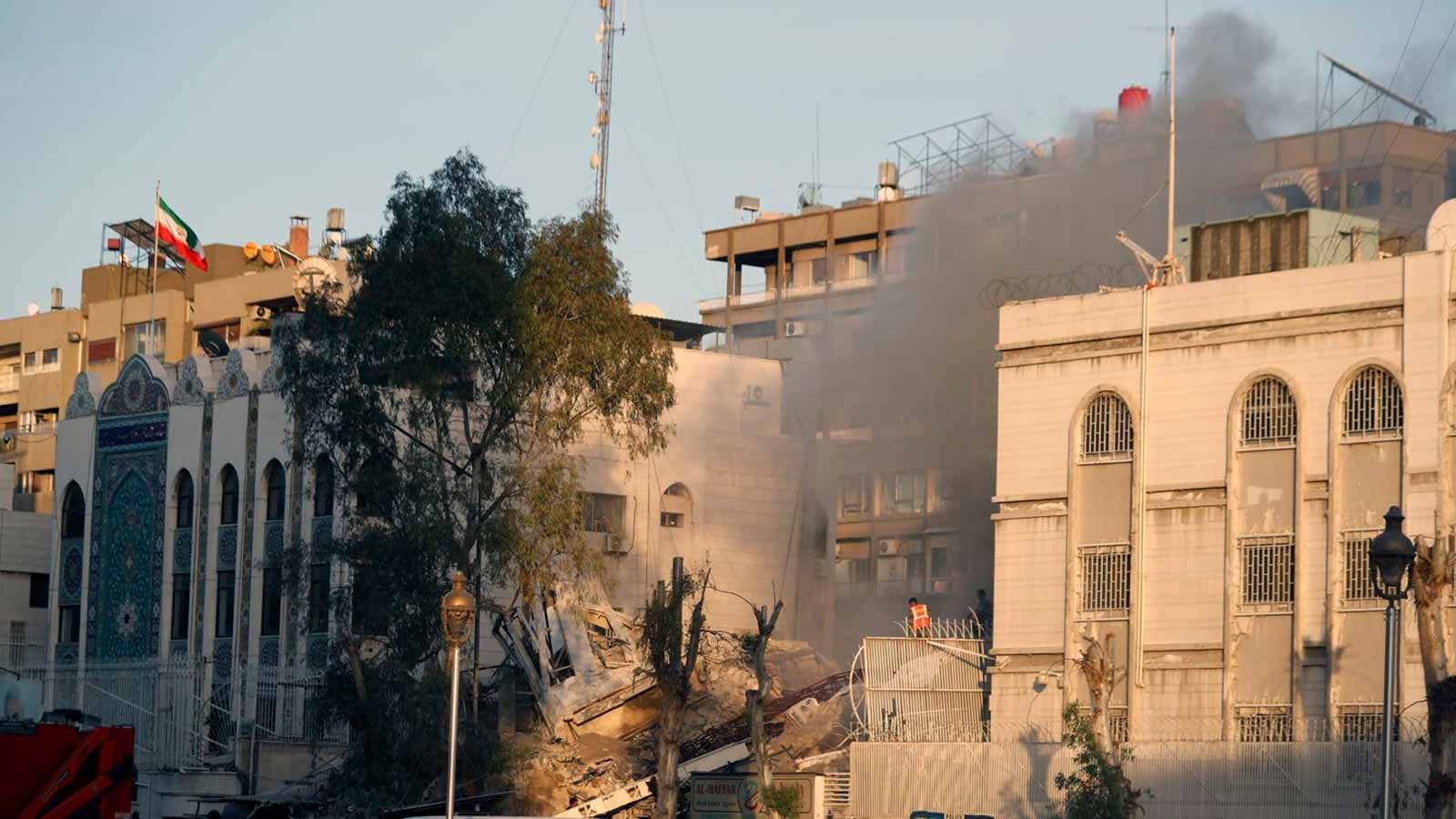
Israel Strikes Near Syrian Presidential Palace
On Thursday night, Israeli fighter jets launched airstrikes near the presidential palace in Damascus, Syria. This marks the second Israeli strike in Syria within a week, escalating tensions in the region. The strikes come amidst ongoing clashes involving the Druze minority in southern Syria, which have raised concerns about security and sectarian violence.
Israeli Justifications for the Strikes
Israeli Prime Minister Benjamin Netanyahu and Defense Minister Israel Katz issued a joint statement, framing the airstrikes as a warning to the Syrian regime. “We will not allow the deployment of forces south of Damascus or any threat to the Druze community,” the statement read. Israel has long positioned itself as a protector of the Druze minority, many of whom live near the Israeli border.
Israel’s intervention follows days of violent clashes between pro-government forces, Islamist factions, and Druze militants. Dozens of people have reportedly been killed in these confrontations. The Israeli government has expressed concerns over the safety of the Druze community, citing their historical and cultural ties to Israel.
Syrian Response to the Airstrikes
The Syrian presidency condemned the Israeli airstrikes, describing them as a “dangerous escalation” and a violation of Syria’s sovereignty. In a statement, the presidency emphasized its commitment to maintaining national unity and security. Syrian officials also called on the international community to denounce Israel’s actions.
Clashes in southern Syria have underscored the fragility of the new transitional government led by President Ahmed al-Sharaa. The government, which emerged after the fall of Bashar al-Assad, has faced challenges in uniting the country’s diverse religious and ethnic groups. The recent violence has further complicated these efforts.
Druze Community at the Center of the Conflict
The Druze, a small religious minority with roots in Ismailism, have historically maintained a degree of autonomy within Syria. Most Druze communities are concentrated in the southern province of Sweida and some suburbs of Damascus. While the Druze have generally avoided direct involvement in Syria’s broader conflicts, recent events have drawn them into the fray.
Last week, an audio clip allegedly insulting the Prophet Muhammad sparked outrage among Sunni Muslims, leading to violent clashes. Although the audio was later debunked, the incident highlighted underlying sectarian tensions. Druze leaders have since called for calm and reaffirmed their commitment to a unified Syria.
Regional and International Reactions
Israel’s airstrikes have drawn criticism from several regional powers. Turkey condemned the attacks, with President Recep Tayyip Erdogan describing them as provocative and destabilizing. Erdogan also called for international efforts to address the ongoing violence in Syria.
In Lebanon, Druze leader Walid Jumblatt rejected Israeli interference in Syria, accusing Israel of exploiting the Druze community to further its own agenda. “We need a unified Syria, and Israel wants to displace and exploit the Druze,” Jumblatt said in a statement.
The United States and other Western nations have yet to issue formal statements on the latest developments. However, Israel has reportedly lobbied the U.S. to support its actions in Syria, framing them as necessary for regional stability.
Historical Context of Israeli-Syrian Relations
Israel has conducted nearly 800 airstrikes in Syria since the fall of Bashar al-Assad in December. These strikes have targeted various factions and infrastructure, often under the pretext of preventing threats to Israeli security. The establishment of a buffer zone extending from the Golan Heights has further entrenched Israeli presence in the region.
The Golan Heights, captured by Israel during the 1967 Six-Day War, remains a contentious issue in Israeli-Syrian relations. The area is home to a significant Druze population, many of whom have familial and cultural ties to Syria. Israel’s actions in the Golan Heights and southern Syria have been criticized as attempts to consolidate control over the region.
Future Implications
The latest airstrikes highlight the precarious security situation in Syria and the broader Middle East. As the Syrian government struggles to assert control over its territory, external actors like Israel continue to influence the country’s trajectory. The involvement of the Druze community adds another layer of complexity to an already volatile situation.
While some Druze leaders have expressed willingness to cooperate with the Syrian government, others remain wary of both the regime and external interventions. The international community faces the challenge of addressing these multifaceted issues while ensuring the safety and rights of minority groups like the Druze.
Source: AP, Reuters, Syrian Observatory for Human Rights