


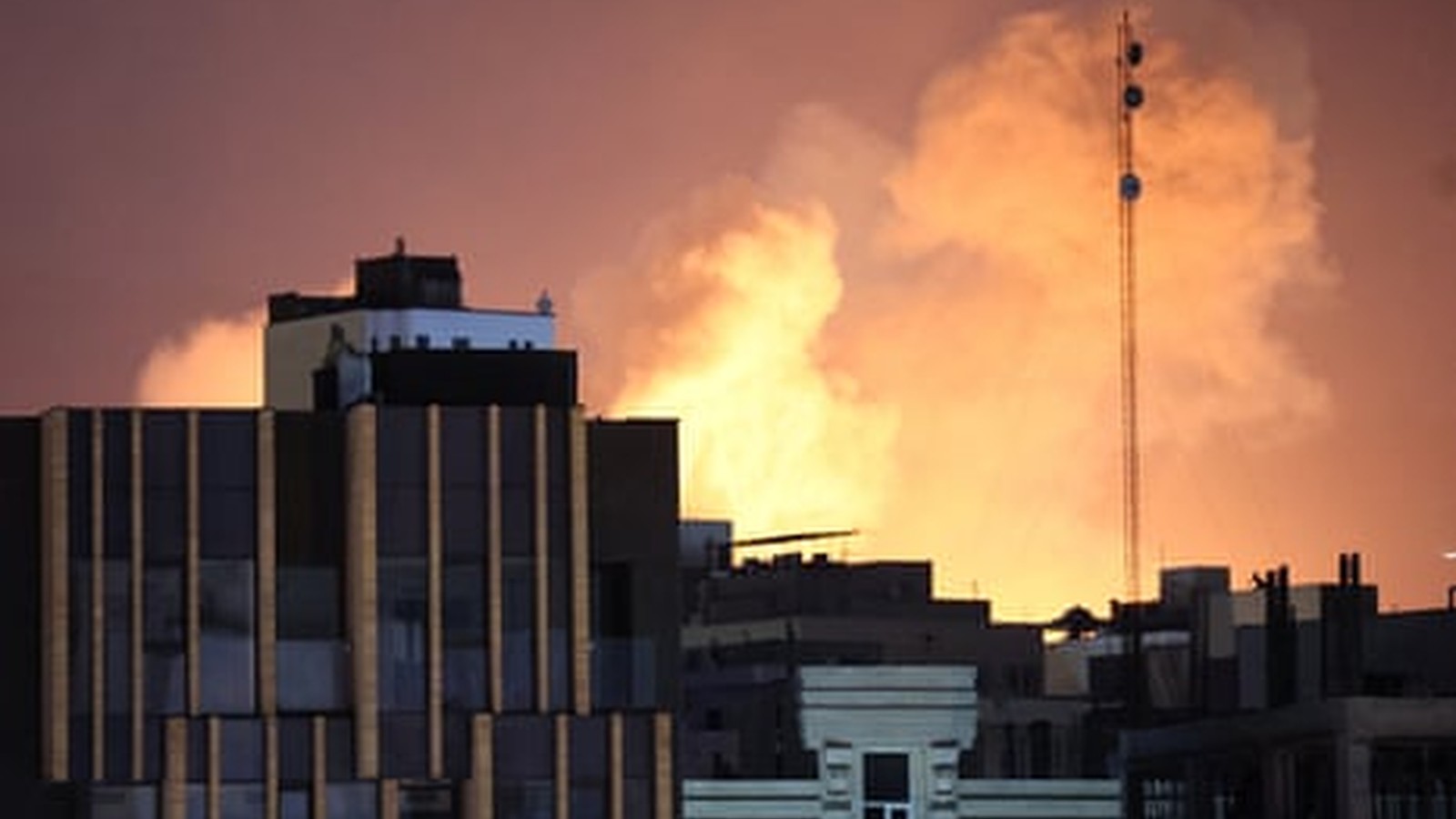
WASHINGTON (Azat TV) – A rapid escalation of military actions by the United States and Israel against Iran over the weekend has plunged the Middle East into a profound and rapidly widening conflict, triggering the first confirmed American casualties and raising significant fears of a broader regional war. The intense air and missile strikes, which began Saturday and continued through Sunday, targeted Iranian military infrastructure and leadership, including the killing of Iran’s Supreme Leader Ayatollah Ali Khamenei. This unprecedented offensive has drawn strong condemnation and vows of retaliation from Tehran, while also igniting widespread protests across the region and prompting calls for de-escalation from international partners.
The US Central Command confirmed on Sunday that three US service members were killed and five others seriously wounded as part of military operations against Iran. These are the first confirmed American deaths since the campaign began. US President Donald Trump, speaking to Fox News, stated that 48 Iranian leaders had been killed in the strikes and that the operation was “moving along rapidly” and “ahead of schedule.” He also claimed that nine Iranian naval ships had been destroyed and sunk, with Iran’s naval headquarters “largely destroyed.”
Intensifying Strikes and Casualties Mark Escalation
The joint US-Israeli campaign, dubbed Operation Epic Fury by the US military, saw B-2 stealth bombers strike Iran’s ballistic missile facilities with 2,000-pound bombs on Saturday night, according to a report by NPR. Israeli Prime Minister Benjamin Netanyahu affirmed that strikes on Tehran “will only increase” in the coming days, stating he had given instructions for the continuation of the campaign against Iran. Israeli forces are reportedly striking the “heart of Tehran with increasing strength.”
Iran’s state media confirmed the death of 86-year-old Supreme Leader Ayatollah Ali Khamenei in airstrikes targeting his office in Tehran on Saturday. Following his death, Iran established a three-person temporary leadership council to govern the country before a new supreme leader is chosen by a panel of Shia clerics. In response to the attacks, Iran’s Revolutionary Guard Corps claimed to have targeted the USS Abraham Lincoln with four ballistic missiles, though US Central Command stated the ship was not hit and the missiles did not come close. Iran’s Foreign Ministry Spokesperson Esmail Baghaei vowed that Iran would continue to fight ‘foreign aggression, foreign domination,’ emphasizing that there would be ‘no mercy or forgiveness in taking revenge for the leader.’
Regional Fallout and Global Reactions to Iran Conflict
The escalating conflict has rapidly spread beyond Iran’s borders, leading to significant regional instability and international concern. Pro-Iran demonstrations in Pakistan resulted in at least 22 deaths, with hundreds marching on the US consulate in Karachi, where a small fire was lit. In Iraq, security forces used teargas against protesters attempting to storm the US embassy in Baghdad. Iranian retaliatory missile strikes also hit targets in Israel and Gulf Arab states, including airports in Abu Dhabi and Kuwait, and damaging Dubai’s airport and the Burj Al Arab hotel, according to NPR.
The United Kingdom’s Ministry of Defense confirmed that a Royal Air Force Typhoon jet, operating from Qatar, shot down an Iranian drone aimed at Qatar. This marks the first operational interception by a UK aircraft in defense of Qatar, underscoring the widening scope of the conflict. NATO announced it is closely following developments and adjusting its force posture to ensure the security of its 32 member nations against potential threats like ballistic missiles and unmanned aerial vehicles emanating from the region.
German Chancellor Friedrich Merz called on US and European partners to begin planning for the future of Iran and the region, stating that the people of Iran deserved a better future. While agreeing with US goals to end Tehran’s nuclear armament, Merz warned of significant risks, noting, “We do not know how far the region will be drawn into escalation by Iran’s harsh counterstrikes.” He emphasized the need for an agenda for ‘the day after’ to ensure peace and stability, end Iran’s nuclear program, and support a stable future for Iranians.
Political Divisions and Uncertain Diplomatic Paths
Domestically, the US strikes have met with mixed reactions. A Reuters/Ipsos poll concluded on Sunday found that only 27% of Americans approved of the strikes, while 43% disapproved. About 56% of Americans, including a significant portion of Republicans, believe President Trump is too willing to use military force. Democrat Representative Ro Khanna expressed concern that Americans are ‘not safer today’ and is seeking to hold a vote under the War Powers Resolution, which would require congressional authorization for further military action in Iran.
Despite the intense military campaign, President Trump claimed in an interview with The Atlantic that Iran’s new leadership wants to talk to him, and he has agreed. ‘They want to talk, and I have agreed to talk, so I will be talking to them,’ Trump said. This potential diplomatic opening, if it materializes, comes amidst an incredibly volatile period following the dramatic loss of Iran’s supreme leader and the first American casualties.
The immediate aftermath of Ayatollah Ali Khamenei’s death, coupled with the first American military fatalities, represents a critical inflection point that significantly heightens the risk of the US-Israeli campaign against Iran spiraling into a full-scale regional war, demanding urgent and coordinated international efforts to prevent further destabilization.