
Quick Read
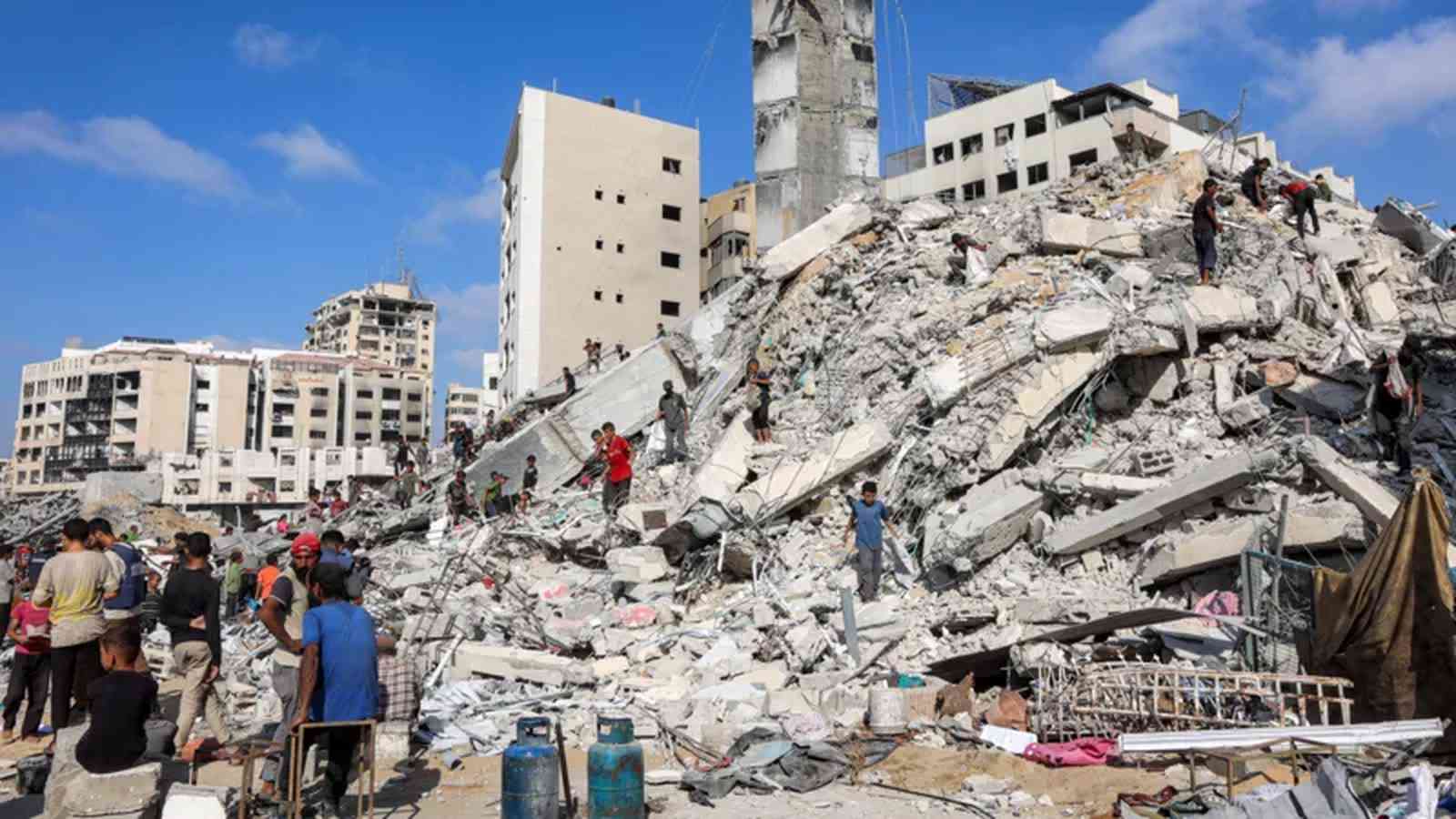
- Israel destroyed the Sussi Tower in Gaza City on Saturday, marking the second high-rise targeted in two days.
- The IDF claims the building was used by Hamas, but the militant group denies this.
- The UN warns of worsening humanitarian conditions in Gaza, where famine has been declared.
- Residents are urged to move south, but even designated ‘safe zones’ have been struck by airstrikes.
- Over 63,000 people have died in Gaza since the conflict began in October 2023.
In a dramatic escalation of its military campaign in Gaza, Israel has destroyed the Sussi Tower, marking the second high-rise building in Gaza City to be targeted in as many days. The strike, carried out on Saturday, was justified by the Israeli Defense Forces (IDF) as an operation against Hamas, a claim that the militant group denies. Videos shared by Israeli Defense Minister Israel Katz on social media showed the 15-story building collapsing into a cloud of dust and debris, accompanied by the caption, “We’re continuing.”
Second High-Rise Destroyed in Two Days
The destruction of the Sussi Tower comes just a day after the Mushtaha Tower in Gaza City’s al-Rimal neighborhood was leveled. According to eyewitness accounts, residents were given only 15 minutes to evacuate before the strike. The IDF claimed to have taken precautions to minimize civilian casualties, including advance warnings and the use of precise munitions. However, Palestinians have accused Israel of targeting buildings that housed displaced families, exacerbating the already dire humanitarian situation in the region.
The UN has reported that nearly one million people remain in Gaza City, which has been under relentless airstrikes for months. Satellite imagery indicates that entire neighborhoods have been leveled, leaving many without shelter. The UN has also declared a famine in Gaza, citing a 23-month blockade on humanitarian aid. Hospitals in southern Gaza, where Israel has encouraged civilians to relocate, are reportedly overwhelmed and unsafe, according to the BBC.
Humanitarian Crisis Deepens
As the conflict escalates, the humanitarian toll is becoming increasingly severe. The IDF has urged residents to move to al-Mawasi, a designated “humanitarian zone” along Gaza’s southern coast, promising food, water, and medical aid. However, the UN and other organizations have criticized these zones as overcrowded and unsafe. Witnesses have reported that even these so-called safe zones have been targeted by airstrikes, leaving residents with few viable options for refuge.
On Tuesday, five children were killed while queuing for water in al-Mawasi, reportedly struck by an Israeli drone. The IDF has stated that the incident is under review. The tragedy underscores the precarious conditions faced by Gaza’s residents, where access to basic necessities like food and water has become a life-threatening ordeal. According to the Hamas-run health ministry, at least 367 people have died from malnutrition and starvation since the conflict began in October 2023.
Historical and Political Context
The destruction of Gaza’s high-rises has a symbolic as well as practical impact. These buildings, which began to dominate Gaza’s skyline following the 1993 Oslo Accords, represent a period of hope and reconstruction for many Palestinians. The towers were seen as a testament to the region’s aspirations for independence and economic development. Their destruction not only displaces thousands but also erases a part of Gaza’s modern history.
Israeli Prime Minister Benjamin Netanyahu has vowed to seize control of the entire Gaza Strip, a move that has drawn widespread international condemnation. The ongoing assault is Israel’s response to a Hamas-led attack on southern Israel in October 2023, which killed approximately 1,200 people and resulted in 251 hostages being taken. Since then, more than 63,746 people have been killed in Israeli attacks, according to Gaza’s health ministry.
International Reactions and Future Outlook
International pressure on Israel to end its military campaign has been mounting. Egypt and Qatar have attempted to mediate a ceasefire, proposing a 60-day truce and a prisoner swap deal. However, Netanyahu’s government has so far refused to engage, citing security concerns. Meanwhile, the United Nations continues to warn of an impending disaster if the situation in Gaza deteriorates further.
As the conflict drags on, the humanitarian and political costs are expected to rise. The international community faces a growing challenge in addressing the crisis, which has already displaced the vast majority of Gaza’s population of over two million people. With no clear resolution in sight, the region remains on the brink of a catastrophic collapse.
The destruction of the Sussi Tower serves as a grim reminder of the escalating conflict in Gaza. As humanitarian conditions worsen, the need for an immediate ceasefire and sustained international intervention becomes ever more urgent.